The Instinctual Mistake of Racism

Our history is replete with racism, and many of my posts are devoted to its tragic examples: US War on Native America, Road to Abolition, Equal Education, Black History and American Concentration Camps. Since genetically all humans are the same species, there is no scientific basis for racism. We are all on the same side. But in my travels, I have found both overt racism and subtler ethnocentrism everywhere. I have heard Swedes make fun of Norwegians, British belittle the Irish, Italians disparage Romani, Turks and Greeks complaining about each other, Russians being anti-Semitic, Japanese discriminating against Koreans, Chinese distrusting Japanese, Malaysians criticizing Chinese, Israelis insulting Palestinians, Tanzanians maligning Arabs, Dominicans faulting Haitians, etc. I’m sure many of the same folks also made negative comments about Americans, behind my back or even calling me a ‘big nose’ or ‘foreign devil’ to my face.

Basically, racism is a damaging and potentially deadly way of thinking about others. Racism divides society, treats people unfairly and often results in violence against innocent people. Academics argue about whether prejudice is an evolved human trait or whether racism is learned. I doubt anyone learns to be racist by reading 19th century books on Phrenology or old Nazi propaganda. People who look up old racist literature have already formed their views. Children acquire racial biases as toddlers and pre-schoolers, often unconsciously by observing adults. Some tribal mistake in our instinctual thinking makes us vulnerable to distrust others, unknown to us, and wish them harm. Tribal unity on superficial facial characteristics may have once been useful in outwitting Neanderthals, but in the modern, interconnected global community, it is not just obsolete, it is a deadly plague, pitting billions against billions, all the same species.

Some academics stress the importance of systemic racism, the structures that sustain it, and the leaders who promote racist ideology. But this logical approach has a human weakness, so a systemic solution is asymmetrical to the problem. Most racist adults deny that they are racist. Relatively few risk public shame with overt racism. Racism lurks in the shadows, until it explodes. Some deplorable adults promote racism consciously, but it is hardly an intellectually rigorous movement. While diversity, equity and inclusion are taught formally, racism spreads informally. In my experience, I’ve heard more racist comments from illiterates and drunks than sober academics. Racism spreads quickly among less educated people who lack access to the benefits of vibrant, integrated multiracial communities. W.E.B. Du Bois exposed the real, blunt view of racists behind their fragile intellectual facade of superiority: “they do not like them”. Racism may be an ideology to a few, but it is an instinctual flaw in many.

While racism is still obviously employed consciously as an instrument of political power, its mass effectiveness lies in its unconscious appeal. If folks already have deeply rooted prejudices, it is easier to convince them to act cruelly, even without evidence. Missionaries believed they were doing God’s work to take Native American children away from their parents and put them in boarding schools. Soldiers believed false and grossly exaggerated claims that Native Americans had committed blood-thirsty atrocities, before they machine-gunned women, children and the elderly as they slept, before taking fingers as souvenirs. Slave owners believed their superiority gave them the right to use whips and chains for generations. School boards believed that money was better spent on white children. Mobs believed that an unproven allegation of sexual assault justified days of death and destruction. And many believed that Americans of Japanese descent could not remain free, while Americans of German descent could. The cruelest acts were committed by people motivated to act without evidence.

Any system can become an instrument of racial injustice, if it is filled with enough people with deep-seated racist views. A racist jury will rule unjustly, no matter how the law is written. Political leaders do not adopt racist policies because they were proposed by Ivy League think tanks, they adopt them because they are expedient and popular among ignorant people who support them. Columbus did not wait for the King or the Pope to issue racist proclamations before enslaving the first Native Americans he met, because he brought base racism with him and his crew. And they immediately decided to apply it to the Taíno, because they were different. The root cause of centuries of tragic American history is the false, racist assumption that there was something wrong with the other group of humans. Racism is the instinctual mistake within us that causes us to break the Golden Rule.

So, since racism is fundamentally a problem of instinctual thinking, the first step in solving it is to reveal it within ourselves. We all act instinctually, or we would forget to eat and die. We are all emotional, with a million likes and dislikes, preferences and aversions. We mimic, extrapolate and project. We have a physiological and evolved social need to group together, find similar soul mates, and to feel good about ourselves at the expense of others. Our society enforces homogeneity from pre-school. Sesame Street taught us, “one of these things is not like the others, one of these things just doesn’t belong”. But when we defectively apply that instinctual thinking to groups of our fellow humans and feel that someone “just doesn’t belong” in our neighborhood, due to their race or ethnicity, then we are being racist. First, be aware.

Being anti-racist requires honest introspection. If you can find a racist attitude in yourself, understand where it came from, and judge it to be hurtful and wrong, then you can fight it. You can change your words and deeds. And then, you can apply that new skill to the world. Suddenly, you will recognize the next racist thing you hear as racist, and you will have the opportunity to object. You can make a little more effort to understand people who are different, and you might find that you like their food, their humor, music, literature, style, or even some of their religious beliefs. Ultimately, you must apply the same open-minded attitude to all groups of humans.

When I lived abroad, groups of schoolchildren would point at me, giggle and sometimes call me names, because I was foreign to them. Their school uniforms, group behaviors and appearance was equally strange to me, at first, but I was happy that the country stopped burning and beheading foreigners who looked like me some 150 years earlier. Culture shock has two sides, when you fall in love with a culture and when you hate it. Before you really get over culture shock, you need to go through both stages. Then you can stop seeing one group—a single culture—and start seeing the diversity within the group.

The simple truth is that there are good and bad people everywhere, in every group. It is neither accurate nor useful to judge whole groups as good or bad based on superficial characteristics. When groups of people share the same prejudice unconsciously, they begin applying their racism broadly. When groups share prejudice consciously, they organize that racism into a damaging and dangerous force, breaking down a peaceful, fair society, challenging laws and morals, and hurting innocents. Decades later, people may acknowledge that one case was wrong, without admitting that the same instinctual fault still persists.

Isn’t it time for us to admit the full extent of our racism, understand it, and stop it completely? Must we continue to repeat the worst of our history in new ways, for the same old reason? Can’t we finally decide that all humanity deserves to be treated as we believe we should be treated?

American Concentration Camps

The day after Pearl Harbor, an angry FDR called it ‘a date which will live in infamy’, and he began to restrict the rights of Japanese Americans. First there was a curfew, then bank accounts were seized overnight, businesses shuttered, homes were searched, guns were collected, cameras and radios were taken, Japanese language schools were closed, and travel was restricted. US citizens of German and Italian descent were free to live their lives, but US citizens of Japanese descent were not. 

In February of 1942, first generation adult male immigrants in the Japanese American fishing community on Terminal Island—between the Ports of LA and Long Beach—were incarcerated by the FBI, followed by a 48 hour notice for all remaining inhabitants to evacuate. The whole community was the first to be incarcerated after FDR signed Executive Order 9066, and their entire neighborhood was razed. Then, at noon, on 30 March 1942: any person of Japanese descent found on Bainbridge Island—opposite Seattle—would be arrested and charged as a criminal. Families were given short notice, allowed two small bags—or one and a baby—, and were sent to the state fairground at Puyallup—near Tacoma. Barbed wire fences and armed soldiers surrounded the ‘assembly centers’. There, they were lined up by family, with their family number tags tied to their clothes, oldest in front, youngest in back.

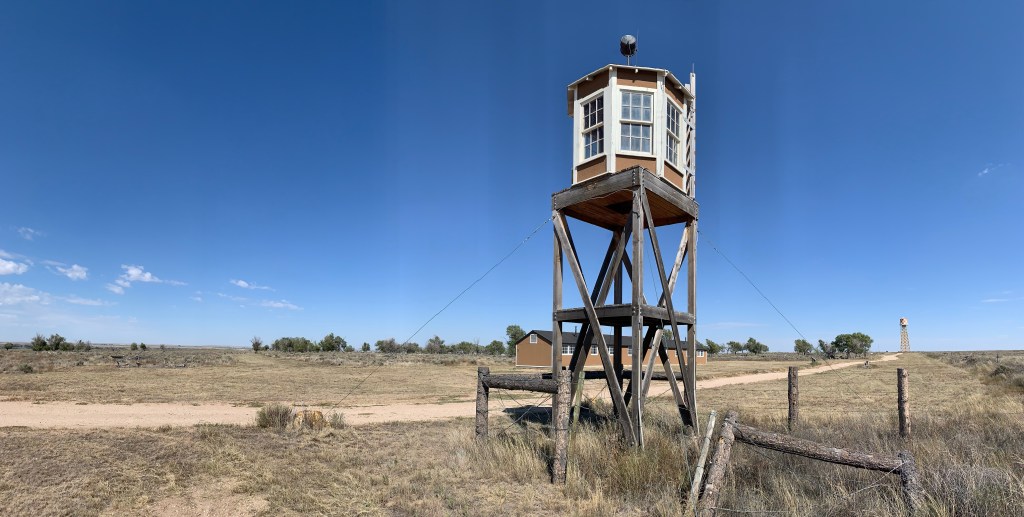
San Francisco residents went to Tanforan—now a shopping mall on the peninsula. Los Angeles residents were sent to Santa Anita or Pomona. Some were housed in racetrack horse stalls, which they needed to clean out themselves. California and half of Washington, Oregon and Arizona were declared ‘exclusion zones’ by the military, and no person of Japanese descent was allowed to remain there. Instead, they were transported from the assembly centers to one of ten camps. The American woman and her baby above were sent to Manzanar in California and then to Minidoka in Idaho. Others went to Amache in Colorado, Rohwer & Jerome in Arkansas, Topaz in Utah, Heart Mountain in Wyoming, Poston & Gila River in Arizona, and some were sent to the ‘segregation camp’ at Tule Lake in California near Oregon. Some male inmates were ordered to build their own barracks, latrines and other buildings. Women prepared meals for thousands. Guard towers were raised along barbed wire fences with searchlights and machine guns pointed inward. There was no privacy, not among family, not at meals, not in the group latrines and not in the group showers. The camps were in remote, desolate, dusty, unpopulated areas away from towns, many were deserts, some mountains and all were sabishii—lonely and forsaken.

Many Americans, including those incarcerated, were lied to about the program by our government: “temporary”, “for your own safety”, “normal” and “happy”. Even today, the program is referred to as “Japanese Internment Camps”, but the vast majority of those incarcerated were not Japanese, they were US citizens, mainly by birth, many never having been to Japan. Propaganda films lied and stated that “household belongings” were shipped to “pioneer villages”, that only those “within a stone’s throw” of military bases were forced to move, that people were “given jobs and more space in which to live” and “managed their own security”. The program was sold as being exemplarily generous, that the military provided for all needs and that the Japanese Americans “approved whole-heartedly”. Journalists and others were periodically given limited access only to the barracks of the most cooperative inmates.

In fact, there were water shortages, food shortages, food poisoning, unsafe living and working conditions, military brutality, unfair punishments, false charges, and inmates fatally shot, including a dog walker at Topaz, a truck driver at Tule Lake, and two protesters at Manzanar where guards fired into a crowd. Some elderly patients had been taken to the camps from their hospital beds, and over 1,850 died of disease and medical problems, including many infants. Complaints were discouraged or mocked. Pressure campaigns were used to enlist men into active combat in Europe. And always, anyone suspected of being disloyal was encouraged to renounce their citizenship and leave the country. In this system, particularly at Tule Lake, some reacted to their treatment by trying to be more Japanese, organizing protests and yelling Banzai—‘long live the Emperor’—at the guards.

They were Americans, and their Constitutional Rights of speech, to be secure in their homes and to due process were all violated for years. The root of this program was racism. Americans of Japanese descent were assumed to have loyalty to a foreign power, and even when they were natural born American citizens, they couldn’t be trusted and would have to prove their loyalty again and again. The Issei—1st generation—chose this country rather than the one of their birth. The Nissei—second generation—were born here, but some parents sent their children back for schooling Japan to preserve their language and culture. These children were called Kibei—returnees to America—, indicating that their parents wanted them to live here. All were Americans, either by their own choice or by their parents’. Only their fellow citizens refused to see them as truly Americans.

Although I quote Eleanor Roosevelt below, FDR and many other Americans believed in the ‘melting pot’—meaning melting metal to forge steel—, that Americans had a duty to assimilate and that their cultures would be purified into one culture. But the price of citizenship does not include giving up one’s culture, whether your name is Ohara or O’Hara. Imagine something happens in the future, and people of your family background are herded up and sent to Guantanamo. Even though you did nothing wrong, your guilt is suspected based on your family cultural background. Your communications are censored, and you are treated the same as foreigners or prisoners of war. And when you finally are freed, all your property has been taken, and nobody will help.

Visit national park sites for camps like Manzanar, Minidoka, Amache and Tule Lake, and interpretive sites in Seattle like the Klondike visitor center which partners with Bainbridge Island and the Wing Luke Museum. Topaz has a museum in Delta Utah (off I-15 towards Great Basin). Poston (off I-10) has a historic marker placed by internees & the Colorado River Indian Tribes near Parker on the Arizona border with California. Heart Mountain has an interpretive center between Cody and Powell in Wyoming (on the road between Yellowstone and Bighorn Canyon). Gila River is on restricted reservation land near Hohokam Pima—neither are open to the public—but the Huhugam Heritage Center has a small free exhibit, not far from Phoenix. There’s a museum in McGehee Arkansas for Rohwer and a monument for Jerome; both are just south of Arkansas Post. The Hawaiian experience was very different, but Honouliuli will eventually open as a historic site. Please encourage your elected representatives to preserve the history at all the camps.

I encourage you to read more about the experiences of the Americans who were sent to American Concentration Camps during WWII: Farewell to Manzanar, Only What We Could Carry, Journey to Topaz, Snow Falling on Cedars, and They Called Us Enemy, among many others. And take a moment to think about how you would feel, if it happened to your family.

“We have no common race in this country, but we have an ideal to which all of us are loyal:
we cannot progress if we look down upon any group of people amongst us because of race or religion.
Every citizen in this country has a right to our basic freedoms, to justice and to equality of opportunity.
We retain the right to lead our individual lives as we please,
but we can only do so if we grant to others the freedoms that we wish for ourselves.”

Eleanor Roosevelt, after visiting Gila River during WWII

Women’s History Month

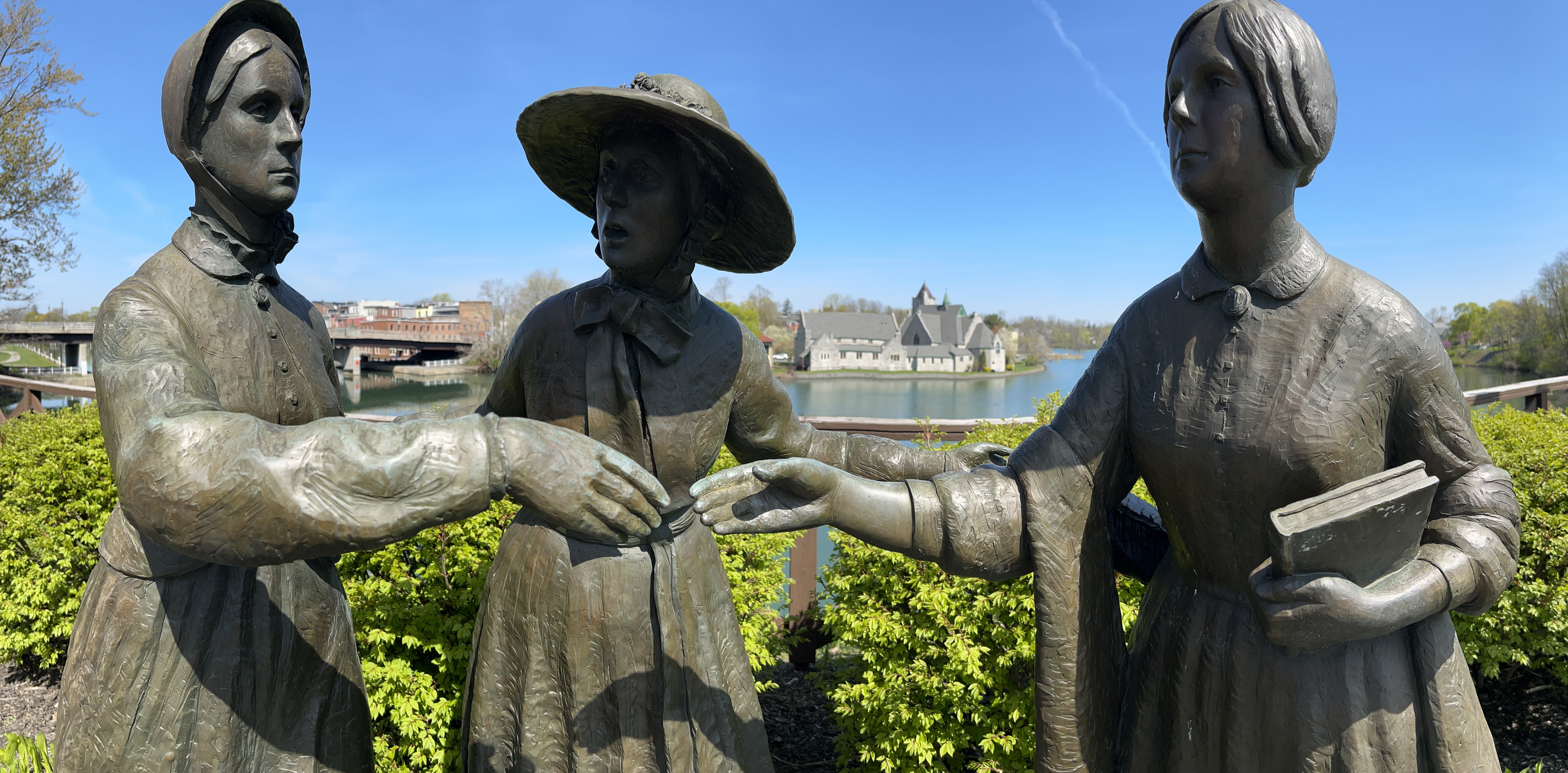
Women’s contributions to our history have too often been ignored or downplayed. Several of the official national park sites primarily focus on telling women’s history, but the park service maintains a far longer list of women who deserve more recognition. The park service says that ‘women’s history can be found in all parks’, but that’s another way of saying that women’s history is secondary in most parks.

First listed are official park sites that focus on telling important women’s history well, and it includes suffragettes, abolitionists, business women, laborers, and political leaders.

Second is a very incomplete list of historically important women often mentioned at national park sites (links go to NPS articles), but without the recognition of their own official park sites. The list below has suffragettes, scientists, and women who fought for the rights of others, and all who must be remembered. A few of these are currently being considered for park recognition, along with a Votes for Women History Trail. My apologies for those I know I’m leaving off the list below.

Who was the first American woman to win the Nobel Peace Prize? The only woman to win the Medal of Honor? Our first Congresswoman, elected before women could vote? If there’s a woman on this list you haven’t heard about, please do yourself a favor and click her link below.

Many famous women also are at rest in Arlington National Cemetery, including astronauts, code-breakers, a Pulitzer-winning journalist and a Supreme Court Justice. But there’s just one memorial—Military Women’s Memorial—for all the women who served in war, despite the diverse stories of women in the Revolution, War of 1812, US-Mexican War, Civil War, WWI, WWII, WASPs, and the rest. We all need to do a better job of remembering and telling Women’s History, with more official, public recognition.

Black History Month

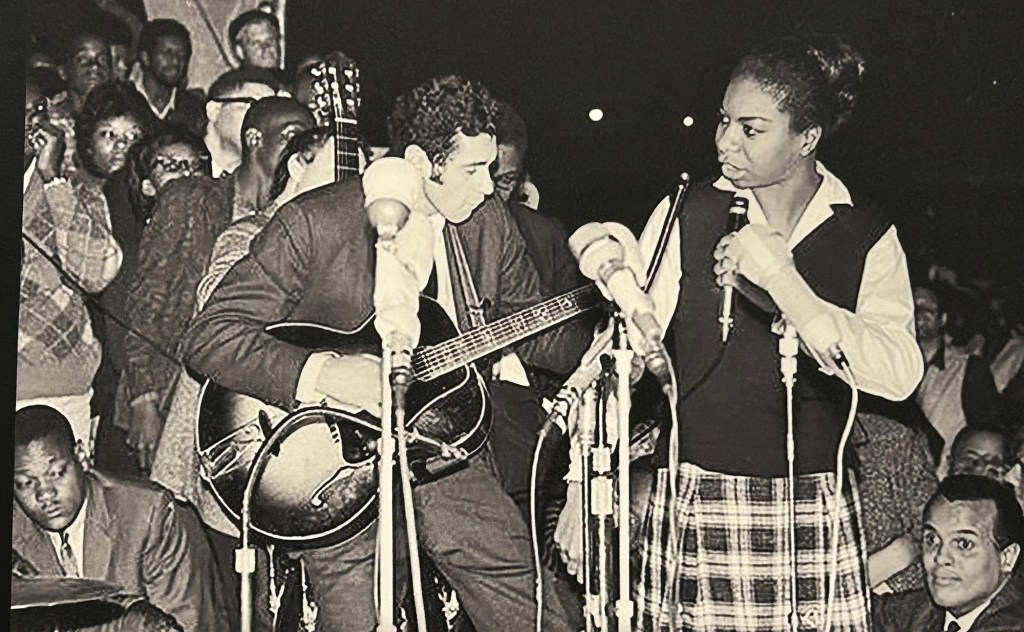
Nina Simone on the march from Selma to Montgomery, with Harry Belafonte lower right.

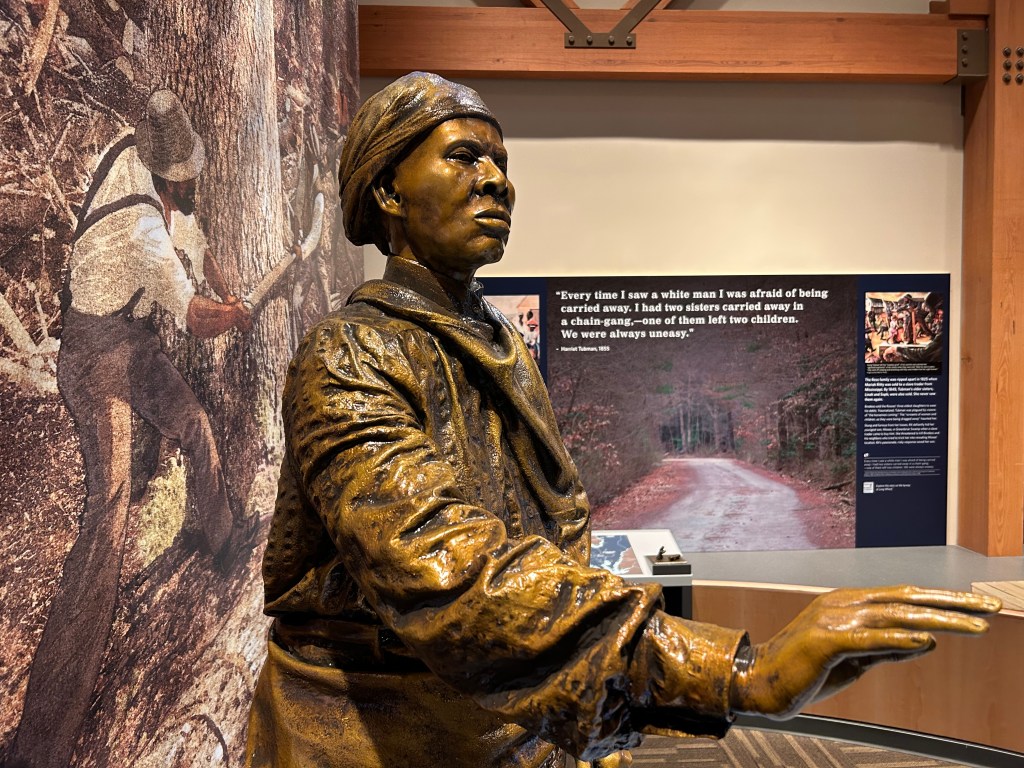
Black History is about much more than emancipation and education. Beyond the basic rights to liberty and literacy, Americans have a right to pursue happiness. All year long, the national park service celebrates those who broke the barriers that denied black people their full rights as citizens.

The African Burial Ground predates our country, includes both free and slave, and is today a powerful symbol of the right to belong, be recognized and be remembered. New Philadelphia, Illinois, was the first town in American officially founded by an ex-slave in 1836. Camp Nelson became a focal point for escaped slaves during the Civil War, both as refugees deserving help and as soldiers with a right to fight in uniform. Nicodemus, Kansas, 1877, is the oldest black settlement west of the Mississippi, and it still lives. Jazz began before the turn of the century in New Orleans. In 1903, Charles Young, born a slave, became the first black national park superintendent, and in 1917 became the first black Army Colonel (surpassing Dr Alexander Augusta, Bvt. Lt. Col. during the Civil War). 

The Springfield Race Riot of 1908 sparked the creation of the NAACP, illustrating both the danger of race hatred and the need for African American advancement. In 1911, Maggie Walker, daughter of a slave, became the first African American woman to found and run a bank, among her many civic accomplishments in Richmond, Virginia, and nationally. In April 1939 after being refused the right to sing elsewhere, Marion Anderson made national news singing at the Lincoln Memorial.

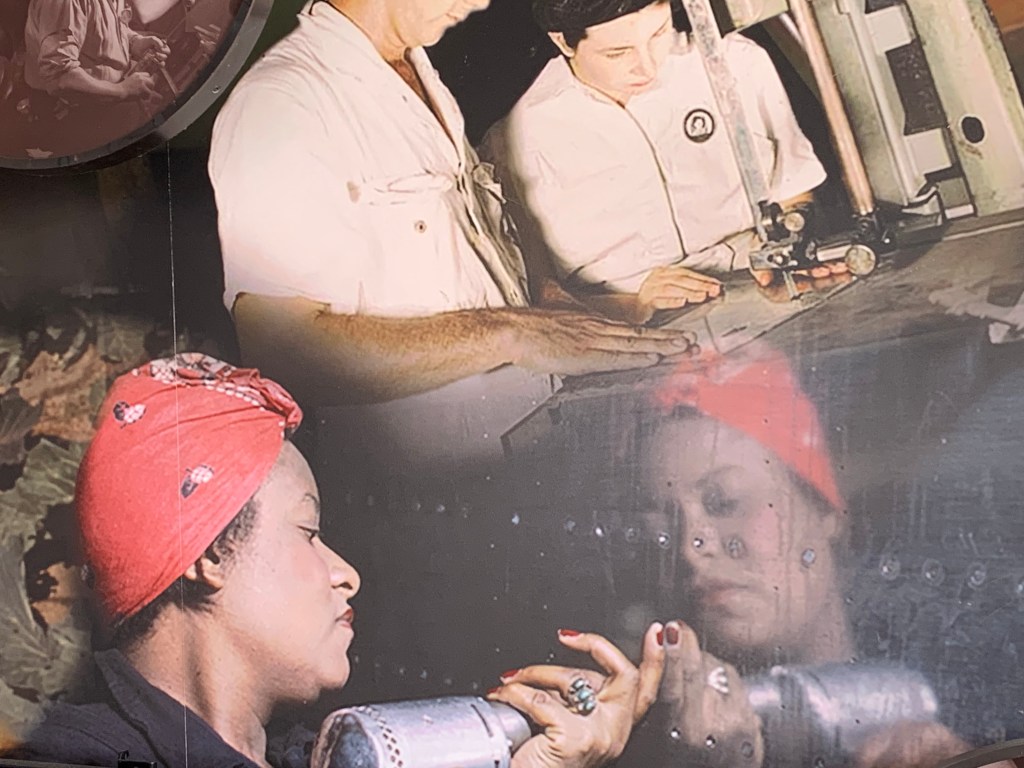
WWII brought new opportunities, including employment for African American women among the Rosie the Riveters who built our fleets and the Tuskegee Airmen who helped turn around the war by defending our bombers over Germany. Tragically, segregation in the military led to the Port Chicago disaster in 1944, which in turn led to desegregation in the military. 

Eisenhower was President in 1955, and America was a very conservative, 88% white, 95% Christian country. Still, when Mamie Till-Mobley’s boy was brutally murdered in Mississippi, she shocked the conscience of the nation with his open casket, sparking the Civil Rights Movement. In 1961, black and white Freedom Riders rode buses to integrate interstate travel, lunch counters and restrooms, but were attacked by “Citizens Councils for Racial Integrity”: the KKK. Despite school desegregation, Normandy Veteran Medgar Evers was denied law school admittance due to his race, so he worked with the NAACP on desegregation, civil rights protests and an investigation into Till’s murder. Returning home the morning after listening to JFK (below) promising to desegregate “hotels, restaurants, theaters, retail stores, and similar establishments”, Evers found his FBI protection detail had been suddenly withdrawn, and he was shot in his driveway, unintentionally desegregating the white hospitals of Mississippi shortly before dying.

That September, the KKK killed four young black girls by bombing a church in Birmingham. In November, JFK was assassinated. But the movement did not stop; it grew. In 1965, in Selma, Alabama, three times residents marched towards Montgomery to try to register to vote and to protest. First, they were beaten bloody and unconscious on the street by police on horseback. Second, they were stopped by legal action. And Third, they marched 54 miles to the capitol in Montgomery, joined by people from across the country, 25,000 strong, ultimately securing the Voting Rights Act a few months later.

The Reverend Dr Martin Luther King, Jr, who led that march and many others, gave his life for Civil Rights, along with many others. On 28 August 1963 in front of the Lincoln Memorial, he said, “I have a dream that my four little children will one day live in a nation where they will not be judged by the color of their skin but by the content of their character.” Well, two of his children are now dead, and his youngest is 60. I believe we failed to achieve his dream in his timeframe. But we must not stop trying.

”One hundred years of delay have passed since President Lincoln freed the slaves,
yet their heirs, their grandsons, are not fully free.
They are not yet freed from the bonds of injustice.
They are not yet freed from social and economic oppression.
And this Nation, for all its hopes and all its boasts,
will not be fully free until all its citizens are free.” 

President John F. Kennedy, Televised Address to the Nation on Civil Rights, 11 June 1963

Rohwer

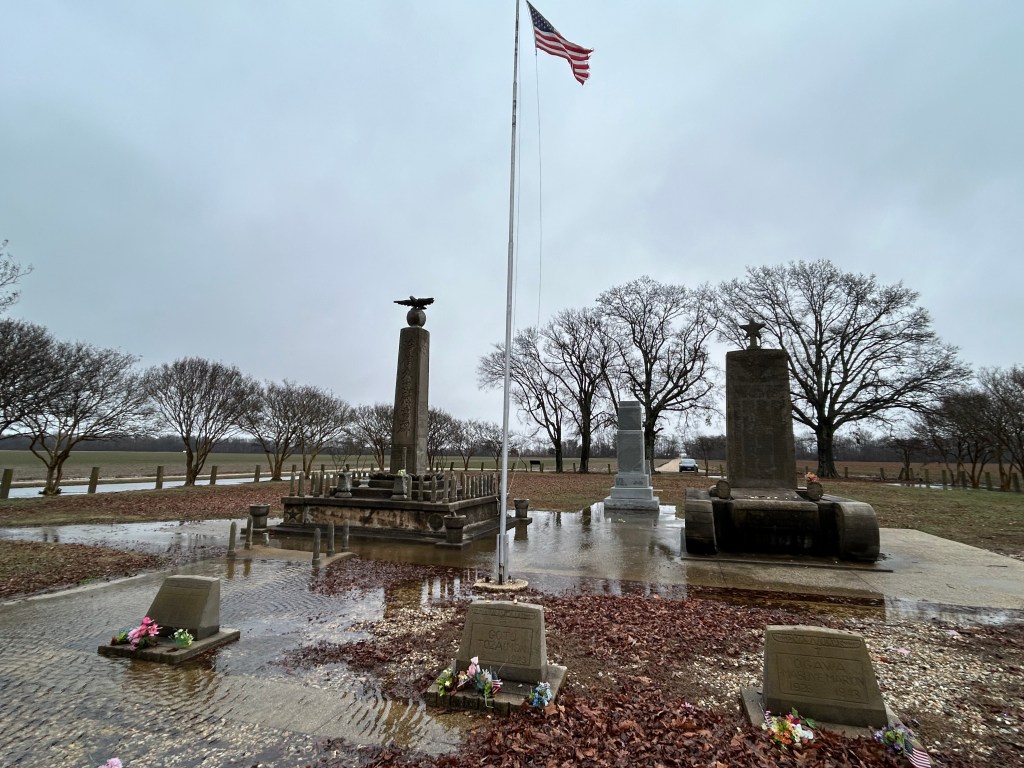
The last American concentration camp to close was Rohwer, Arkansas, deep in the delta near the Arkansas Post. There’s an echo of history, since that site is part of the Trail of Tears, when another group of Americans were forcibly removed from their homes unconstitutionally and sent to live in government reservations. The vast camp soon returned to farmland, so little remains besides the cemetery above. Several of the graves mark infants and elderly inmates. The monument to the right is to the 442nd Regimental Combat team, the most highly decorated unit in US military history. They served in Europe, while their families were imprisoned. 

The neighboring town of McGehee maintains the excellent WWII Japanese American Internment Museum about both Rohwer and Jerome. The sculptor Ruth Asawa was imprisoned here. Another inmate at Rohwer was a 5 year old boy named George Takei, who later played Lt. Sulu on the original Star Trek. 

“And it became normal for me to go to school in a black tar-paper barrack
and begin the school day with a pledge of allegiance to the flag.
I could see the barbed wire fence and the sentry tower
right outside my schoolhouse window
as I recited the words,
‘with liberty and justice for all’.”

George Takei, speech at the museum on 16 April 2018

Jerome

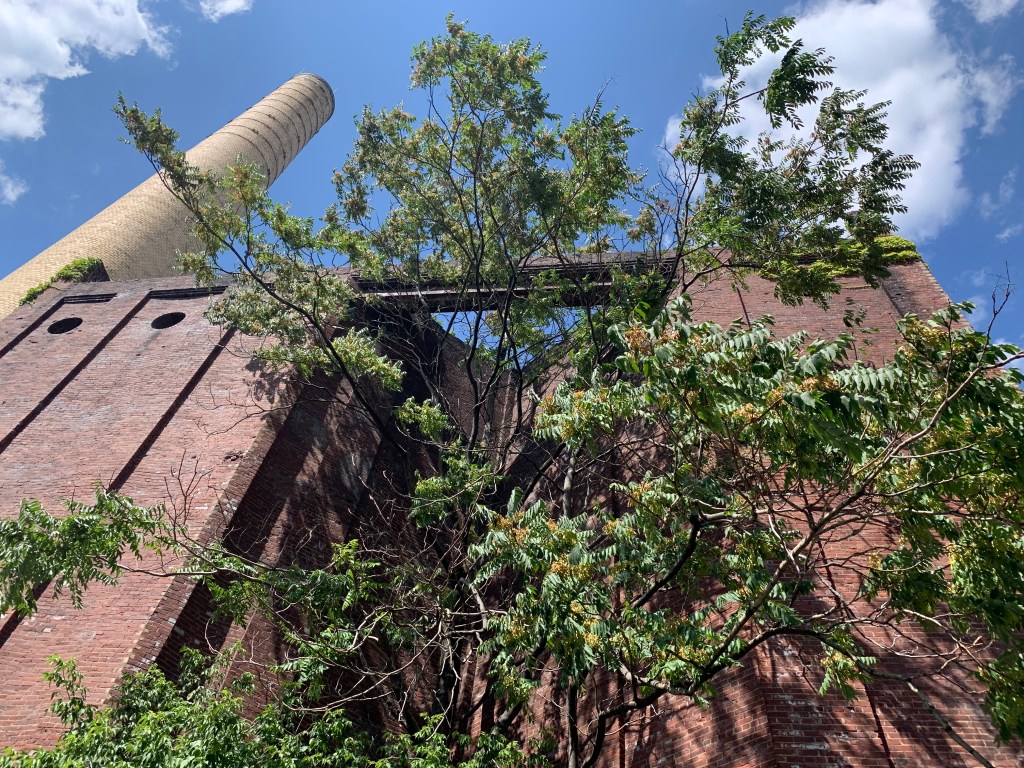
Jerome was the last American concentration camp to open and the first to close, as it was converted into a POW camp for Germans. The military acquired the land as a result of a tax default, and over 8,000 Americans of Japanese descent were incarcerated here in the southeast corner of Arkansas, deep in the Mississippi Bayou. The Governor of Arkansas insisted that none of the prisoners be allowed to remain in his legally segregated state after the war and that all of the guards be white. When it closed, the prisoners here were mostly transferred to the other camp in Arkansas, with some sent to Amache, Gila River and Heart Mountain; ‘trouble makers’ who protested had already been sent to Tule Lake. Besides the monument above, there is a deteriorating old smokestack from the infirmary visible in the distance to the right. Nothing else remains, and the land is now a working farm. 

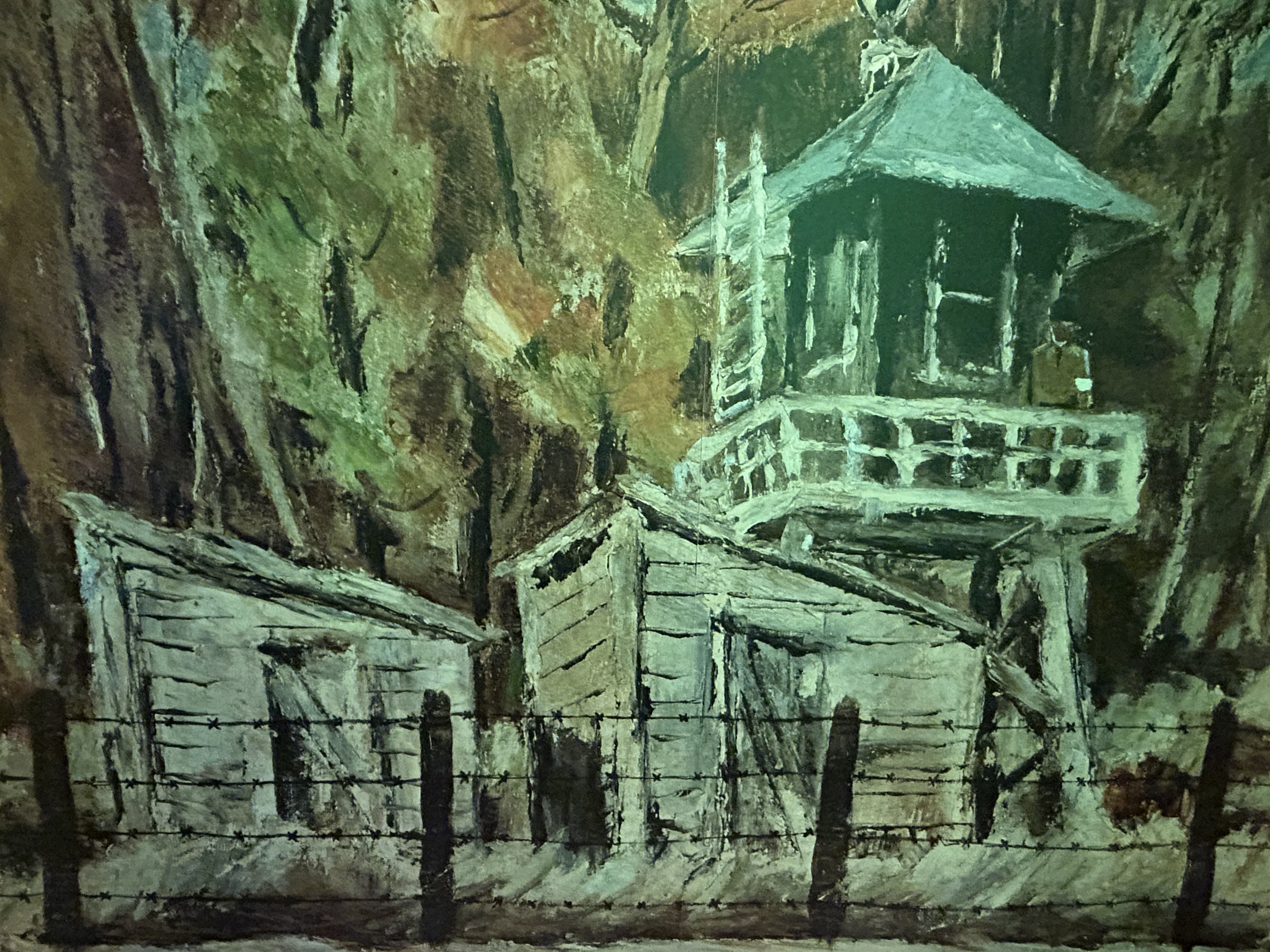
Nothing except a shameful unconstitutional history, a duty to be better Americans, and memories. Below is detail from a painting by Henry Sugimoto showing how he remembered his time at Jerome. The painting is on display with many other exhibits at the WWII Japanese American Internment Museum in McGehee about 20 miles north. The museum is excellent, open Thursday to Saturday, and is the result of talented, caring and dedicated townspeople working to preserve this important history without federal funding. 

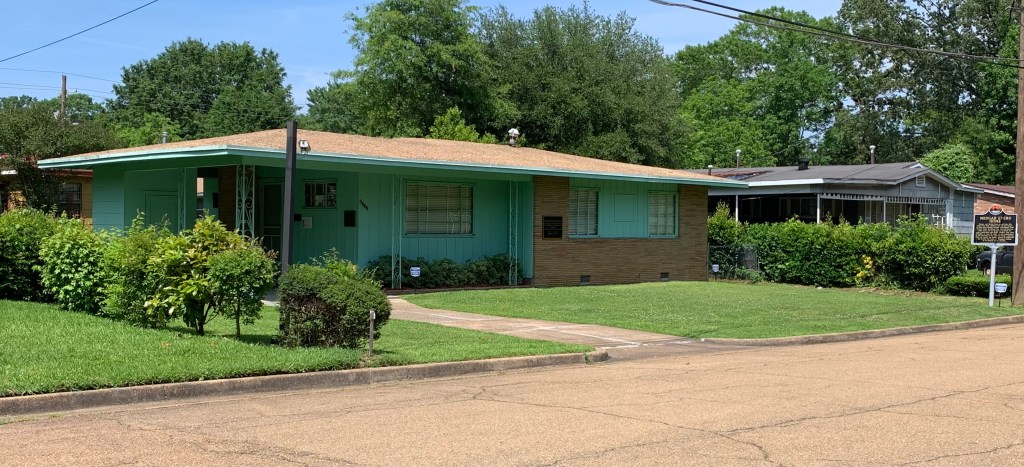
Emmett Till and Mamie Till-Mobley National Monument

”Let the people see what they did to my boy.”

Mamie Till-Mobley

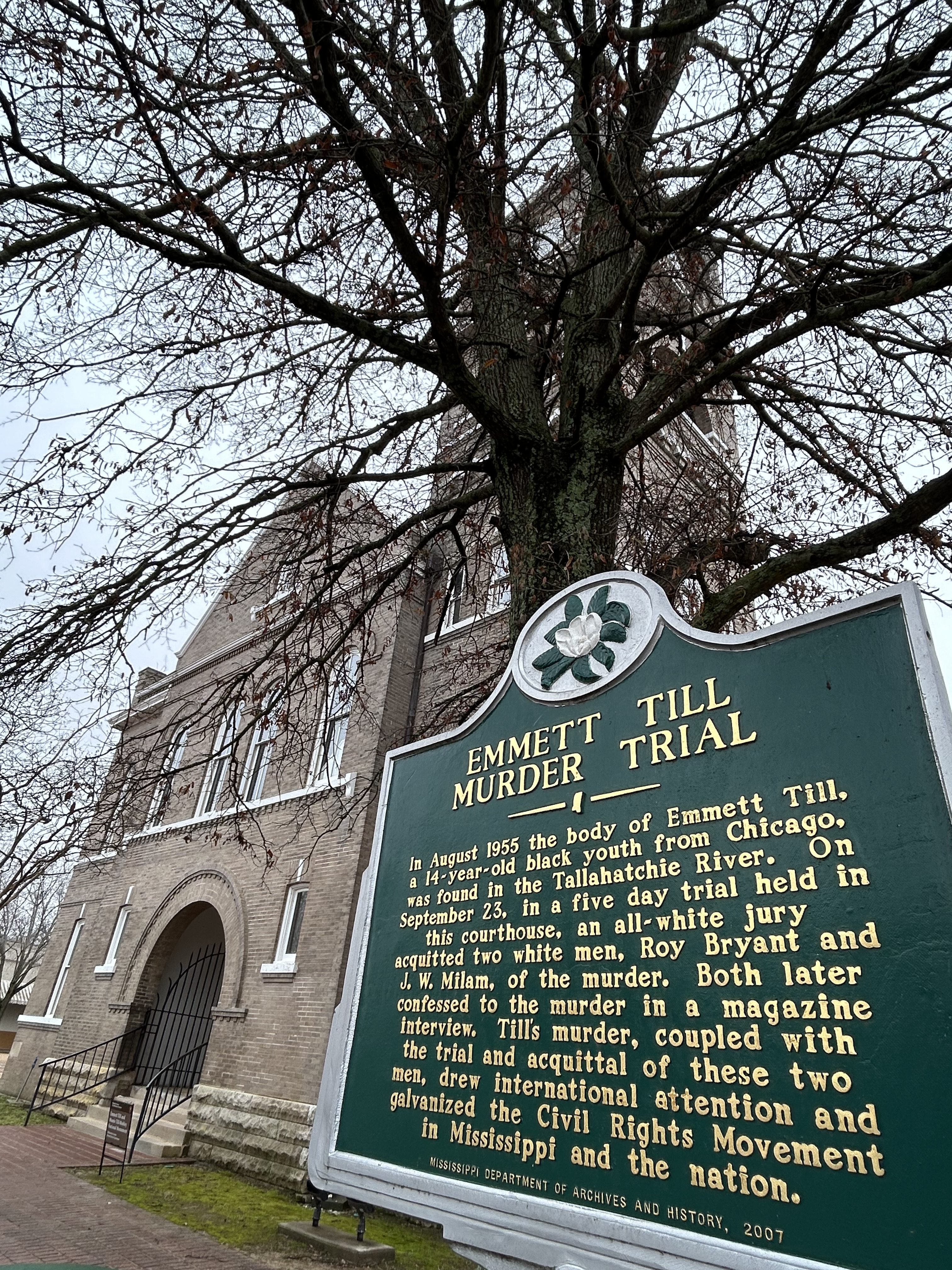
The animosity against African Americans, especially in the Deep South, is hard to comprehend, but it is deep, real, persistent and extremely dangerous. Emmett Till’s mother warned him, but even she underestimated the risk. In late August of 1955, Emmett Till was kidnapped from his great uncle’s home by a shopkeeper’s husband and his half-brother, who accused Emmett of whistling at the shopkeeper, a white woman. From past midnight to pre-dawn, the two men, along with several others, held Emmett, aged 14, in the back of a pickup truck, drove around the county, terrorized him, tortured him, shot him and dumped his body in the river. Witnesses reported hearing Emmett’s screams all over town for hours. His great uncle reported the kidnapping, the men were arrested, and the body was found a few days later. His mother, saying “let the world see what I see”, insisted on an open casket at the funeral in Chicago. Jet magazine published photos of his brutalized body. His mother became a lifetime activist, author and motivational speaker on education, poverty and Civil Rights with the NAACP. Many consider Emmett Till’s killing to be the beginning of the Civil Rights Movement, not least because Rosa Parks cited Emmett as the reason she kept her seat on the bus in Montgomery on 1 December 1955. 

The trial was a foregone conclusion. Outside the courthouse (below) stood a statue dedicated to the “Heroes” of the Confederacy. Inside there was no justice. Instead of jurors, police, court officers and elected officials defending the Law, the courthouse became the focal point of a deep criminal conspiracy, based on racism. Witnesses were intimidated, hidden, immunized and silenced. Emmett’s great uncle testified at the trial, pointing out the kidnappers and murderers, and then he left town immediately and went into hiding under a false name. And for many years afterwards, there has been a concerted effort to conceal the truth. Evidence lost. Signs have been repeatedly shot and torn down. Historic artifacts and structures intentionally left to ruin or demolished. One witness, in hiding for decades under another name, still received death threats demanding silence. The confederate statue still stands in front of the courthouse, just left of the photo. 

But despite the legacy of lies, terror and violence, people still work to tell the truth about Emmett Till. Especially if you’re exploring the new monument’s sites in Illinois and Mississippi, I recommend reading the darkly fascinating stories in the Emmett Till Memory Project app, after being introduced to it by one of the contributors at the Emmett Till Interpretive Center across from the courthouse in Sumner, MS. Emmett Till’s coffin is on display at the National Museum of African American History and Culture in Washington DC. His name was given to the Anti-Lynching Act of 2022. And this new national monument was established by President Biden on 25 July 2023, on what would have been Emmett Till’s 82nd birthday. 

Tule Lake National Monument

Sometimes the story is more important than the scenery, and Ranger Danny told it well. In April 1942, US citizens of Japanese descent on the west coast were given 2 days to pack 2 suitcases and check in to temporary relocation centers, losing their freedom and property in violation of the 4th Amendment. They were not given due process in violation of the 5th Amendment. FDR’s order was popular—especially among those who planned to take their property—, and the wartime Supreme Court partly upheld it, in the infamous Korematsu decision, while simultaneously partly dismantling it, in Endo. Reagan apologized and offered survivors small compensation.

Many Americans grew up either not knowing much about this or believing it justified by war. The Japanese military attacked Pearl Harbor without warning, after invading their neighbors, occupying Shanghai and committing atrocities in Nanjing. When FDR’s order went into effect, Japan had taken Hong Kong and Singapore, and they held several thousand American civilians as prisoners for the duration of the war, with insufficient food, forced labor and a high death rate. Americans did not want to prove themselves better; they wanted revenge.

And yet the Germans had acted similarly, with sneak attacks, invading neighbors and taking prisoners, but the US issued no similar order to imprison US citizens of German descent. Americans lost relatives in battle to both foes. Both aggressive countries employed spies. Japanese Americans do not appear different from other Asian Americans, so Japanese spies could still operate on the west coast. There is no justification for abrogating the rights of Japanese Americans, not expediency, not greed, and certainly not racism.

These ten American Concentration Camps were a failure of leadership, imagination, morality, of our government and of rational behavior. Having dispensed with our Constitution, the rules were arbitrarily made up on the fly. The US military defined a huge ‘exclusion zone’ from Washington state to New Mexico, fearing another naval assault in Arizona?!? Hawaii, despite being the location of Pearl Harbor, detained few Americans of Japanese descent. Japanese Americans who already lived in Idaho, Utah, Wyoming, Colorado or Arkansas witnessed their fellow citizens arriving in their states and being imprisoned for having the same cultural background as they did.

The US military still wanted to draft soldiers from the citizens they detained, so they created a loyalty questionnaire to invite them to fight in Europe. The government then started using the questionnaire to divide the incarcerated into loyal or not. The questions were convoluted, rewritten in some camps and many were misadvised on how to respond. Since Tule Lake only used the original version, they had a higher ‘failure’ rate, so they got a reputation for disloyalty. Inmates exercised their 1st Amendment right to protest, and the military sent in tanks. Then they had the inmates build a concrete jail inside the barbed wire, machine gun manned watchtower prison. One man was interrogated for 12 days because his mother accidentally played a borrowed radio. Many inmates here were pressured into renouncing their US citizenship.

One reason that most Americans don’t know much about this history, or have mistaken views, is that the US government intentionally misled the public about conditions here. The press was invited in to see the one barracks in Tule Lake where everyone was happy and would receive steak for dinner in return for cooperating, while the remainder of the massive camp was suffering from basic food & water shortages. The image of the ‘happy Japanese interns’ was amplified as propaganda, which some visitors still repeat today.

The highly recommended ranger tour is given on summer weekends out in the field (above) and in the jail, complete with jail cell bars saved by a local to preserve the real story. The camp is 10 miles outside town, per military requirement, and there are a few original buildings, the top of a watchtower and a stone monument, besides the small visitor center. The site is in the far northeast corner of California, in the reclaimed lake bed, quite close to Lava Beds. It’s remote, but important to visit.

Klondike Gold Rush National Historical Park

Seattle is a fascinating city, and this park offers a free walking tour of the Pioneer Square Historic District which teaches you about how the city overcame various challenges to grow. But the focus here is on the Gold Rush of 1897. To just report the numbers, 100,000 people rushed off to find gold, 70,000 bought supplies in Seattle, 40,000 reached the Klondike (mid-border of Alaska and Canada), 20,000 tried prospecting, 300 ‘struck it rich’ finding over $500,000 in gold, and only about 50 didn’t waste their money away digging for more. So the store above represents the only real winners of the rush, Seattle’s merchants. The stories are fascinating, although darkly tragic in many cases.

There’s another section of the park on Bainbridge Island across from Seattle, which is a memorial to the first US citizens of Japanese descent to be forcibly removed from their homes and sent to Manzanar and Minidoka. There is a beautiful cedar and stone memorial wall there along with names of the ‘interns’ and origami cranes, each representing a fragment of hope that a wish comes true. More than in some other places, many of the victims returned to their homes after the war. The main Klondike visitor center in Seattle also has a small exhibit about this American experience.

Statue of Liberty National Monument

My remaining parks are fewer and far between, so starting today I’m posting every other day.

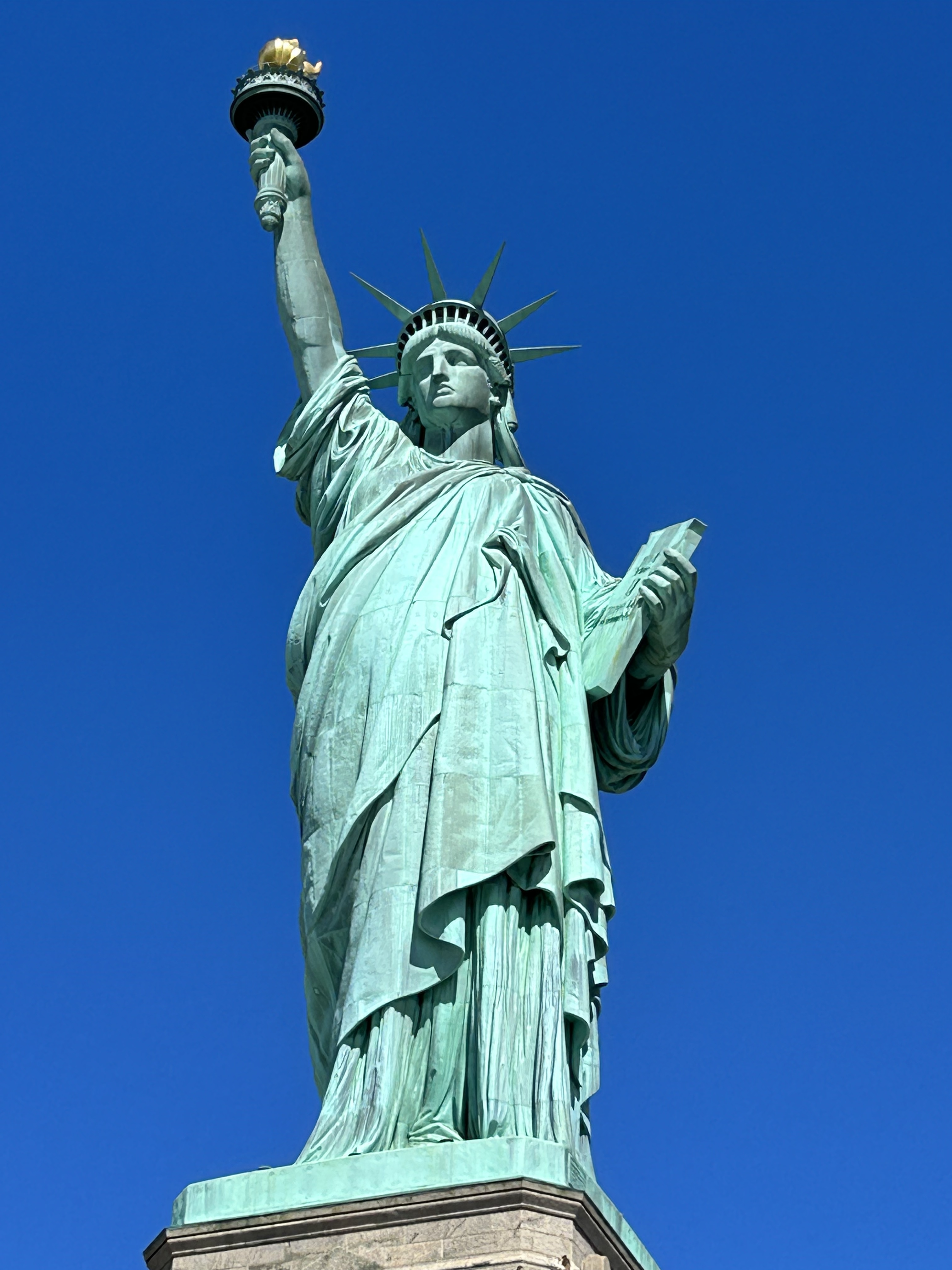
Yes, I took the ferry. No, there is no other way to visit. As a reminder, I have two goals: first to visit the parks without using any carbon fueled vehicles and second to enjoy the parks even if that requires brief carbon vehicle use. So I arrived in NYC by car, walked to Castle Clinton—which is an official Statue of Liberty park office (stamp available)—, and then took the ferry. I wasn’t going to skip it, as it is my favorite iconic park.

I’ve been here before, as a boy, a tourist, with my kids, and now on my own. As usual, some folks visiting from abroad ask me to take their photo, since this World Heritage Site is the highlight of many trips to America. For 62 years immigrants came past the statue on their way to Ellis Island, now a fascinating part of the park. America, an immigrant nation, welcomed them to this huge city in this grand harbor under Lady Liberty’s torch, young and old, rich and poor, from all parts of the globe. Now, together in the city, we share cuisines from around the world, and we learn to overcome the petty ignorance that must never separate us.

“Not like the brazen giant of Greek fame,
With conquering limbs astride from land to land;
Here at our sea-washed, sunset gates shall stand
A mighty woman with a torch, whose flame
Is the imprisoned lightning, and her name
Mother of Exiles.”

Emma Lazarus, “The New Colossus”, 1883