Weir Farm National Historical Park

When I say that I don’t like J. Alden Weir’s paintings, don’t misunderstand me. I was kicked out of my only art class at age 9 for drawing sketches of a battle including graphic illustrations of stick figures getting blown apart by WWII tanks & planes. I couldn’t tell you the difference between a tint or a tinge from a tincture. One of my favorite pieces of modern art remains the remains of an artist named Art, who, according to his will, was cremated and put on display. So, don’t judge Weir by my predilections.

Actually, I do like “On the Porch”, a Japanese inspired watercolor of two of his daughters painted here on his farm. But I don’t like “The Red Bridge”, where he contrasts a natural setting with a railroad bridge, and I find his landscapes to be too muted and subtle in color to hold my attention. Unlike some European impressionists, Weir didn’t typically paint laborers, preferring farm animals or his family (although he sold paintings to help the unemployed). In any case, tastes change, so creativity must overcome tastes.

Weir, the son of a West Point drawing instructor, helped found American Impressionism. Where his brother went to Hudson Valley, Julian went to Paris, where he overcame his initial horror of Impressionism to adopt some of the techniques. Soon he was back in the US, exhibiting impressionist paintings with his friends, Twachtman, Ryder, and others who organized a group of ten artists to promote the new style. His daughters grew up to be artists as well, and one married one of Brigham Young’s grandsons, Mahonri Young, whose studio is also on the Weir Farm.

While the tour of Weir’s house and studio is interesting, the magic of the place is in the artists who continue coming here to paint. Art colonies and communities constantly influence and depict each other, as when a student of Saint-Gaudens created a bronze relief of Weir. There’s an artist-in-residence, and a small army of artists of all levels who continue to see the new in the old barn, gardens, fields, forest, pond and porch. Some of their paintings are in bold, bright dramatic colors, which I like.

But honestly, real nature is subdued and muted in color. Light on leaves reflected in water is blurred. Roots and rocks on dirt trails near muddy banks are all shades of brown and gray. The real bear in the woods here isn’t kaleidoscopic. Nature is messy, mostly dully boring and awkwardly chaotic, with one tiny amphibian emerging from the algae to catch one’s eye on a stone before almost being trampled. Hmm, maybe I should go back and take another look at Weir’s landscapes.

Thomas Cole National Historic Site

Like the Oklahoma City Memorial and the Touro Synagogue, this is an affiliated site that’s run separately from the park service, so there’s a $15 fee for the house tour. I’m a fan of Cole’s The Course of Empire set of paintings, which depict the same landscape from Nature to height of civilization and to forgotten ruins. The reproduction in his old studio above is from another series called The Voyage of Life.

Cole immigrated from England in 1818 at 17 and settled in the Catskill area of the Hudson River Valley to become a painter in 1825. Witnessing both the natural beauty and its destruction due to rapidly growing industry, Cole created romantic and allegorical landscapes to convey both his love of nature and his sadness at its devastation. He was extremely influential, and there’s a whole Art Trail devoted to the landscape artists who followed his style.

“Nature has spread for us a rich and delightful banquet.

Shall we turn from it?

We are still in Eden;

the wall that shuts us our of the garden

is our own ignorance and folly.”

Thomas Cole

Saint-Gaudens National Historical Park

Ranger Naomi, an artist, was kind enough to put up with my incessant, ignorant questions during the outside tour this morning. We discussed the stunning Robert Shaw memorial depicting the Massachusetts 54th volunteer regiment marching in Boston, the statue of Lincoln that drew Saint-Gaudens here to find lanky & tall models, how Daniel Chester French considered Saint-Gaudens his mentor although they were the same age, the collaboration evident in the Farragut monument, his nude model for the huntress Diana (his mistress), Victory on the Sherman monument, and more, including how “poor artists imitate, good artists copy and great artists steal”. All these glorious pieces can be seen around the country, or, better yet, all here in one beautiful garden, where the sculptor worked and led a colony of artists, below a lonely mountain and above a covered bridge. This is my favorite art site.

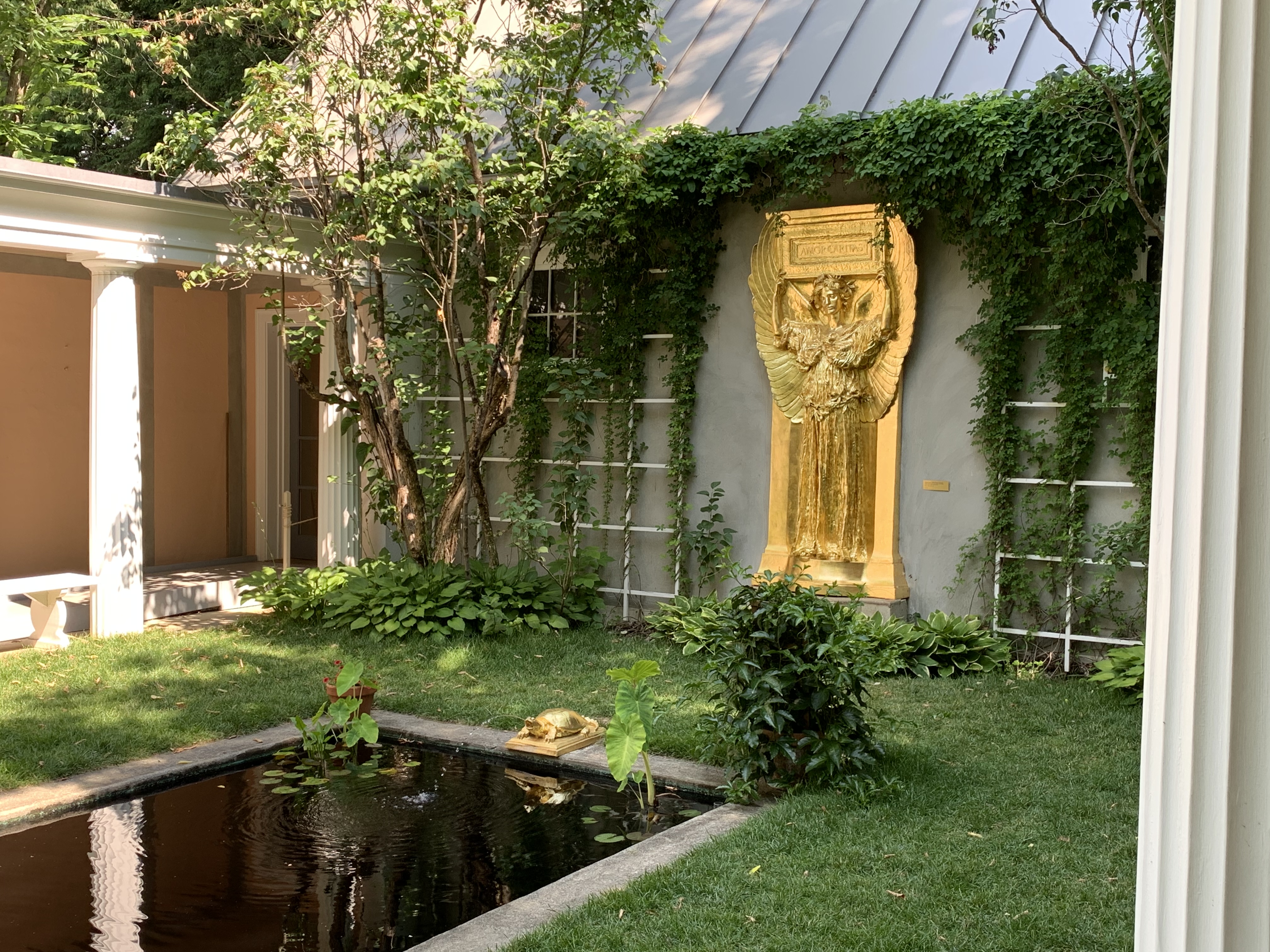
This piece, “Amor Caritas”, set in a lovely atrium, is also modeled by Augustus Saint-Gaudens’ mistress, whose love-child’s education was paid for by his wife. I often see the Latin mistranslated as “Angel of Charity” or “Love and Kindness”, but my seven years of Latin study says different. While in a church or graveyard setting for which the piece was created, it might be acceptable to translate it that way using church Latin, but that’s not what it originally meant, especially to someone as familiar with Greco-Roman themes as Saint-Gaudens. To the Romans, before their language was coopted by medieval Christians, I believe the phrase would have meant something more like “Oh the costly affair”. (Amor meaning physical love, and Caritas, “the expensiveness”, positioned after as vocative case to call out). At least, it was a double-entendre.

Minute Man National Historical Park

OK. First thing you need to know is to avoid Lexington; nothing to see or do there. Sure, the first shot of the day (4/19/1775) may have been fired there (unknown who or why), but the untrained militia scattered immediately. Next, unless you’re interested in walking through the woods along the Battle Road and imagining the battle scenes, you can probably skip the Minute Man visitor center too. They have a film, in case you don’t know who the Minute Men were, but the action is all at the North Bridge in Concord.

“By the rude bridge that arched the flood,
Their flag to April’s breeze unfurled,
Here once the embattled farmers stood,
And fired the shot heard round the world.”

Ralph Waldo Emerson

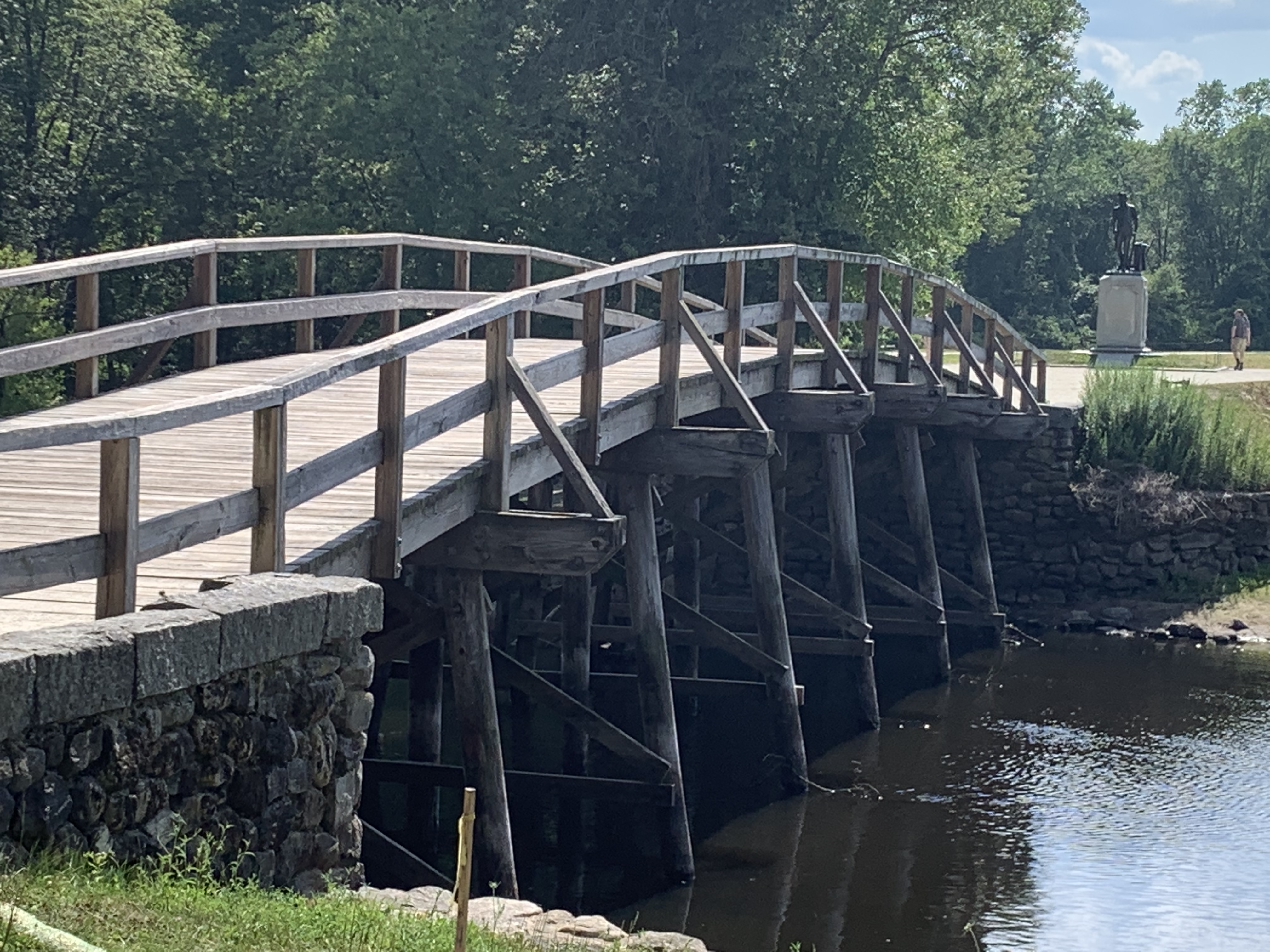
Emerson was standing at the Old North Bridge in Concord when he read that line to commemorate when the Minute Men (militia with extra training) were ordered to fire the first shots of what became the Revolutionary War. The British were thwarted from crossing the bridge and taking the arsenal on the hill behind the statue, and they were forced to retreat to Boston pursued by small groups of Minute Men engaging them in small skirmishes along the way. The quote is carved in the base of the famous Daniel Chester French statue across the bridge above.

Emerson’s grandfather witnessed the battle from The Old Manse, which is part of the site and later was home to Nathaniel Hawthorne. Emerson was also friends with the Alcott’s, and another part of the park is the Wayside where Louisa May Alcott lived. And, since you’re in Concord, you really should visit the Concord Museum, where you can see Paul Revere’s lantern, learn about Emerson’s other friend Henry David Thoreau, and see the excellent new exhibit that describes the battle in detail. All four literary luminaries are buried on Author’s Ridge in Concord.

Again, any propaganda you may have heard suggesting that Lexington was somehow historically important is nonsense. (And I should add that a group of cowardly Lexingtonians snuck into Concord to vandalize and destroy an early monument built around the 50th anniversary in a pique of petty jealousy). ‘The shot heard round the world’ was fired in Concord, likely by Minute Men from Acton, who were in the front and suffered the first casualties, because that order to fire on the British was understood to be an act of open rebellion that could lead to war. Soldiers on both sides blamed the other for firing first. There’s another visitor center over the bridge and past the statue that describes the day’s action. If you get a chance to hear the ranger talk “Monuments & Memories” about how the meaning of the battle has changed over time, I highly recommend it. Obviously, this is my favorite Revolutionary War site.

Longfellow House – Washington’s Headquarters National Historic Site

The stately home to the right should be the subject of my photo, or perhaps the meticulously preserved interior, but I’ve always loved the garden. Brattle is a quiet street off of Harvard Square, and the garden is a lovely little oasis for contemplation. George Washington doubtless had little free time after he set up his command here to build a revolutionary army. The British had retreated to Boston (along with the owner of this house) after the Minutemen forced them back in Concord. A siege ensued, and the British were unable to break out of the city, taking heavy losses at Bunker Hill. Then Washington arrived here, organized, trained, and motivated his troops for nine months. In the middle of an exceptionally cold winter, using oxen to drag sledges quickly over the ice, Henry Knox delivered cannon captured in New York to the hills surrounding Boston, and the British evacuated the city permanently.

Some sixty years later, a young literature professor named Henry Wadsworth Longfellow arrived here to rent a room from the indebted landlord, and he was thrilled to stay in the famous headquarters of General Washington. His father in law bought the house for the young couple, and Longfellow wrote the poems that many of us memorized as children: A Psalm of Life, The Midnight Ride of Paul Revere, Song of Hiawatha, the Courtship of Miles Standish, and Tales of a Wayside Inn. Fortunately for us, his family protected his legacy in exceptional detail, along with heirlooms from his colorful relatives, such that “if Longfellow returned, he would be able to find his books and most of his things exactly where he left them”. The tour explains the history of all kinds of people who lived here, from the first owner’s slaves to the flamboyant Longfellow descendant who both preserved the original artifacts and entertained here in style.

“All are architects of Fate,

Working in these walls of Time;

Some with massive deeds and great,

Some with ornaments of rhyme.”

Henry Wadsworth Longfellow, 1849

Frederick Law Olmsted National Historic Site

Yet again, I arrived at a site only to realize that I had visited before, possibly even before they became a park unit. I also realized that I’ve been to many of his architectural landscape sites: the National Cathedral, the El Tovar Hotel, Arlington National Cemetery, the Roosevelt Memorial, the Biltmore Estate, the US Capitol Grounds, St Francis Woods, Redwood National Park, Boston Public Garden, the National Mall, Everglades National Park, Riverside Park (NYC), Central Park (NYC), Niagara Falls, Yosemite, UC Berkeley, Stanford, Columbia, Balboa Park, and a number of other sites, mostly in New England. And that’s just a tiny fraction of his work. You’ve probably visited more of his sites than you realize.

Olmsted was a self-educated big-picture guy. He presented a vision and hired experts to make it real. When I visited as a child, I felt small next to the hemlock outside his front door, cozy in his sunken garden, curious on his path into the woods, and free as I burst out on his lawn. What I learned today, is that those feelings were intentionally created with earth, rocks, trees, vines, bushes and lawns. I recognized hints of the Suzhou Gardens that Olmsted must have seen on his trip to Asia, and small design elements that he employed on a grander scale across our country. He said that “nature abhors a straight line”, and unlike the formal gardens of Europe, his designs organically blend nature together in a way that people enjoy instinctively. His home here is a good place to see what landscape he chose for his family, and the (mostly weekend) tours, both inside and outside are educational and inspirational.

“You may thus often see vast numbers of persons brought closely together, poor and rich, young and old… each individual adding by his mere presence to the pleasure of all others, all helping to the greater happiness of each.”

Frederick Law Olmsted, describing the importance of lawns and public spaces

Fort Union Trading Post National Historic Site

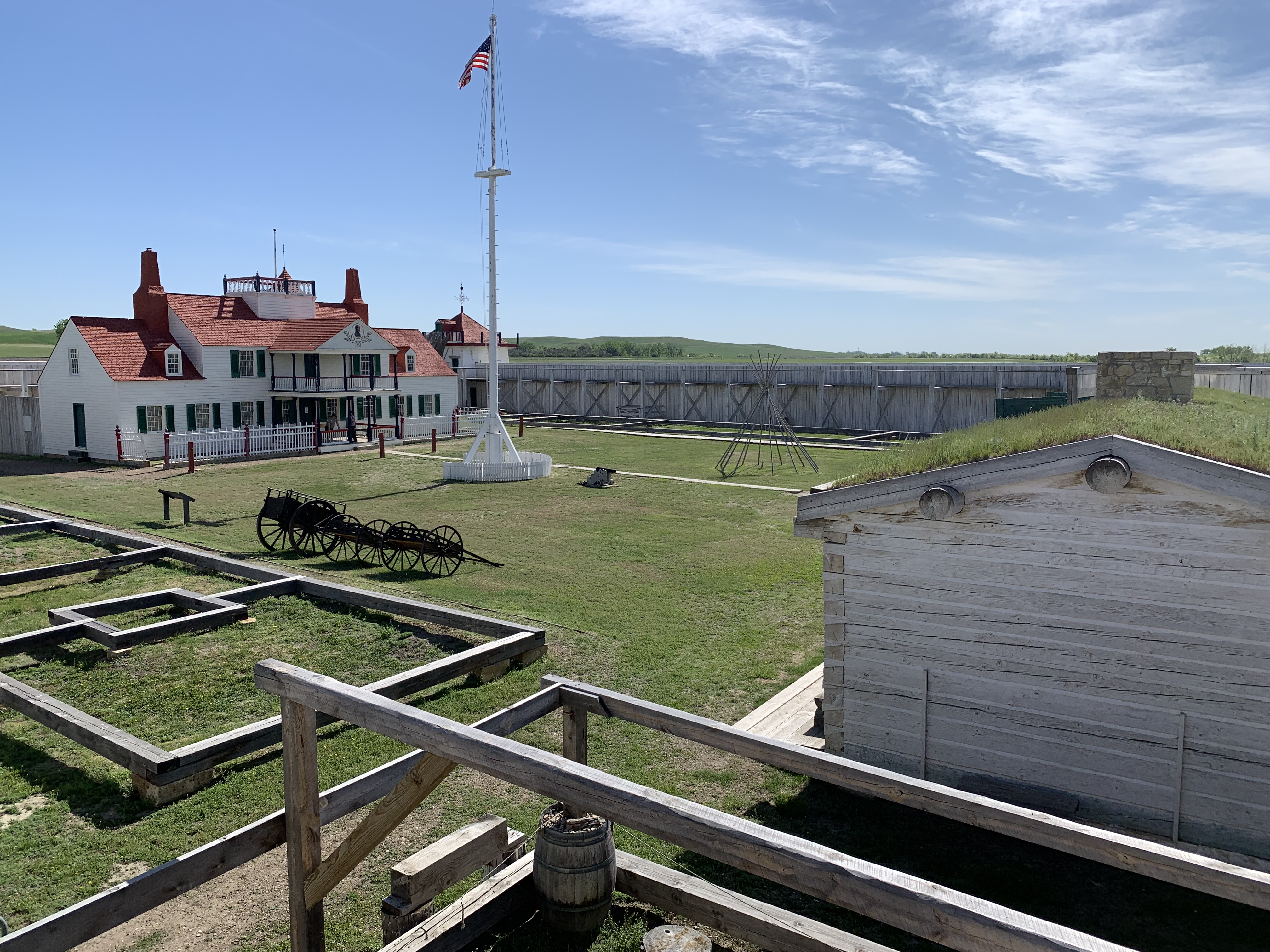
Not to be confused by the other Fort Union, this was strictly a trading post built for the fur trade at the invitation of the Assiniboine. The post was open for 40 years, peacefully and profitably trading with the Native Americans. Large numbers of natives brought stacks of furs, which were sorted and pressed outside the fort to determine payment, and then at a window they bought various goods, especially cloth. The large fur press outside the fort is basically a long pole on a fulcrum to measure fur stack thickness. Fort Vancouver in Oregon has one too, reconstructed from photos, but the rangers didn’t know what it was. (I showed them a picture and told them to call my favorite rangers here.)

Audubon came here to study mammals after finishing his bird book. Catlin came here to paint portraits of natives and portray their lives without the hateful bias that was common at the time, and he first suggested a series of national parks to protect the beautiful, historic and vanishing way of life in the West. The rangers here were among the best I’ve heard at bringing the old fort to life with engaging stories.

There’s also a small plaque, near where Lewis & Clark must have stopped, to a national parks founder named Mather, praising him for good works that “will never come to an end”. But if we lose the climate fight, many of our national parks will fail in their mission to protect nature and fail to pass that natural world on the future generations.

Carl Sandburg Home National Historic Site

As a teen, Sandburg rode the rails in boxcars, like a hobo, to see the country, from Illinois to Colorado. ”I’m an Idealist.” He once wrote. ”I don’t know where I’m going, but I’m on my way.”

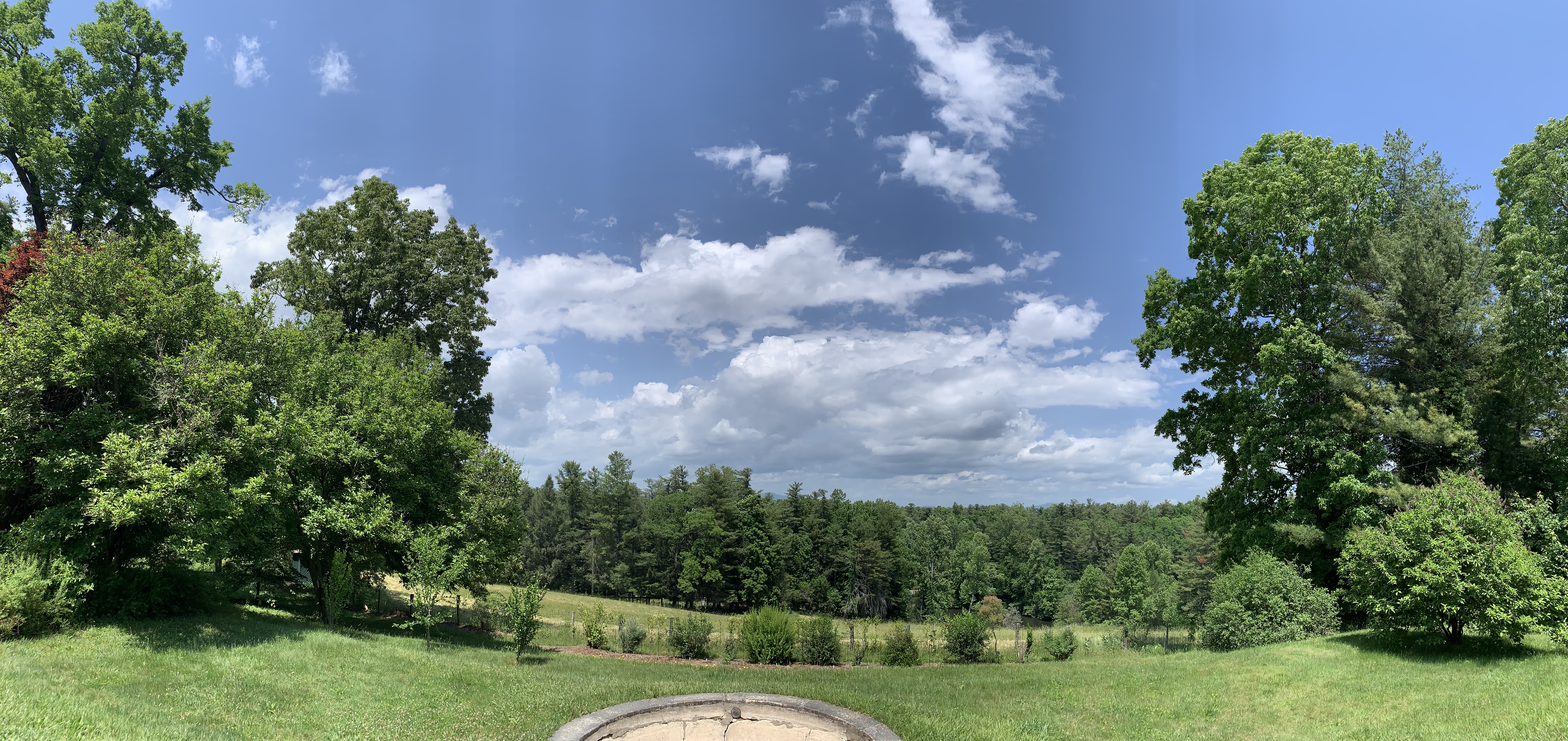
The prize winning poet & author enjoyed solitude in nature, and he bragged that his home up in the foothills here included “millions of acres of sky”. It’s a beautiful and peaceful spot with a fish pond and goats.

It is necessary now and again

for a man to go away and experience loneliness;

to sit on a rock in the forest and as himself,

”Who am I, where have I been, and where am I going?”

— Carl Sandburg

New Orleans Jazz National Historical Park

On a New Years dare, a young Louis Armstrong fired a pistol in the air here and changed both his own fate and the world. He was taken from his home here with the Karovskys (recently reduced by hurricane to a brick pile above) and sent to reform school, where he joined the band. The Karovskys lent him money for a trumpet, and he joined King Oliver’s band playing the Eagle Saloon in the foreground and the Iroquois Theater next door. Remembered by many for the “Wonderful World” end of his career, it was his astounding trumpet skills that made him a breakthrough star. He recorded both the first Jazz solo (multi-bar & improvisational) and the first use of scatting. Despite racial barriers, he played all over and converted many into Jazz lovers. Of all his accolades, he was proudest of being Mardi Gras Zulu King in his hometown.

The block is eventually going to be restored. Sorry for not giving NOLA a longer entry, but I’m posting sporadically from the road. Lessez les bons temps rouler.