Golden Gate National Recreation Area

This most-visited park protects land in San Francisco, Marin and San Mateo Counties, but most of the fun stuff for visitors is near the Golden Gate Bridge. The southern units include the unimaginatively named Ocean Beach, Fort Funston which is great for watching hang gliding, Rancho Corral de Tierra for horseback riding, and Sweeney Ridge which has views, hikes and wildlife. If you’re on your way north to Muir Woods and Point Reyes, then you can wind your way up the coast past Muir and Stinson Beaches, past Bolinas Lagoon and through the bucolic Olema Valley. If you have young kids, a stop at the Bay Area Discovery Museum is fun, especially if you’re going to Sausalito. The urban units include Alcatraz, Fort Mason, the Presidio, China Beach, and Lands End near the Legion of Honor art museum.

But if you’re focusing on San Francisco, then you may want to start with the bridge. On the north side, there are nice views from the Marin Headlands, not just Vista Point, but through the tunnel to the Marin Headlands along the loop road to the old forts. On the south side, there are good views from Lands End to the Presidio. If you’re taking photos, note that the north end of Baker Beach is clothing optional. Crissy Field, the naturally restored area once used by the Wright Brothers, is popular for kite surfing, which must be a fun way to see the bridge. Fort Point is under the south east side of the bridge, about as close as you can get without being on the bridge. At the last northbound exit, there’s a visitor center with a small parking lot and info about the bridge, and if you want to go on the bridge, one side is for pedestrians, the other for bicyclists and the middle for cars ;).

The Presidio was originally fortified by the Spanish in 1776, passed to Mexico, and then was taken by the US around 1846. It was an important military base for every US conflict for the next 140 years, and it includes a national cemetery, an officers club dating back to Spain, a former military hospital now used by Lucasfilm (see Yoda above), and a museum dedicated to Walt Disney, who stole some of his best ideas from Oakland’s Fairyland, along with a whole list of other interesting projects. The park leases many of its historic buildings as private residences. I don’t normally write long travel guides to parks, but I can’t help it as I used to live near the Sutro Baths ruin. OK, one last tip. Reserve tickets for Alcatraz months earlier than you think is necessary and try to do the night tour if possible. Unfortunately, the only way out there is by fossil fuel ferry.

Before the bridge was even conceived, the opening from the Pacific into the San Francisco Bay with passage up the Sacramento River was known as the golden gate, and people came from all over the world to get rich quick. In Chinese the area was called 金山 meaning ‘Gold Mountain’, and San Francisco is still called 舊金山 or ‘Old Gold Mountain’ today. (Many Chinese immigrant dreams were quashed by racist immigration policies, despite laboring on the railroads, levees and in a variety of businesses). Of course, nowadays, the path to riches is in the Bay Area’s high tech industries, where dreams are spun into gold. Which is why Yoda is a fine image for the Golden Gate NRA.

Rocky Mountain National Park

Rocky was not what I expected. The strict timed entry system limits access to two hour windows and sells out within minutes after 5 pm the day prior, unless you reserve up to two months in advance in releases on the first of each month or unless you book a campground. The headwaters of the Colorado River are lovely, but not a huge source of water for over 40 million people downstream. The wildfires have been obviously devastating, especially in the western side of the park. The unique alpine landscape along the trail ridge road was smooth and barren, with low mats of tiny waxy hairy plants and, although I didn’t see any, only one species of bird, the Ptarmigan, tough enough to live there year round. Amid hail and high winds I failed at photography along the Trail Ridge Road over 12,000’, but the views were desolate, stormy and magnificent. Only after descending down to Upper Beaver Meadows did I manage to photograph a herd of elk and listen to the bull elk bugle.

In the line of cars, I keenly felt how masses of humans put pressure on fragile, limited nature. There were far more elk photographers and cars than elk. Even in unpleasant weather near the end of the season with controlled entry, every parking lot was full, and on the short trails I saw far more hikers than total wildlife. The best experience might be to book a summer campground at Bear Lake and try to hike into the backcountry. Park visitors love wildlife, but we’re overwhelming all the other species and increasingly encroaching on their last refuges. The towns surrounding the park are packed with galleries, gift shops and mini golf. Skiers fly into Colorado resorts and rent gas guzzling SUV’s, while the Congresswoman from western Colorado denies that the climate crisis exists. We are on the wrong path.

Great Smoky Mountains National Park

This little guy walked out on the trail through the meadows in Cades Cove. There’s a beautiful loop drive around there with an old mill, horses playing and a spectacular natural environment. Nice campground too. The road closes to traffic some days, but there are miles of trails, creeks, a lake and mountains to explore by foot, horseback, boat or bicycle. This is one of the most visited parks, one of my favorites for wildlife, a World Heritage Site and a UN biosphere, but I think most people just pass through quickly. My last trip here, I drove through far too quickly, without any idea what I was missing. Just lovely.

Mammoth Cave National Park

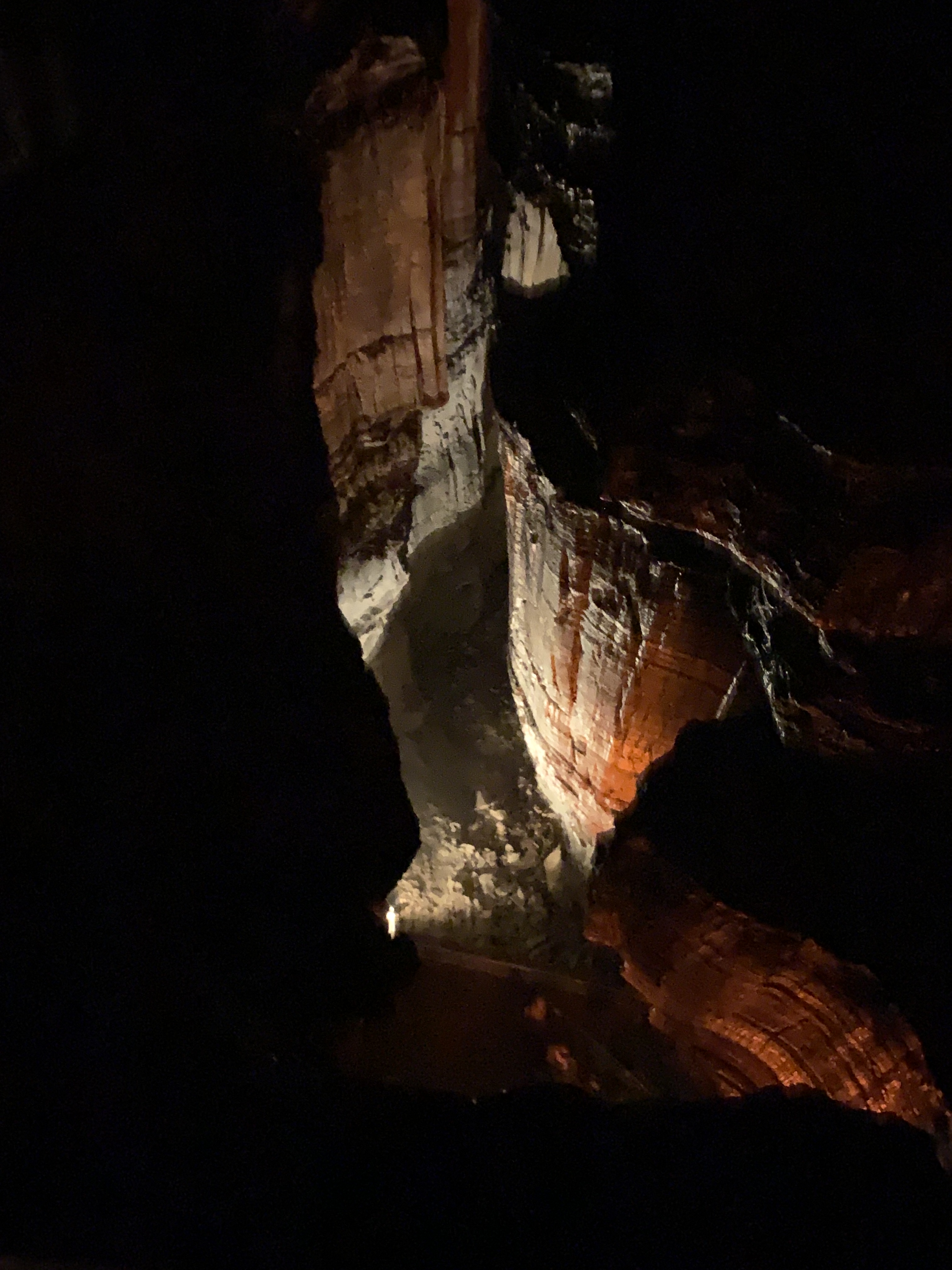
Where Carlsbad is like the Mines of Moria where you’re expecting goblins to stream out of the crevices into the magnificent cathedral-sized chambers, Mammoth is definitely hollow-earth lizard people. The walls are fairly smooth and plain and the ”cave” is actually an incredibly long maze of tunnels with underground rivers. I figure since the ceilings vary in height that only lizard people who are equally comfortable either upright or on all fours would feel at home roaming the endless passageways. The ranger herding us from the back concurred and told scary stories which kept us moving right along.

The cave is a World Heritage Site. Above ground is a huge forest with miles of trails, several nice campgrounds, and the Green River which runs deep enough to require a small car ferry at one point. The clean ecosystem above helps keep rare blind cave fish and other species alive below.

The ranger leading the historic tour explained that a slave named Stephen Bishop first crossed the ’bottomless pit’ and discovered the fish while guiding tourists. His tours gained widespread fame and included luminaries like Emerson. Bishop was evidently fearless, had an unusual amount of freedom as a guide and educated himself in geology and other subjects to converse with visitors. Emerson’s tour lasted all day, and they must have had interesting discussions. Emerson and his literary friends were conductors on the Underground Railway at the time, and many slaves escaped through Kentucky in the area near the cave. Bishop must have been motivated to use his unique access into the hundreds of miles of tunnels under Kentucky, since his own children were sold away into slavery. He died shortly after gaining his freedom in unknown circumstances.

Speaking of railroads, I charged my Tesla at the Casey Jones Museum in Jackson Tennessee on the way, and got a kick out of how modes of transportation change. I also ate at the Old Country Store there, which was reasonably priced and delicious, and it surprised me. Outside it celebrated the confederate General Nathan Bedford Forrest of KKK infamy, but inside it had a thoughtful and beautifully done exhibit on the Woolworth lunch-counter protests. Much like Mammoth Cave, you sometimes can’t judge what’s happening beneath the surface. Similarly, this post has been too long and meandering, but I hope somehow it’s all connected.

Mojave National Preserve

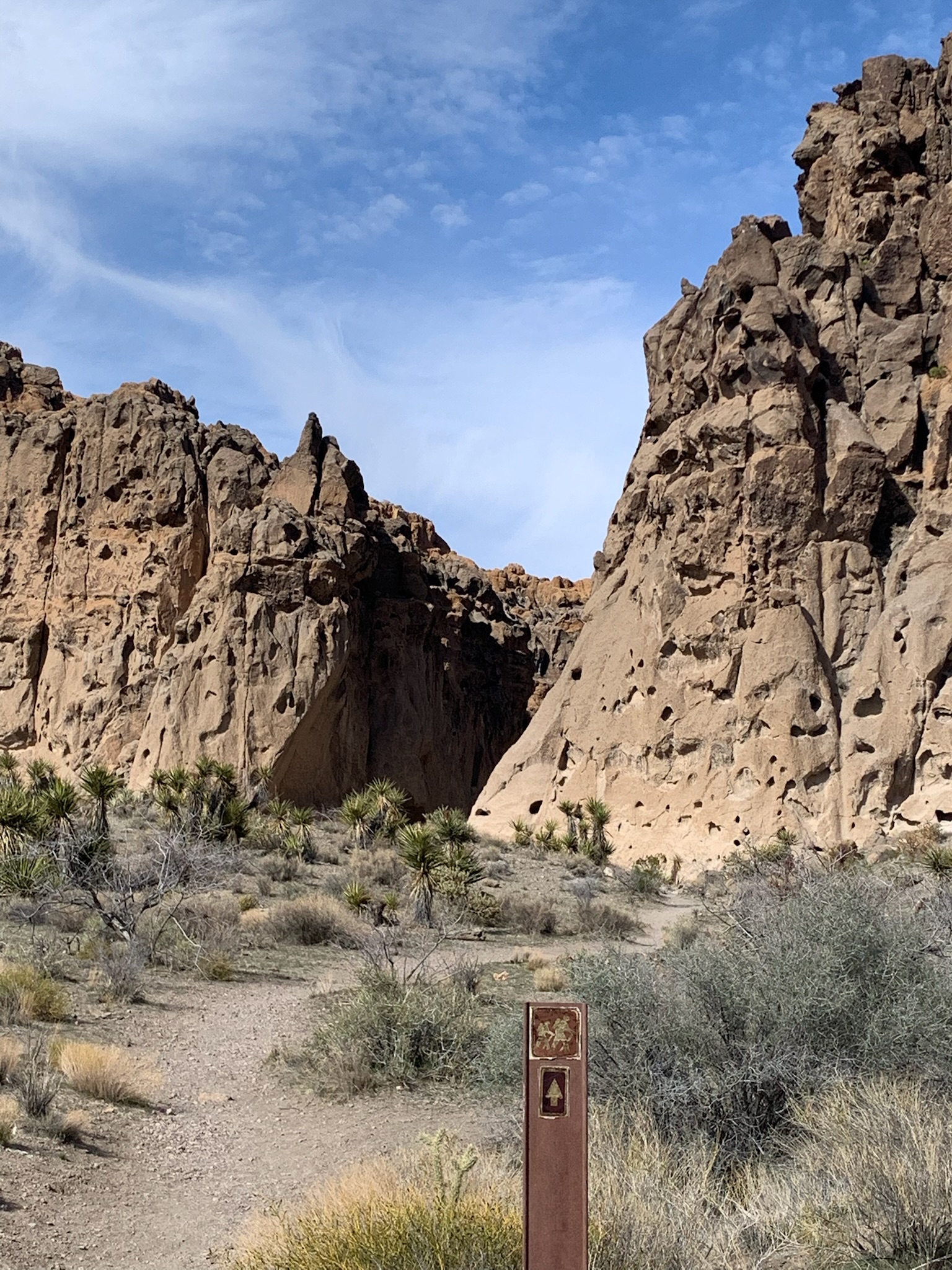
I wrongly assumed that this preserve was just a flat sandy desert, but it is a varied terrain of mountains, mesas, canyons, and volcanic landscapes, in addition to sand dunes.

The Rings Loop Trail pictured, near the Hole-in-the-Wall visitor center, goes right through a canyon with Swiss-cheese holes in the walls. There are petroglyphs to see, fascinating views, and short ladders of iron rings to climb.

A couple of retired campers asked me about my long range Tesla 3. The recent spike in gas prices ($7 in California) interests people who regularly spend over $100 to fill their tanks. Of course it’s also a very fun car to drive with a low center of gravity and instant acceleration. But too many folks resist change, even when their carbon travel habits contribute to devastating change.

Click to see my photos of all national park units in California.

Organ Pipe Cactus National Monument

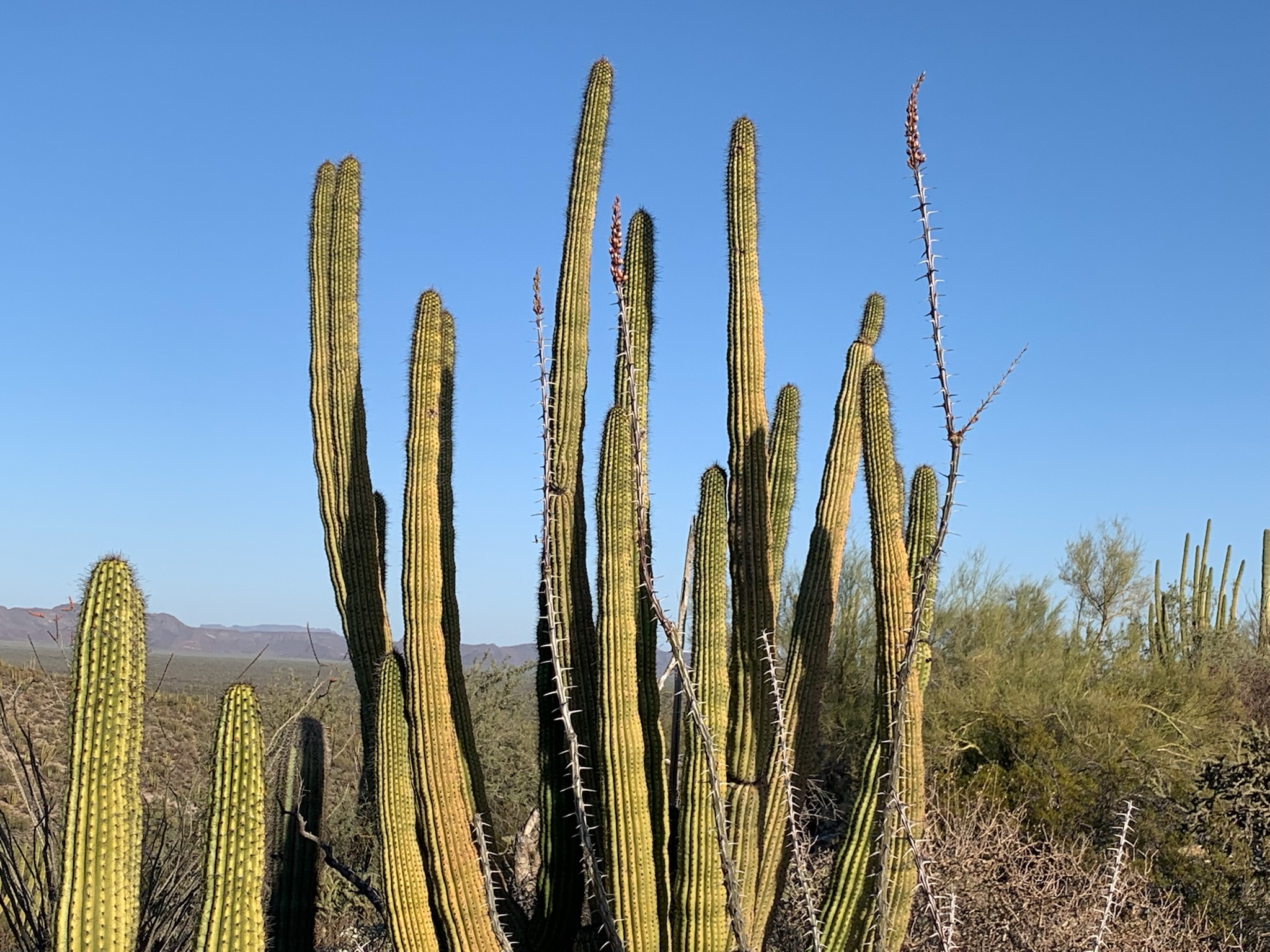
The skinny shrub reaching up in front of the cactus is Ocotillo, just beginning to bloom.

The ranger asked good questions. Given that we live in the Anthropocene or Human epoch, what exactly does wilderness mean to us now? This was one of my favorite ranger talks.

There’s a tiny endemic fish living in a corner of this park near the Mexican border. But because groundwater levels are now dropping sharply, the Quitobaquito pupfish’s natural habitat could disappear within a few years.

Some local school kids helped build a pond behind the visitor center to try to save the pupfish. The park service is re-lining the original Quitobaquito Springs to try to retain more water, but the springs are shrinking. People have been impacting the environment here for over 10,000 years, and, whether we like it or not, the little fish is now dependent on whether we choose to save it.

Ranger Kate asked the campers what we should do. The most common questions were about whether the Mexicans were at fault by siphoning off “our” water. They are actually on a different aquifer south of the Sonoyta River. And that jingoistic attitude really misses the point of being in an International Biosphere, next to the Pinacate y Gran Desierto de Altar Biosphere Reserve in Mexico. We’re supposed to be sister parks working together to save an internationally important natural area.

One suggestion was to “relocate the fish to a more viable habitat”. But if you take the pupfish out of Quitobaquito, are they still really Quitobaquito pupfish? Zoos don’t really prevent extinction in the wild.

I voted to add water to maintain the habitat. People think nothing of draining a river for a new golf course community and destroying ecosystems by burning fossil fuels. So why not reverse that destructive and short-sighted attitude and take this one chance to spend a few dollars to save a species?

Click to see my photos of all national park units in Arizona.

Joshua Tree National Park

Jumbo Rocks Campground

The common meme here is that the eponymous trees remind folks of Dr Seuss, but the stars here are the lumpy rocks. Every time I turned around, I half expected the rock monster from Galaxy Quest to stand up. I took this panorama less than 50 feet from my campsite. Exploring around here brings back that childhood sense of wonder, and the actual kids I saw also enjoyed scrambling all over the weird landscape.

Also, the tree that inspired Dr Seuss for the truffala trees in his Lorax story was a Monterey Cyprus, not a Joshua Tree. But it’s not a bad idea to think about the Lorax when visiting any park, since we need to protect our trees more than ever now. And since I’m correcting the record on trivial items, Jumbo Rocks Campground site #113 has plenty of parking for a 15′ 5″ long electric vehicle. The site description says that the parking space is limited to 13 foot long vehicles, and coincidentally I’ve noticed more than once that it is the last campsite available. So, if you have an EV, go ahead and book the site. If you’re driving a gas-guzzler, stay home.

“It’s a rock monster. It doesn’t have motivation.”

Galaxy Quest

Click to see my photos of all national park units in California.

Death Valley National Park

Badwater Basin, 282 feet below sea level. Highest peak, Telescope, is over 11,000 feet and is snow-capped.

Death Valley National Park is a repeat park for me. I last came here with my kids when I still traveled by burning carbon. This time I hiked out into the basin, since the grand scale is difficult to comprehend from the parking lot. While a very few species have adapted to the extreme climate, humans can not live here during the summer. And yet every day we choose continued desertification of our planet over choosing to convert from fossil fuels.

“All in the valley of Death, rode the six hundred”

Alfred Lord Tennyson

Click to see my photos of all national park units in California.