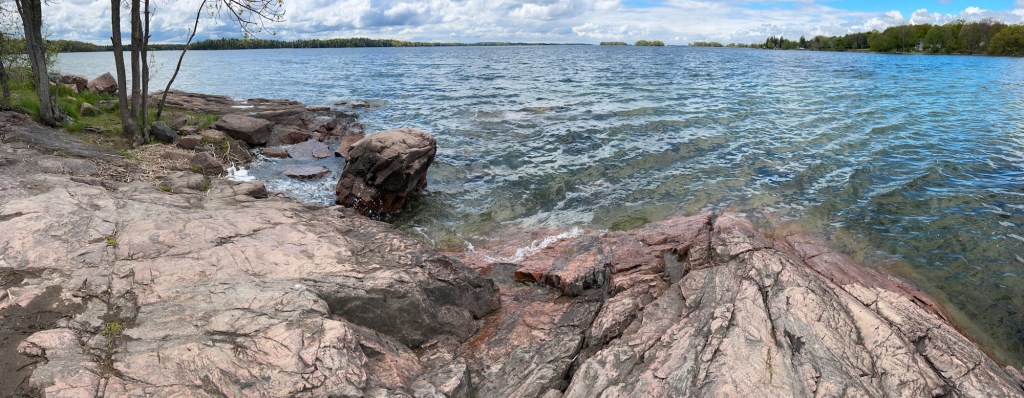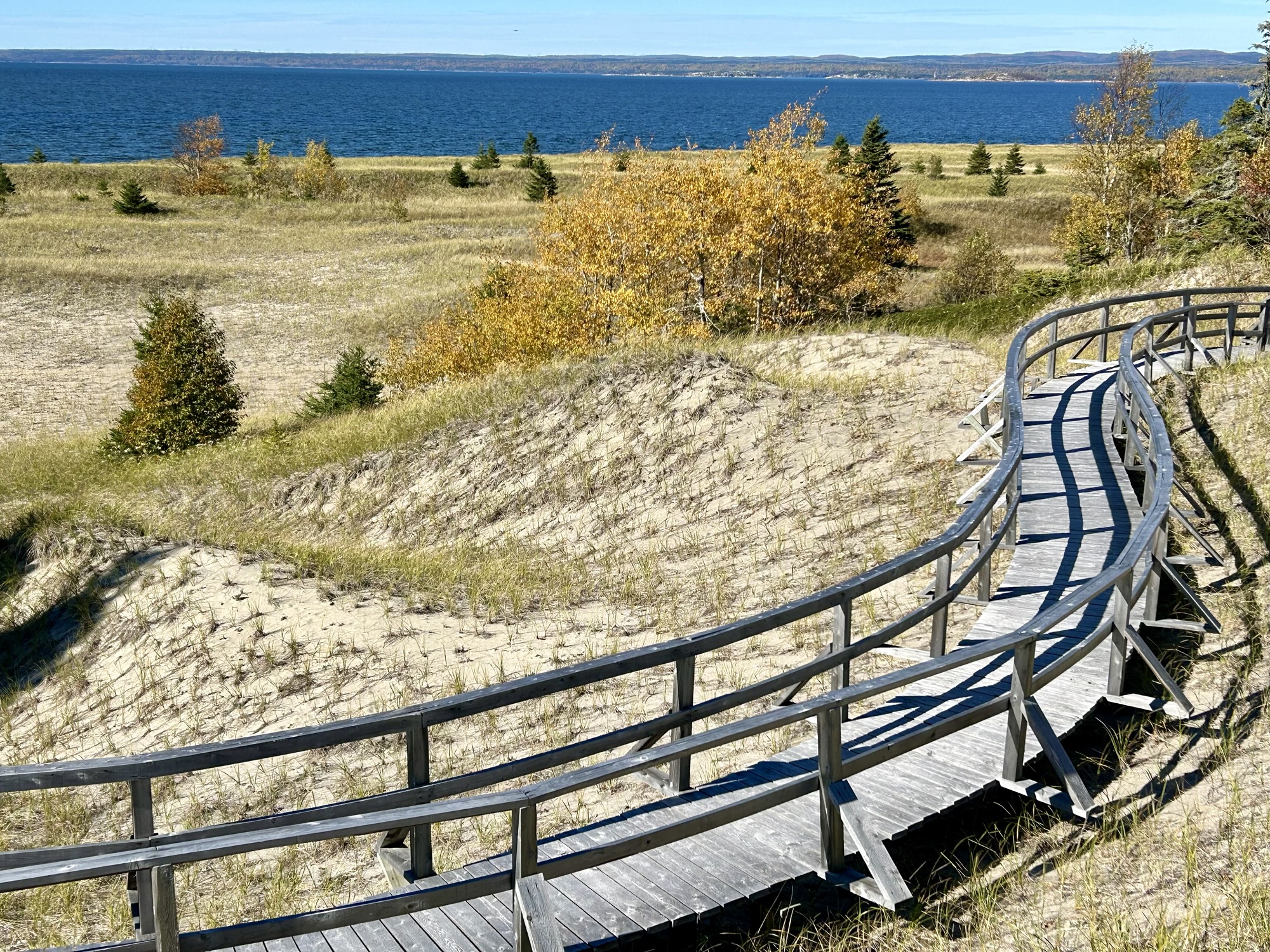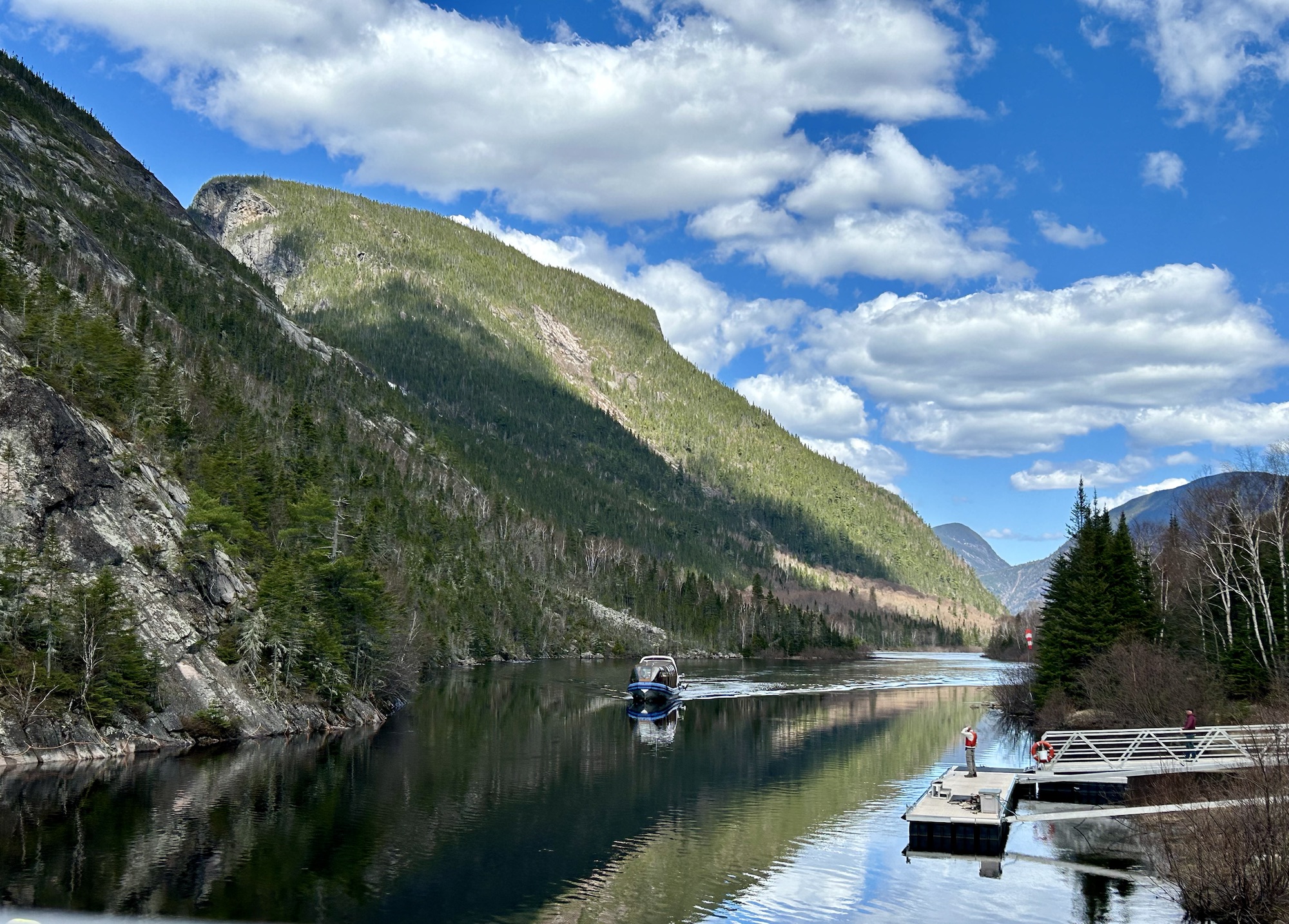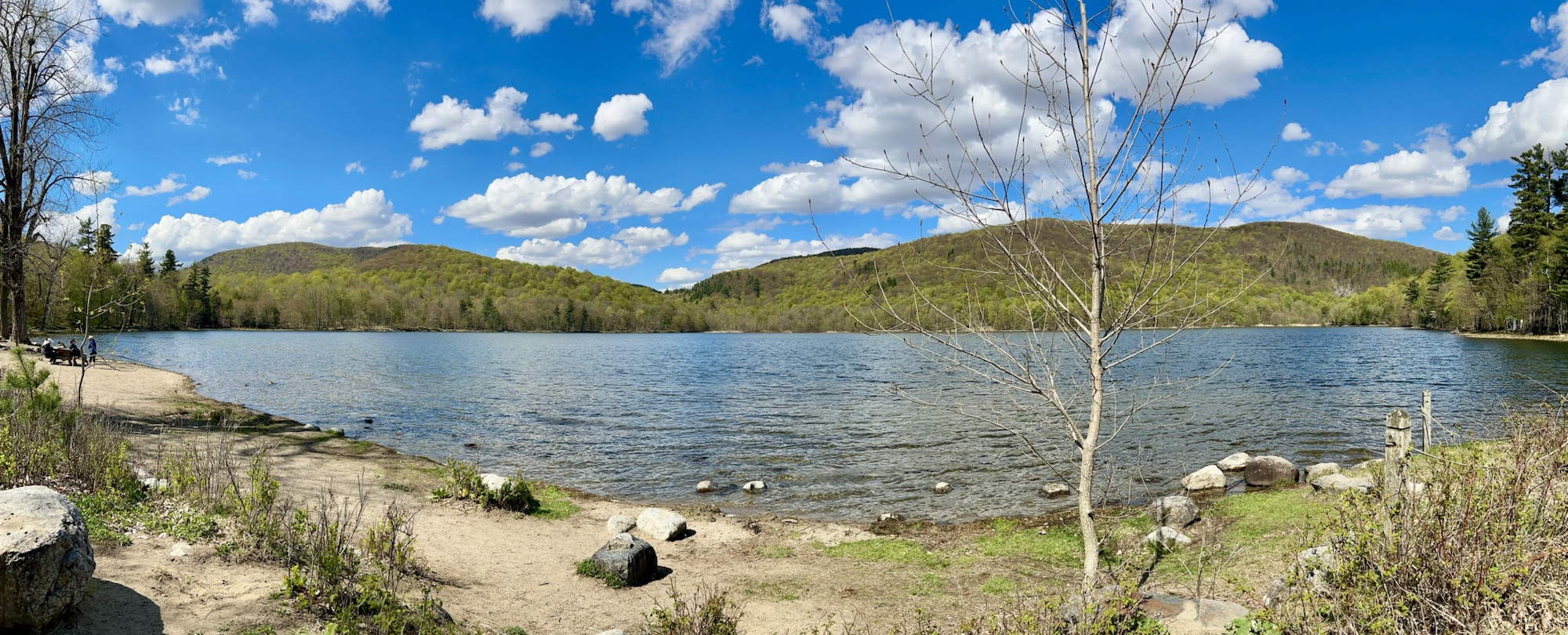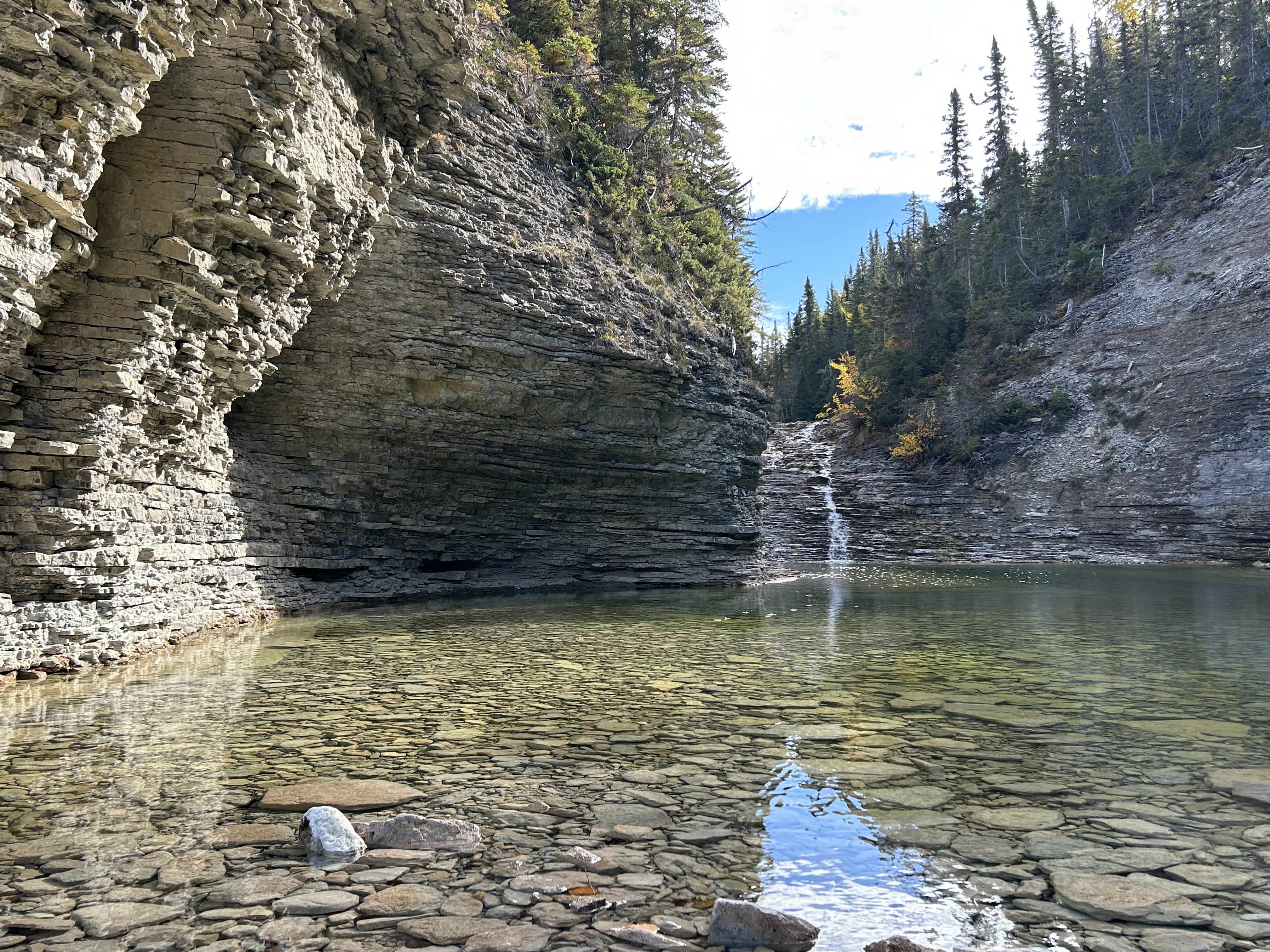
Much of southern Nova Scotia belongs to this UNESCO Biosphere, and the at the center is Kejimkujik Lake, historic site and national park above. My cousin was instrumental in gaining early recognition for the area’s exceptional starlight and dark skies, making it a great place to stargaze. The visitor center has a couple beautiful birchbark canoes and exhibits on the First Nation people who have lived in the area since time immemorial.
Due to extreme fire conditions, the backcountry was closed during my visit, but a few lakeside trails were open. The lake was low, the air and forest dry, but the day was lovely and quiet. The climate change is even more visible to the north, and there were many fires burning in Newfoundland in September. The national park includes a seaside section on the southeast coast with nesting piping plovers on a (closed) beach from April to September, but the biosphere covers far more land, outside the core park, from Yarmouth to both southwest and southeast Nova Scotia.
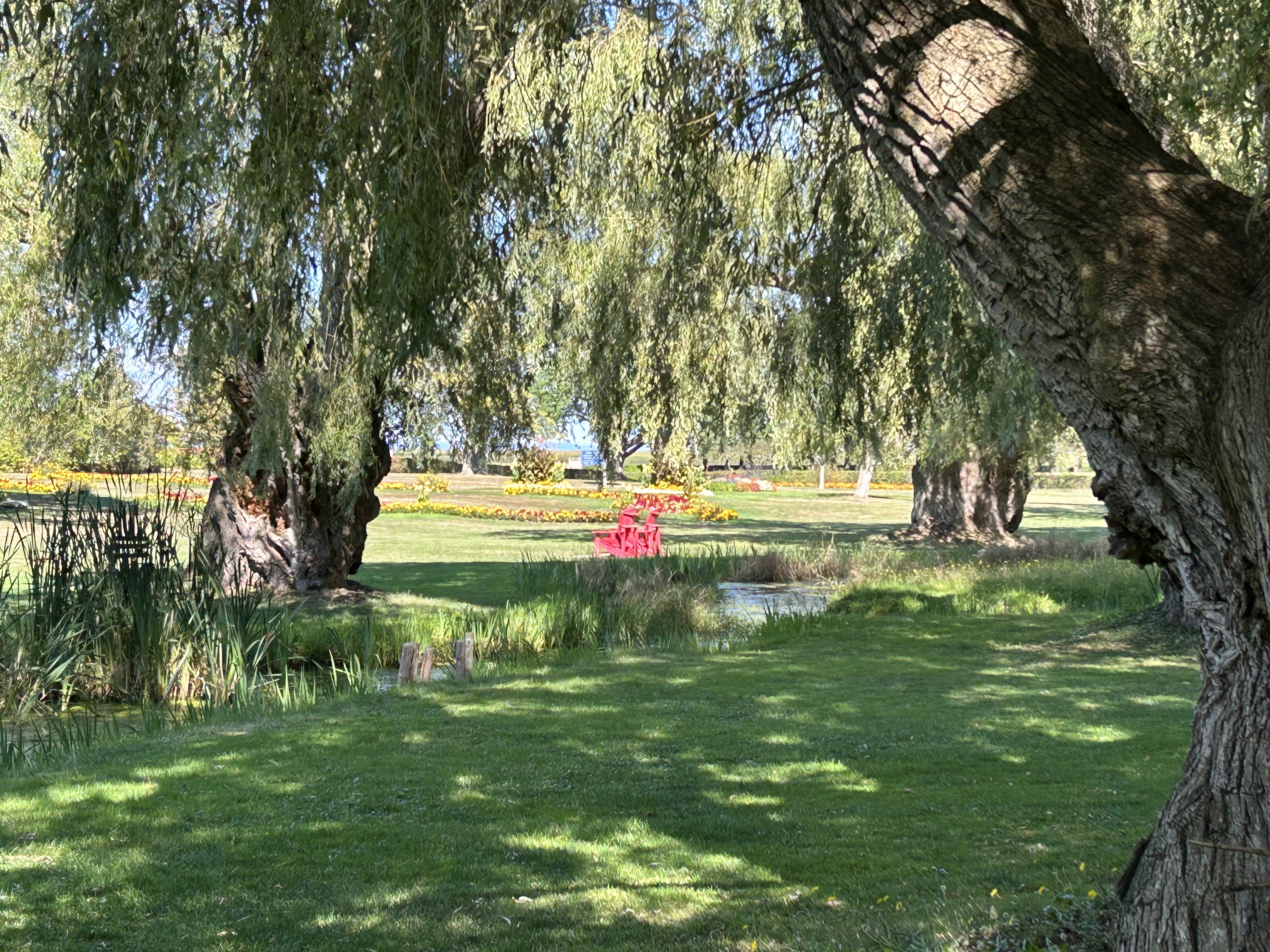
This UNESCO Biosphere Reserve is in New Brunswick Canada, although the Bay of Fundy is also formed by Nova Scotia to the east. The photo is from the north end at Fort Beauséjour looking south towards where the water comes rushing in with the highest tides in the world. The shape of the bay both funnels the water and creates oscillation that magnifies the tidal surge. The tide is fairly low at this time but already covering some of the vast mudflats that attract thousands of shorebirds, especially sandpipers in mid summer that bulk up on mud shrimp to fly to South America.
Due to the silty water, tidal power has not been harnessed here yet. The Acadians built aboiteaux or sluice gates and dykes here to reclaim some of the nutrient-rich salt marsh land for the fields below. The star fort was taken by the British during one of their conflicts with the French, played a role in the expulsion of the Acadians, and was successfully defended against the Patriots during the American Revolution. But I visited the Bay of Fundy mainly to see the tides, and one of the few places in the world that you can actually see the tide rising is where the rivers empty into the bay. I watched the tidal bore come in near Maitland Nova Scotia, creating waves as the tide forced its way up river.
This remote basin along the Apalachicola River of the Florida panhandle is a UNESCO protected biosphere and, along with Okefenokee in Georgia, is the main production area for Tupelo honey. The Peter Fonda movie Ulee’s Gold is set here, and beekeepers frequently boat around keeping track of their bees. Many of the stumps in the photo are white tupelo gum trees, while others are cypress. Tupelo means ‘swamp tree’ in Muskogee, and Elvis’ hometown of Tupelo Mississippi has black gum trees.
Technically the photo shows the Dead Lakes on the outskirts of the preserve, but a bit past the Chipola River Bridge is the Gaskin Park boat ramp, where you can access the core area. Due to the high density of large reptiles, I decided against kayaking. But the river, swamp, floodplains, estuary, mudflats, forest, seagrass beds and barrier islands here comprise a uniquely diverse, remote, and unpolluted ecosystem, supporting many unusual and endangered species, including more reptiles and amphibians than anywhere else in the country, black bear, manatee, hundreds of species of birds, and a critical nursery for fish and shellfish. ⭐
This post marks the end of my trip to Florida and the Southeast region of the contiguous US. Next Monday I’ll post about a world heritage site in the Mid Atlantic region.
The southern end of Florida is home to Everglades National Park, which is also a UNESCO Biosphere and a World Heritage Site. Since 1900, the area has been both protected and threatened, with political battles needed to protect bird plumage, to create the park, and to protect the large, diverse ecosystem here. Marjory Stoneman Douglas wrote a book to explain how the Shark Valley River Slough runs as a “river of grass” through the Everglades. When summer rains fill Lake Okeechobee, a sheet of water overflows the low bank and floods the flat grasslands, revitalizing fish eggs and a whole ecosystem. A cross Florida road called the Tamiami Trail prevented that flow, and a political battle was fought to restore it partially. The fresh water eventually sinks through the limestone, filling the Biscayne Aquifer to provide drinking water for Miami. There are also canals crisscrossing lower Florida, including here, and that’s where these two young alligators were hanging out. Alligator Alcatraz, a temporary migrant detention center, is in the Everglades ecosystem, but it’s not in the national park. Alligator Alcatraz is north of the Tamiami trail in Big Cypress National Preserve.
The park is 1.5 million acres, including the mangrove islands that form the southern end of Florida, before the Keys. The best place to see the mangroves is by boat, either from Everglades City west of Big Cypress or by driving to Flamingo. I took my family to the latter, and we saw a large crocodile near the dock, plus much more wildlife on a quick cruise in the “submerged wilderness” of Florida Bay. Personally, I wouldn’t kayak these waters, but many people do, camping on the Chickees or raised bits of ground where natives camped seasonally and for different purposes for centuries at least. There’s even a paddling waterway to go between Everglades City and Flamingo. Before the highway was built out to Key West, visitors commonly took a similar route by boat.
The work of environmental protection is never done. Burmese pythons entered the park in the 1970s—likely as discarded pets—, and now they’ve wiped out most of the native animals, threatening the Florida panther with extinction. I was disappointed to see the dramatic decline in wildlife evident from the Shark Valley Tower, since I first visited decades ago and even since I visited again with my family not so many years ago. And since last year, the state government is not allowed to mention climate change, global warming or sea level rise, but that obviously won’t do anything to prevent rising sea levels from submerging much of southern Florida, including most of Miami and almost 1/2 the park in the coming decades. Especially if the government refuses to take action, climate science clearly shows that the environment will only continue to worsen more rapidly.
This is one of two UNESCO Biospheres in the Mid Atlantic region; the other is Pine Barrens in New Jersey. Dedicated to scientific research, protected for decades by dedicated environmentalists and locals, including Federal, State and Local lands, and managed by the Nature Conservancy, this UNESCO Biosphere protects much of the Virginia part of the Delmarva Peninsula, including its fragile barrier islands. It’s a crucial stop for birds on the Atlantic flyway from the Yucatán, over Florida and up the coast to Canada. And of course, studying these coastal wetlands is critical for combating the effects of the climate crisis.
There’s a nice trail next to the Brownsville HQ with boardwalks out to the Atlantic view below and a similar one facing the inland wetlands. I saw a great blue heron, two large turtles, and many butterflies, spiders and frogs. Frogs were much more common in my youth, so it was a delight to see so many hopping across the trail or grass in front of me.
The highlight of my trip to Baja California last month was seeing Gray Whales (see videos below) in the Ojo de Liebre—hare’s eye—Lagoon, in the northeastern corner of the huge Vizcaíno biosphere and world heritage site in central Baja. I must thank the legendary Shari Bondi for organizing the experience, as there’s an element of magic required to bring people and whales together well. Unlike any whale watching experience I’ve ever had, the gray whales can be quite friendly. One female approached my boat, stuck her nose up and touched my hand.
The rock art mountains are also within the Vizcaíno preserve, along with several other lagoons popular among winter-breeding gray whales and turtles. Since the lagoons are closely regulated, the only way to see these whales is to join a tour. Since the winter season is short, the tour guides typically work with local hotels and add lagoon-side camps. You may find it difficult to book a room in Guerrero Negro around February, unless you book a package tour. Some visitors spend days on site, taking multiple whale watching trips. Enjoy!
Earlier this month, I visited El Pinacate y Gran Desierto de Altar [literally ‘the stink beetle and the great high desert’]. It’s a UNESCO Biosphere and World Heritage Site in Sonora Mexico, and it’s a sister park to Organ Pipe Cactus NM across the border in Arizona. A dozen pronghorn scampered through the various cactus, but unfortunately the border wall prevents many species from moving freely in their natural habitat. The main attraction is ten large volcanic craters, including the deep, symmetrical Elegante below. The landscape is extraordinary and otherworldly, with long black lava walls, cinder cones, sand dunes, various cacti, bushes, shrubs and wildflowers. There is enough rainfall to support birds, reptiles and wildlife like big horn sheep. Some folks camp overnight to experience the vast dark skies, far from large human settlements.
A 2018 movie called Sonora was filmed here, and the movie describes the desert as both the middle of nowhere and ‘the devil’s highway’. A few years ago some criminals moved into the area, but they are gone now. The roads are severely washboarded, sandy and sometimes are blocked by local landholders due to disputes over compensation, so I hired a driver, a van and a guide. There are no facilities to speak of, so you need to bring whatever you need in and pack everything out. From the supercharger in Gila Bend, it’s more than a full charge round trip to Puerto Peñasco or Rocky Point where guided tours depart, so I charged at my hotel on the Playa Bonita. The local economy is still recovering from various border shutdowns and Covid, but the onsite park museum is expected to reopen soon, which will bring more visitors. But for my visit, I was happy to have the whole park to myself.
The Salmon River flows into the Pacific just out of sight between the headland and the beach above. The trail up here to the lower viewpoint starts at the boat launch, climbs through a lovely mossy old growth grove and crosses a few small bridges—the cascades were hidden in the brush—before reaching the meadow where a rare flower and butterfly live. There’s an upper viewpoint some 700 feet further up the hill, but I figured the closer view was better.
This UNESCO Biosphere is mostly on Nature Conservancy land, thanks to concerned citizens who rallied to protect it. Definitely needed the birdsong app: white-crowned sparrow, golden-crowned kinglet, chestnut-backed chickadee, pacific wren and a brown creeper, not to mention the usual coastal waterfowl and some raptor I couldn’t identify. Lovely spot on the Oregon coast with about a dozen other hikers on the trail on a beautiful day last fall.
This large UNESCO biosphere near Edmonton Alberta includes Elk Island National Park, which has hundreds of plains and wood bison. But Elk Island is fenced, so, as important as that park is for restoring the bison population, I came to see beaver. And on the Beaver Hills Biodiversity Trail, I saw several large beaver dens, like the one above.
Beaver are quite destructive, and their homes are surrounded by felled and drowned trees and pointy stumps. But they also create year round dens and dams with ponds and small lakes for many other species. Besides the many waterfowl, blue dragonflies, and chattery squirrels, I saw a magnificent golden eagle circle above the pond. And of course, I saw five or six beaver, swimming far from their dens, playing and occasionally climbing on branches to dry off, scratch or hang out.
When humans create zoos, safari parks or even national parks with fences, it’s not right to call the enclosed animals ‘wild’. Some may have been born wild, but as long as they’re locked up, they’re no longer wild animals. Humans make the rules in those spaces, so, no matter how we try to copy nature, the spaces are artificial. But when beaver fell trees, build dams and create lakes, they make the rules. And the species gather there naturally. Beaver Hills is a natural area, filled with wild animals, and it is delightful to pause here and take in the peaceful balance of life.
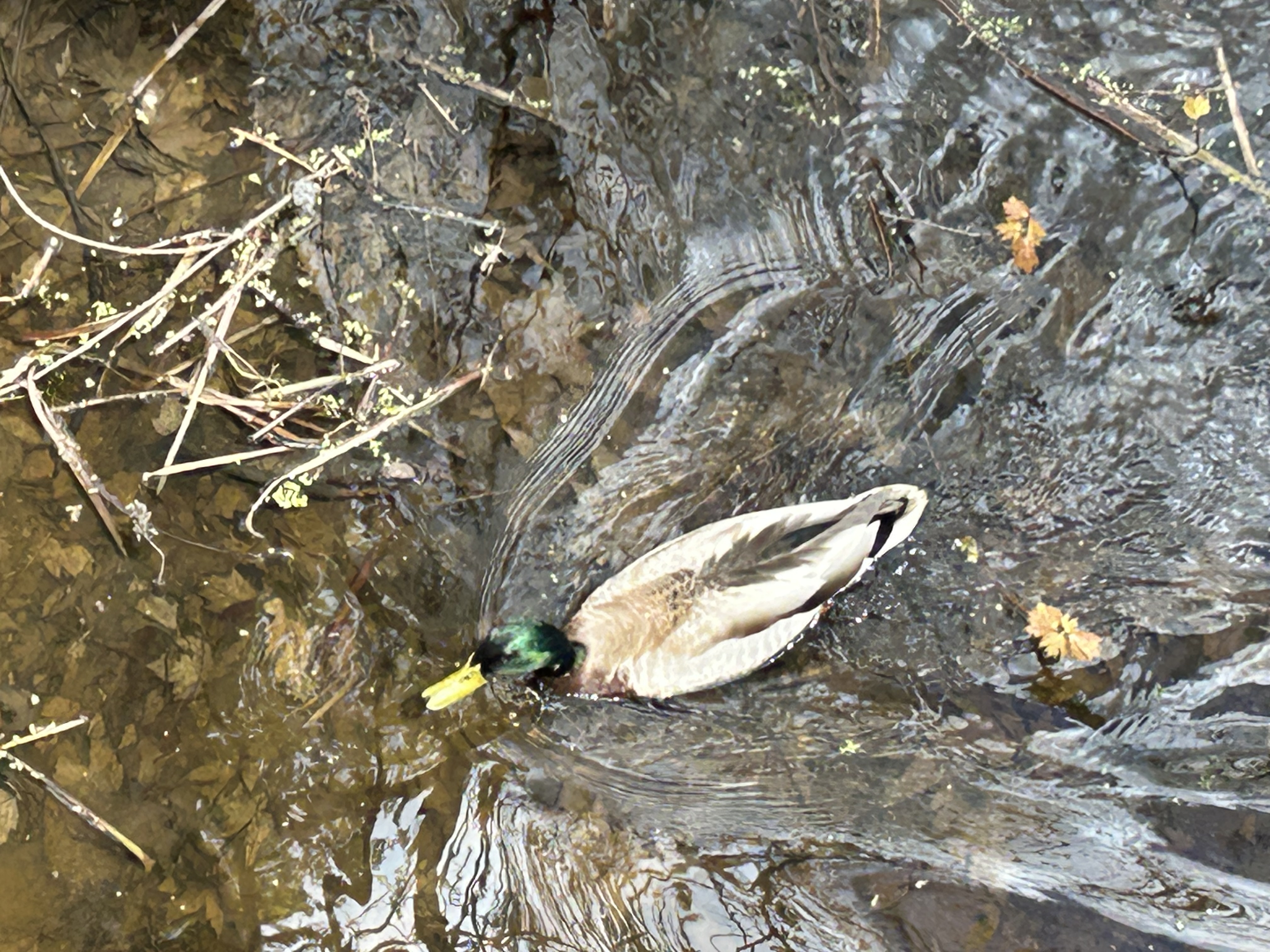
I saw ducks and geese in the thousands, a flock of whooping cranes, a pair of sharp-tailed grouse, and many other birds, but they kept their distance from me. Saskatchewan has many lakes, and occasionally one will be full of birds. I also saw a young moose walking near the road, and there were bison behind fences. Since I was there during harvest, I could see the giant combines gathering grain. The self-guided driving tour gives several suggestions for exploring the area, which is mostly farms and First Nation communities. I believe there’s a visitor center opening soon.
The lake is at the center of a UNESCO Biosphere Reserve, but there’s also a popular state park camping and recreation area. So there are RVs, cabins, a beach below with a playground, mini golf, a golf course, a boat launch and even a few JetSkis, which hardly seem compatible with an internationally important bird refuge. Humans have trouble sharing our world with all the other species.