Heart Mountain

Heart Mountain (above) is the site of an American Concentration Camp in Wyoming. One of the incarcerees left a bequest for ‘something to be done’, and now much is being done here to teach people about the injustice sustained here from 1942 until 1945. There is an original barracks, a guard tower ‘built to spec’, memorials, artwork, and a remarkably personal and revealing museum. Renovations, expansion, acquisitions and outreach are ongoing.

While most sites choose not to use the term “concentration camp”, due to its association with the Holocaust, one of the incarcerees in the film uses that term plainly, the then Governor used the term in arguing in favor, and that was the term used most commonly at the time. Many of the Americans who were sent there had never seen so many people of Japanese descent in one place at the same time. What else are you going to call a facility that literally concentrates one group of citizens based on racial/ethnic identity in a prison camp?

What makes the exhibits here better than other sites is that they go one or two steps deeper in describing the experience. When the site started, “it was like pulling teeth” to get incarcerees to talk about it, but then gradually the stories started coming out: a dog left behind that refused to eat and died alone, a beautiful older lady describing how she was spat on and called a slur as a child, and a family recounting the suicide of their father after being robbed and rejected by their community upon release with $25.

The museum pulls no punches in their descriptions, making it plain that these innocent American civilians had their rights abrogated and in many cases lost everything, due to racism. Instead of recognizing that we were at war with an enemy nation, our government and most Americans also declared war on a racial/ ethnic group of their fellow citizens. While J Edgar Hoover and Eleanor Roosevelt counseled against the program as ‘unfounded’ and ‘unjust’ respectively, FDR approved the military’s ‘relocation program’ recommendation for ‘sensitive military areas’, which the military interpreted as the entire west coast.

“The Japanese race is an enemy race
and while many second and third generation Japanese born on United States soil,
possessed of United States citizenship, have become ‘Americanized’,
the racial strains are undiluted.”
“A Jap is a Jap.”

Lt. Gen. John DeWitt,
architect and overseer of the American Concentration Camps
Topaz

[Programming note: Monday posts for the rest of the year will be national parks. Thursdays will be other national park units and affiliates. And I may have a bonus post on a few Saturdays. I am catching up on a backlog of park visits, so even if the House Republicans shut down the parks, my posts will continue].

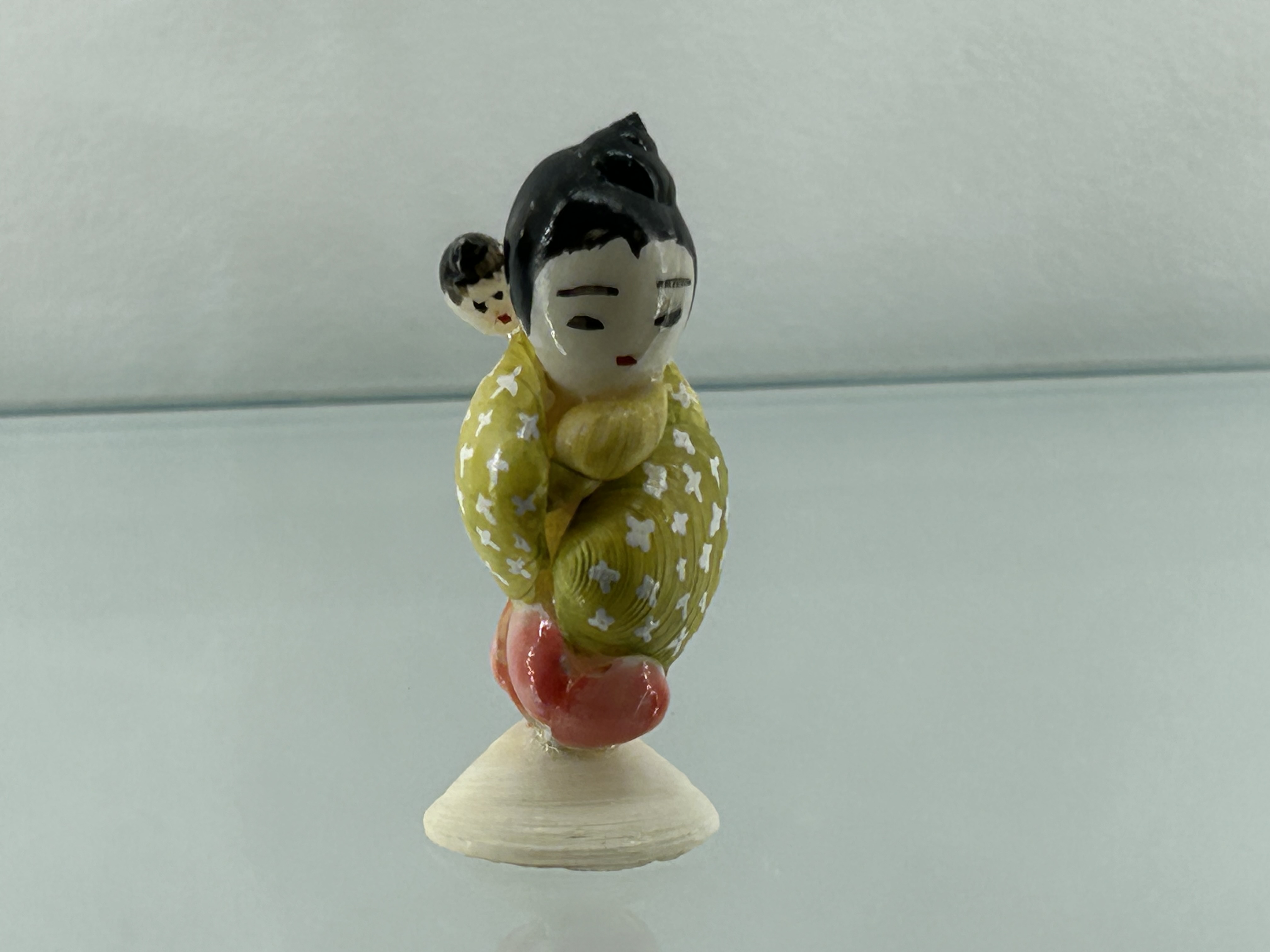
Off I-15 in Utah towards Great Basin, there’s an excellent museum about Topaz, one of the American Concentration Camps for US citizens of Japanese ancestry. Since it’s near the Bonneville flats, the incarcerated Americans collected shells to make art for sale (see photo), one of many detailed exhibits. The prison site itself was stripped bare, so there’s not much to see on the museum’s informative guided tour except barbed wire and a few foundations.

Fred Korematsu was one prisoner here. He lost at the Supreme Court 6-3 in 1944, but he eventually got his conviction overturned by a California court in 1983. In 2011 the DOJ issued a rare ‘Admission of Error’ in Korematsu’s case, for suppressing a military report dismissing the threat of spying by Japanese Americans (not already confined) and of racism motivating the military leadership. Another prisoner, James Wakasa, on the other hand, was shot without warning inside the fence while walking his dog. Over twenty men from Topaz died fighting in Europe for the highly honored 442nd Regimental Combat Team.

Utah is a well ordered state, clean and conservative, like Japan in some ways. People prefer order to disorder, which is one reason many don’t like change. But mistakes must be fixed, or they typically get worse. Fixing the climate crisis will cause disruptions, but solving the problem is the only way to a better future.

Imperial Japan tried to impose ‘order’ on its neighbors through its military. One person’s order is another’s oppression. Order solves lots of problems, but when order is used to amplify an unfair policy, that’s what puts over 100,000 Americans including children in prison camps for four years, without trial, losing their homes, unable to communicate freely and pressured under harsh conditions.

A Japanese American project folded over 100,000 paper cranes, one to represent each American imprisoned. Orizuru are fractional wishes, and completing a thousand is meant to make a wish come true. Hanging many strings of cranes together is also an expression of solidarity, commitment and dedication in Japanese culture. But due to some failure of imagination, the cranes are kept here in storage, a few handed out to kids, instead of being displayed.

There’s not much enthusiasm at Topaz for establishing a joint venture with the park service, as the locals believe they’re doing a fine job alone. But the least the US government could do is organize a public display of the origami cranes at each of the American concentration camps it built. When order is used to coordinate and amplify wishes to make lives better, it can change the world.