7 trails cross the Southwest region, including 6 National Historic Trails linking multiple sites, plus a National Scenic Trail. Here’s a quick summary in case you are interested in exploring the trails in the region.
Butterfield Overland NHT passed through Arkansas, Oklahoma, Texas and New Mexico (although the photo below is near a stop across the Arizona border in Tombstone).
8 trails cross the Rocky Mountain region, including 6 National Historic Trails and a National Geologic Trail that link multiple sites, plus the North Country National Scenic Trail that is an individual park unit. Here’s a quick summary in case you are interested in exploring the trails in the region.
In South Dakota the expedition traveled north along the Missouri River from Yankton Sioux to Lakota territory.
In North Dakota they hired Sacagawea and her husband at Knife River.
In Montana they split near the Yellowstone confluence where Fort Union Trading Post was later built and rejoined near the Snake confluence where the Nez Perce NHP is now. Grant-Kohrs and Big Hole are both on their trail too.
California NHT 1841 to 1869 also crosses Colorado and Utah.
Mormon Pioneer NHT 1846-1847 continues to Utah.
The Pony Express NHT 1860-1861 followed the pioneer trail through Colorado, Utah & Wyoming, but the young riders rode from Missouri to California in only 10 days.
One terminus of the North Country NST is in North Dakota while the other is in New York.
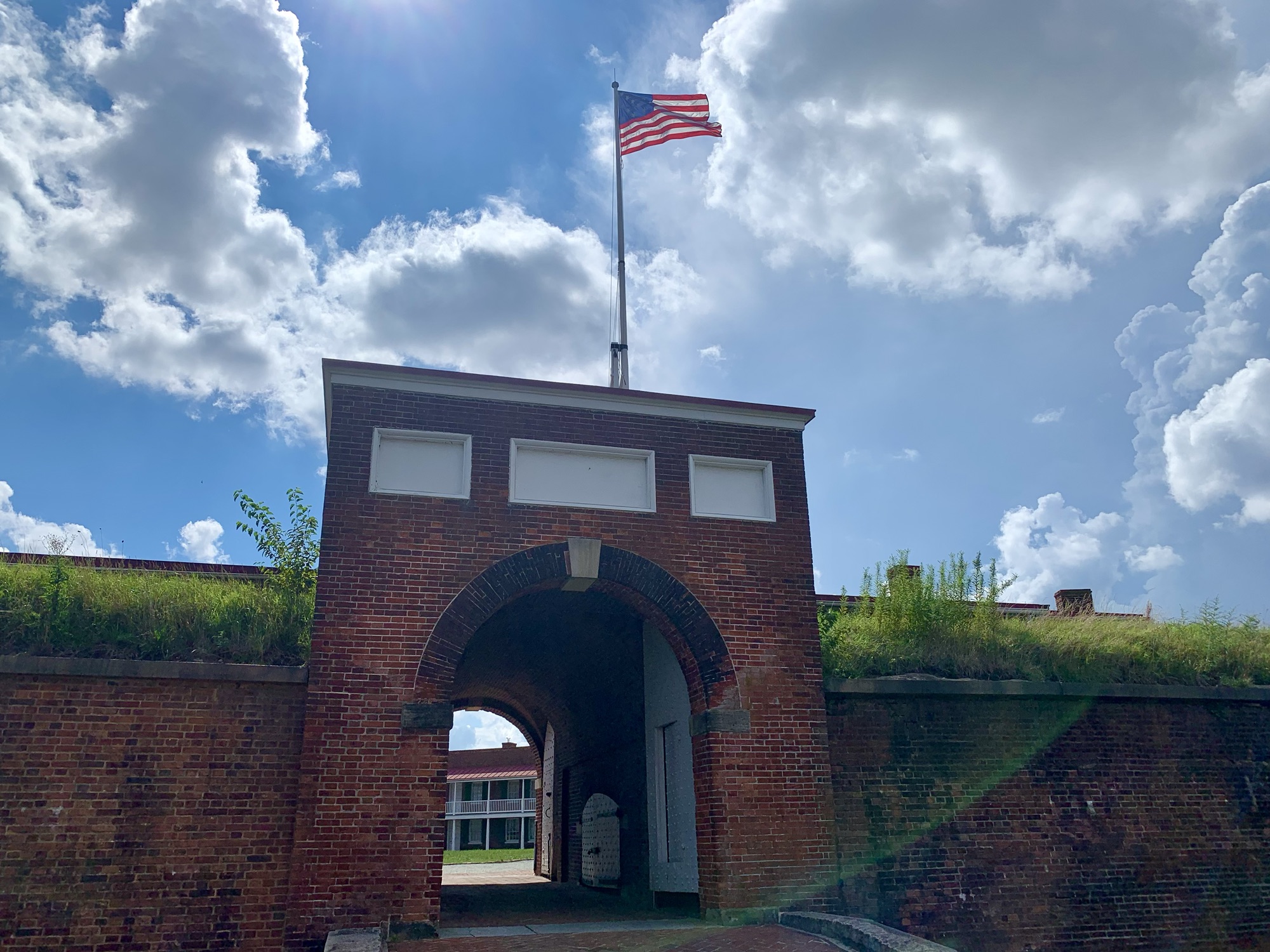
Although his namesake bridge collapsed in Baltimore, Francis Scott Key is best remembered for capturing the spirit of renewed patriotism that grew out of the War or 1812, as he penned his description of the defense of Fort McHenry (above) that became our National Anthem. The War of 1812 was a national low point in many ways, as Congress had ended Alexander Hamilton’s National Bank, and Albert Gallatin’s budget cuts had eviscerated the military. The trail traces the British advances on land and sea, leading up to the siege of Baltimore. Many of the DC area sites are part of this trail, including Fort Washington, Greenbelt Park, Kenilworth Aquatic Gardens, the National Mall, Pennsylvania Avenue, the White House, the George Washington Parkway, and the Potomac Heritage Trail, but there are lesser known battlefields, forts, museums, plantations, gardens, parks, the Pride of Baltimore II, the house of Mary Pickersgill, who made the flag, and more throughout Maryland.
Dolley Madison may have been our greatest First Lady—especially compared to the feckless Congress and Cabinet, often only barely loyal to the US and open to surrender—, but Dolley did everything she could to support her husband and her country. She invented the Inaugural Ball, hosted Native American Chiefs, smoothed quarrels between European and African envoys, and, in our hour of need, stood fast in the White House, even as the marauding British Troops approached in 1814 and as her husband tried to rally the local militia to defend the Capitol. At the last possible moment, she evacuated, with the President’s papers, the curtains, china, an original copy of the Declaration of Independence, and a famous portrait of George Washington, torn from its immovable frame. The British burned the White House to the ground. Dolley’s famous diplomacy helped convince Congress not to abandon Washington DC and to rebuild the White House and the Capitol. And through the news reports of her defense of our country, the nation rallied, shocked that the British would burn down DC’s public buildings.
However, in the war’s aftermath came a new sense of national identity, including our national flag and national anthem, setting the foundation for a more aggressive and stronger nation. That nationalism was fatal to many Native Americans, as the British had tried to enlist them and as the USA became more assertive and expansionist. And today, there are self-proclaimed ‘nationalists’ who support the second attack on the Capitol.
Dallas County Alabama systematically denied its 15,000 African American residents from registering to vote, using poll taxes, literacy tests, white-only primaries, and grandfather clauses, which made registration easier for those whose ancestors voted when only whites could vote. In 1963, with older people intimidated by murderous KKK raids or being fired for speaking out, organizers asked local high school students to protest. They did, meeting in churches—the only places they could safely assemble—and they were trained in non-violent protesting. Students marched by the thousands, staged lunch counter sit-ins, were beaten and arrested. All civil rights meetings were then banned by a local judge in 1964. Then, the Reverend Dr Martin Luther King, Jr came to Selma to speak in defiance of that ban, bringing national media attention. The contrast between black citizens, old and young, assembling peacefully to try to register to vote, and the police who denied their rights violently—criminals with badges—was to play out on TV.
The teachers marched with their students. The police filled the jails with hundreds of students. Beatings outside churches turned uglier, and on 18 February 1965, while protecting his family, Jimmy Lee Jackson was shot to death by a police officer who was not punished. In response, the people decided to march 54 miles to the state capital in Montgomery. The police responded at the Edmund Pettus Bridge—the first step in the march—with billy clubs, horses and tear gas. Bloody Sunday, 7 March 1965. The TV coverage made the protest national overnight. Dr King organized a second march, but stopped on the bridge to avoid violence and due to a federal injunction. Rev James Reeb was killed on 11 March. LBJ called out the national guard, saying “we shall overcome” in a major speech 15 March. On 17 March, a judge cleared the injunction. Then Dr King led a third march, all the way from Selma to Montgomery from 21 to 25 March. Singers like Sammy Davis Jr, Nina Simone, and Harry Belafonte encouraged 25,000 marchers along the route. Upon arrival at the statehouse, Dr King gave his “How Long, Not Long” speech, including the phrase, “the arc of the moral universe is long, but it bends toward justice”. LBJ signed the Voting Rights Act on 6 August 1965.
Selma may have been the turning point that enfranchised millions of African Americans, but the city and surrounding ‘black belt’ in central Alabama has suffered economic exclusion. Burned out buildings are common there today. The national park service is currently renovating several historic buildings in Selma including an interpretive center, and there’s also a Voting Rights Museum just across the Edmund Pettus Bridge which has an excellent, detailed display. Selma’s sights include the churches, lodgings and offices used by the organizers, and the jail where they were incarcerated. Halfway on the trail, near where Viola Liuzzo was murdered by the KKK, the park service has another interpretive center with an excellent multimedia film. Along US 80 are the four campsites used by the marchers. And on the campus of Alabama State University in Montgomery, there’s another interpretive center with a different, also excellent film. And Montgomery sights include the state Capitol, a memorial designed by Maya Lin, and the Rosa Parks Museum, along with various archives and gathering areas. The drive is easy, and I recommend all three stops for the complete experience.
The King Center in Atlanta gives a broad and deep view into the life and works of Dr King, as well as the ongoing non-violent international justice movement. The Birmingham Civil Rights Institute explores how deeply segregation divided society, how violent the oppression became both across the street in the park and at the 16th Street Baptist Church where four young girls were killed by the KKK in a bombing, and how strong the Civil Rights Movement became. But the Selma to Montgomery trail, with its searing photos and video testimony of foot soldiers, brings history to life. The open racism (see photo) is shocking and revealing. In one of the films, a white woman argues that since Jefferson Davis was their president, Lincoln’s Emancipation Proclamation has no effect, that slavery is still the law. Such vile hatred does not dissipate overnight. Indeed, in both subtle and ugly ways, racism still divides our society. So we must feel this history again to continue fighting more effectively.
The PCT is 2,650 miles and grew out of Clinton Clarke’s idea in the 1930s to link existing trails to create a border-to-border extremely scenic trail. Although in 1968 it officially became one of the two first national scenic trails—along with the 2,190 mile Appalachian Trail—, the PCT wasn’t completed until 25 years later. It’s a foot trail (e.g. horses), no vehicles (e.g. bicycles). Having visited all the parks and many of the national forests wilderness areas along the trail, including places photographed by a PCT founder named Ansel Adams, it’s one of our great national treasures.
As we prepare to cross into a new year, take a moment to think about the high ground that divides the west from the east. Rivers, agriculture, ports and cities all are shaped and developed by changing elevation across the land. Watersheds support different species and define much of our history. Colonial America is set east of the Appalachians, along rivers like the Savannah, Susquehanna and Hudson that flow into the Atlantic, while the Ohio and Tennessee Rivers flow down the western slopes on their way to the Mississippi and Gulf of Mexico. But from Alaska to Tierra del Fuego, all of the Americas are divided by one great line of mountains and high elevations.
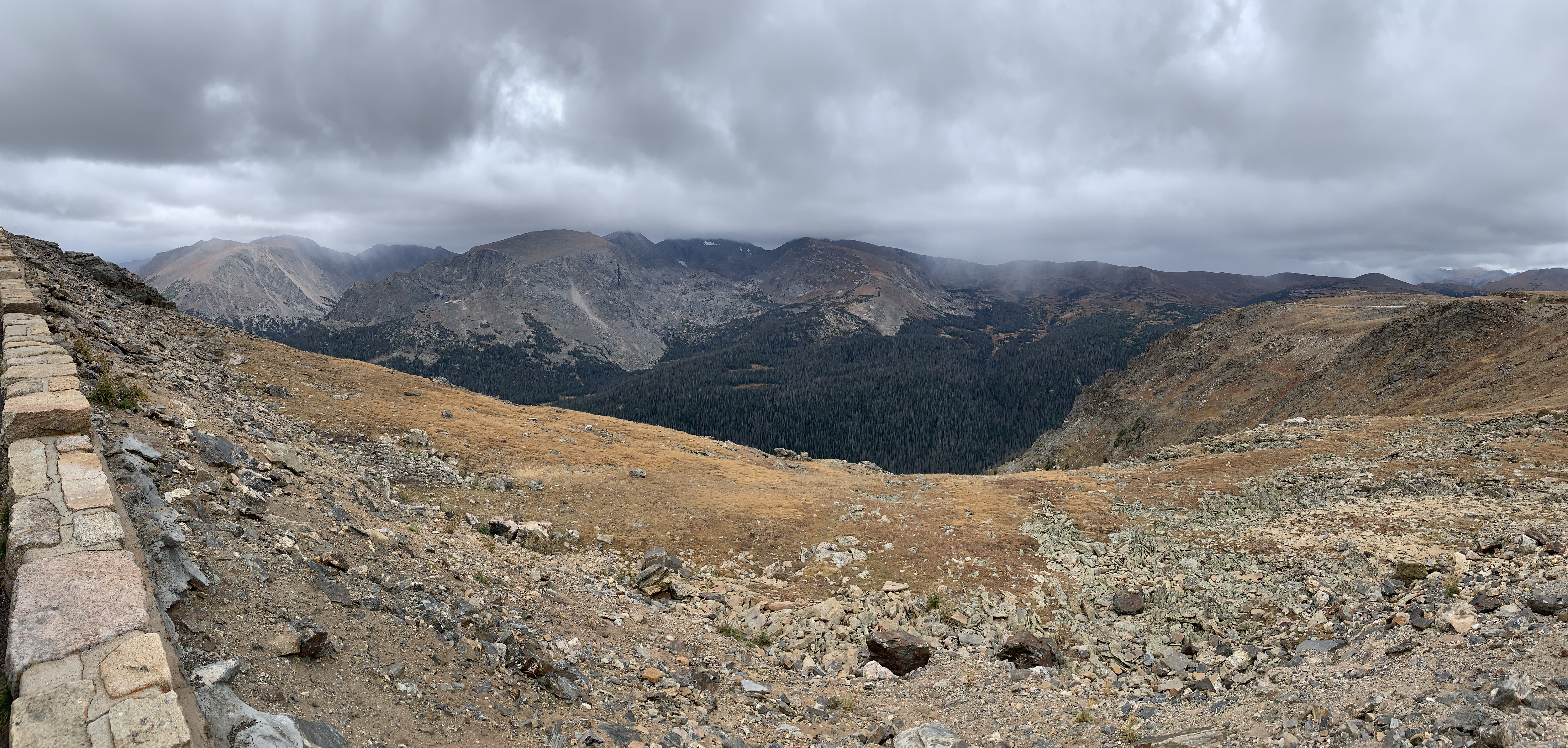
In the US, the 3,100 mile Forest Service managed trail starts at the New Mexico border, runs up near the Gila Cliff Dwellings, through El Malpais, cuts up west above Taos into Colorado, winds high through the Rockies, near Camp Hale, reaching its highest point at 14,270 feet on Gray’s Peak and then crosses through Rocky Mountain park (see photo). Here are the headwaters of both the North Platte River that flows east to the Mississippi and the Colorado River that flows west to the Sea of Cortez.
The trail continues north into Wyoming, where it crosses the Pioneer trails, through Yellowstone, where it crosses the Lewis & Clark trail, near the headwaters of both the Snake River which flows west to the Pacific and the Missouri River which flows east to the Mississippi. The mountainous divide continues up into Idaho and Montana, above Big Hole and Grant-Kohrs, connects with the Pacific Northwest trail and crosses through Glacier to Waterton in Canada. In Glacier, the epic trail summits Triple Divide Peak, which marks the hydrological apex of North America, where the Atlantic, Pacific and Arctic watersheds meet. Hope you have a happy new year!
From 1858 to 1861 John Butterfield operated the fastest and most reliable stagecoach route west via the Oxbow Route that bent from the central Mississippi River deep along the Mexican border and up California to San Francisco, before the Civil War put him out of business. The trip took 25 days (or less) and carried mail, passengers and freight. The current parks along that route are below.
From 1860-1861, express mail was carried by young riders—including a young ‘Buffalo’ Bill Cody—who would stop only briefly to switch ponies along the way. That trip took 10 days along the pioneer trail, but the completion of the transcontinental telegraph line later in 1861 put them out of business. Due to the simple nature of the operation, almost all of the original trail and stations are gone, but a few remain. I’ve visited stops and roughly driven the length of the trail by EV, and I recommend the following sites to enthusiasts.
The first recorded pioneers to take the trail with wagons were the Whitmans in 1836, who settled in Washington 11 years before the massacre. In 1841, the Whitmans were followed by the Bidwell-Bartleson party, which split midway and settled in both Oregon and in California, after a harrowing journey. In 1843, a thousand pioneers made it to Oregon, finding a safer path through southern Idaho. In 1846, the Donner party got caught in early, heavy snow near Lake Tahoe and engaged in cannibalism before being rescued. That same year Brigham Young led 500 Mormons to Salt Lake City, leaving from Nauvoo, Illinois, two years after a mob broke into jail and killed Joseph Smith.
Gold was discovered near Sacramento in January 1848, and then Mexico ceded the state in February after the Mexican-American War ended. So, there was a flood of migrants to the mountains in California. To be clear, ox-driven wagons were used for gear. Pioneers walked. Many miners did not have wagons. And most Mormons pushed their carts by hand. Cholera and other diseases spread rapidly on the trail. Many of the pioneers were economic migrants or seeking freedom from persecution, and some did not have legal rights to settle where they did. As we celebrate our pioneer heritage, let’s not close the door on today’s migrants.
All three trails were heavily traveled in the 1850s and 1860s, and all passed through Scotts Bluff—see photo above & read how coffee saved lives—and Fort Laramie. The Mormon trail ends at Salt Lake. The Oregon trail goes past Hagerman Fossil Beds in Idaho and on to Fort Vancouver in Washington. The California trail breaks into different routes in Wyoming, with some passing through City of Rocks in Idaho, before the trail joins together to cross central Nevada. And then, the route depends on the destination: some north through Lassen to Whiskeytown, some through Carson City Nevada to Sacramento, and others south near Yosemite to the central valley.
Naturally, the trails only cover the most common routes, and there are pioneer trails all over the west, including some carved into cliffs. But all three main historic trails were used heavily, in both directions, until the railroad was completed in 1869. Our history includes many changes and challenges in transportation. Today, the Climate Crisis demands that we switch to electric vehicles. Compared to the pioneer stories, that should be easy.
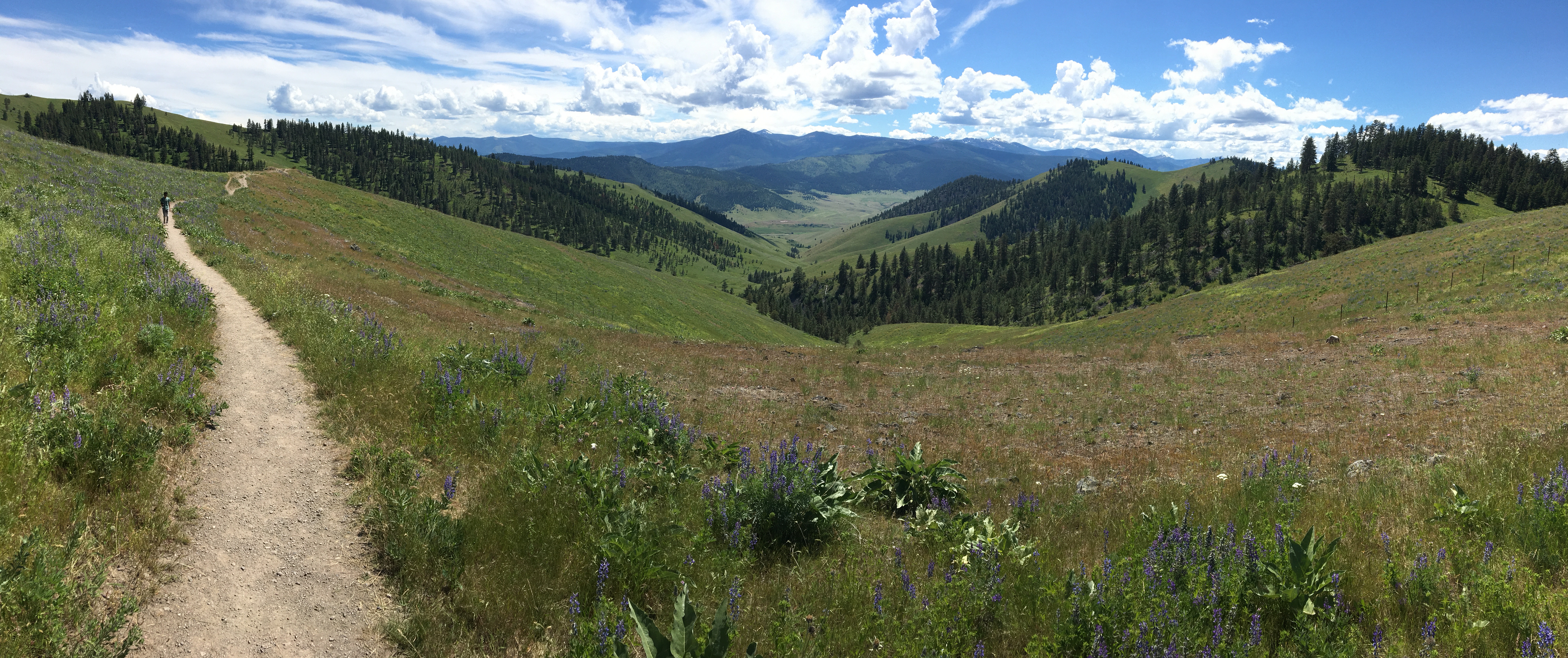
The Forest Service managed trail runs through Glacier in Montana, just below the Canadian border to the north end of Lake Roosevelt in Washington, to Lake Ross, through the north part of the North Cascades, past Ebey’s Landing (see photo) near where it connects to Port Townsend by ferry, and through Olympic to the Pacific. I’ve hiked short sections and roughly driven the length of this 1,200 mile, wild, rugged and beautiful trail.
The Ice Age National Scenic Trail in Wisconsin is now a NPS unit, so I will create a new entry for it. The trail will link most Ice Age National Scientific Reserves in the area, which are NPS affiliates. The Ice Age Floods National Geologic Trail runs from Montana to the Pacific Ocean. I’m keeping this post about all three together here.
Wisconsin’s scenic trail curves around the edge of the last ice age glacier 26,000-10,000 years ago, which covered the north near Lake Superior and east near Lake Michigan with a massive ice sheet. The trail extends from near the confluence of the Mississippi and St Croix Rivers east towards Michigan’s upper peninsula, south to Madison and back up the Door Peninsula between Green Bay and Lake Michigan. South and west of the trail contains both an area that had glaciers before that and a ‘driftless’ area without signs of glaciation. The glaciers stripped the earth of many layers of soil, leaving a flat land of lakes with short forests. The Wisconsin Dells, with its horizontally carved lines in the rock, is at the edge of the last glacier and the driftless area, where the ice sheets pressed and cut into landscapes that had not been glaciated before. From there the Wisconsin River flows down through the gentle driftless area to meet the Mississippi near Effigy Mounds. Frank Lloyd Wright build Taliesin in the driftless area, which reminded him of the verdant rolling hills of Wales, which were similarly carved by glaciers.
The simple geologic explanation for the vast floodplains and dramatic gorges, is that the ice melted, repeatedly collapsing ice dams between mountains, releasing huge waves of water and reforming the landscape. Much of the rich farming soil we depend on was placed there in a natural climate change event. Washington state produces billions of dollars worth of produce annually on those floodplains, including apples, milk, potatoes, wheat, beef, hops, hay, cherries, grapes and onions.
What some folks don’t seem to understand is that while the end of the last ice age was ‘sudden’ in geologic terms, man-made climate change is exponentially more abrupt. Imagine a deer seeing a hiker slowly approaching on foot and choosing to flee by jumping into the woods. Now imagine a deer seeing a truck approaching at 75 miles an hour and not having time to respond. That’s the difference between natural and man-made climate change. We don’t have time to stare into the headlights.






 Zero Carbon Travel