The Trouble with Thinking

The trouble with thinking these days is that few do it correctly. First, most Americans are chemically impaired, irrational or misinformed. Second, modern conveniences help us do many things every day without thinking. We act habitually, instinctively and follow others, and when nothing goes wrong, we declare ourselves ‘smart’. Third, we don’t know what real thinking requires. For most, ‘thinking’ starts with an unconscious desire, is validated by a childhood belief and is rationalized by something we once heard somewhere. However common, that’s mush.

Don’t feel bad. Few, if any, were taught how to think both methodically and comprehensively in school. Even well-trained academics are often either one-dimensional thinkers or at best employ self-developed, mismatched thinking techniques. After obsessing over mistakes for years, I finally recognized how haphazard and contradictory our way of thinking has become. So, on alternate Thursdays, I’m going to write about thinking: how to do it better, how to make fewer mistakes, and how better thinking is the way to a better future.

[That’s it really, but, if you want to read more, I belabor the point below.]

Most Americans are exposed to chemicals that reduce our cognitive skills. Self medication with products containing THC, the active ingredient in marijuana, is even higher than prescription antidepressants which have also soared, with over 20% of seniors consuming cannabis and 60+ million Americans consuming CBD. Long term exposure to THC can cause problems with memory, concentration, IQ, and ability to make decisions. 1/2 of American adults today were exposed to unhealthy amounts of lead as children, from leaded gas fumes and leaded drinking water pipes, lowering IQ a few points. And 2/3 of American adults drink alcohol regularly. Obviously all that presents an obstacle to thinking clearly.

But, even if folks got off dope and booze, most would still do the bare minimum of thinking. Our modern convenient lives are filled with routines, absorbing views from others and our habitual responses. Like Forrest Gump in the Army, not thinking is the path of least resistance. The Age of Reason lacks followers. We have returned to an age of Mob Rule, where illusions and emotions drive society. It’s very easy to become deluded today, surrounding yourself with whatever views you like: most Americans believe in aliens or ghosts, many believe in conspiracy theories, and unrealistic expectations are common. Critical thinking, weighing evidence and predicting consequences are ignored, and instead decisions are made by general feelings.

The climate crisis is a good example. Scientists agree that humans burned so much fossilized carbon from eons before we evolved, that we have caused global average temperatures to rise to levels that drive and will continue to drive mass extinctions for long beyond our lives, leaving our descendants to face unprecedented challenges to life on earth. That’s a fact. But even people who claim to be rational, logical thinkers find ways to downplay that threat and avoid taking action to help solve the problem. ‘Alternative facts’ are available online, you can simply refuse to believe evidence, or you can just ignore it and distract yourself with entertainment.

It’s easy and fair to blame politicians, biased media, hostile foreign governments and corporate lobbyists for lying to us. But how did we get to the point where most adults can’t tell fact from fiction, can’t see obvious consequences ahead, and can’t imagine how to solve basic problems like reducing carbon pollution? We can no longer simply raise a problem, discuss honestly, brainstorm and agree on the best solution. Sure, it’s a failure of leadership, but we’re all failing to face the truth and act appropriately. At this point we must admit we all have trouble thinking.

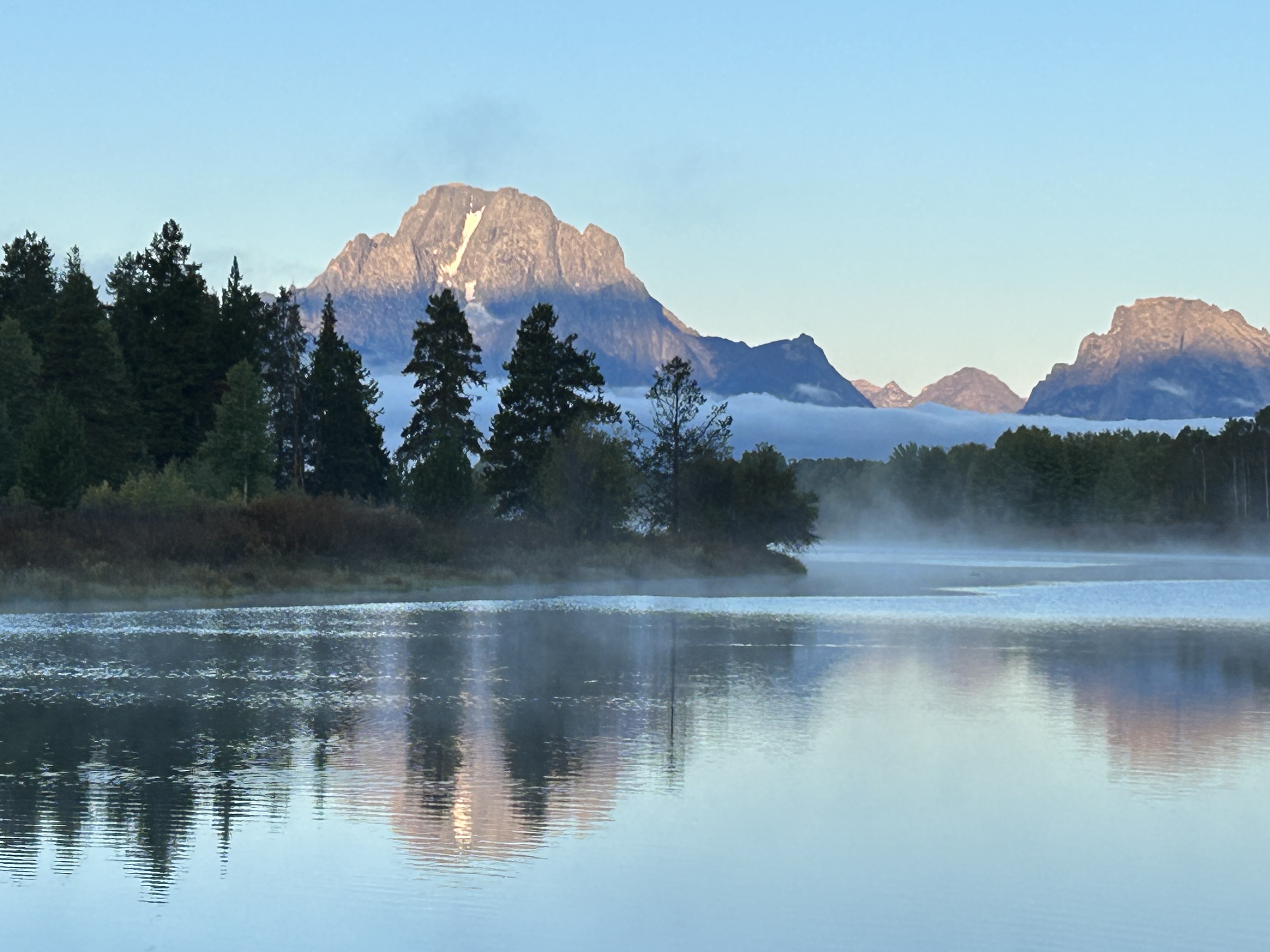
I will tell you the truth.  I am neither an expert in human psychology nor intelligence.  But I have way too much experience making and struggling with mistakes.  Determined to understand what went wrong, I obsessively analyze my own mistakes, specific historic mistakes and the broader, general mistakes humans make.  Frustrated, I travel, visiting sites of beauty and pain, of conflict and success, and of nature and destruction.  Each day trying to see a better way.  Isolated both by choice and by my own mistakes, eventually my view became as clear and honest as a distant peak on the horizon, emerging from the mist and hit by the sun above the wilderness.  

So now I have a few worthwhile thoughts about thinking. Unfortunately, my realizations come a bit too late for me.  Too late to save friendships, my first degree, marriage or my career.  Too late to discuss with my father.  But not too late for you to benefit, if you continue to read this blog.

We do not think how we think we think. Because we think wrongly, we make predictable mistakes. And we become depressed, which also decreases our cognition. But we could change how we think. We can become aware of how we really think and exercise more control over unhelpful ways of thinking. Better thinking could solve problems, help us make better choices, and help us come up with better ideas.  Then we would all feel better about ourselves and our future, instead of medicating ourselves into false comfort in an increasingly troubled world.

While we quickly agree that others need to learn how to think better, our vanity makes us reluctant to believe that our own way of thinking could possibly be improved. I challenge you to read my insights about thinking on alternate Thursdays. Why do I care? I believe we’re on the same side, and I want us to stop making so many mistakes. So I will write for you, so you will think better.  Thanks.

Extinction is a Mistake

Imagine a universe like ours, except devoid of life. Space, stars, planets, air, ocean and rock. Imagine our Earth, with waves on the beach, wind blown sand, lava, floating ice cap, canyons and waterfalls, spinning each day, heating or cooling each month, year after year, for eons. Structurally, very similar, but empty, without any living things, anywhere.

Nobody would explore it. None would appreciate its beauty, and no one could try to divine its purpose. Without any living creatures to inhabit it, and without us, such a world would be meaningless, neither studied, understood nor experienced. Without life, there is no knowledge.

Without knowledge, there is no life. Every living thing contains within it a recipe, the ingredients and the drive to cheat death. The recipe is our genetic code, passed down from our ancestors. Every living cell in our bodies carries this knowledge, which includes hidden traits and alternate characteristics for future generations, a master cookbook of the adaptations our successful ancestors employed to live, including our survival instinct. All living things carry such ancestral knowledge. Life began when some tiny process replicated itself in a repeatable way—an accident, a trick or a miracle. Life began when the knowledge of that trick was passed on to create the next generation. Life is that knowledge, plus every other trick that worked to keep life going for generations, in all forms, through billions of years of evolution.

Some such knowledge may be useless, dangerous or doomed to fail. In nature, failed ways of life die out, and such mistakes are forgotten. But species that have survived many times longer than mere humanity, have proven their success far longer than we have proven ours. Their lineage is noble, deserving of a place among earth’s great tapestry of living creatures. Our more recent genealogy is dubious, as we have used our supposed ‘superiority’ to create both weapons and pollution that could extinguish most life on earth, including ourselves. In our arrogance, we dismiss all wild species for not having adapted to us, when in truth we should adapt ourselves to sharing this earth with them. The mistake is ours, not theirs.

Life is knowledge. Many living things have learned to communicate, to call for help, to warn, locate and comfort each other. The tactics learned by observation, communication and mimicry become living knowledge of ways to outwit death, shared in community and thus kept alive for the next generation. Our species created written records as yet another path, besides our genetic code and our learned behavior. Some trivial knowledge may offer only a scant promise to enhance some future life with a minor convenience or comfort, while other knowledge may redesign human civilization, if we have the wisdom to discern it. We pursue knowledge to survive, to improve life and to pass it on. Because knowledge is life.

So extinction is the permanent loss of the secrets of life, both the code and the living behaviors. Most species have carried that knowledge for millions of years, long before humans evolved. We have learned from many species, observing how they act, adopting their tactics, and we have used tens of thousands of species to make medicines. We neither know the present value nor can estimate the future value of this accumulated knowledge.

Prematurely and unnaturally extinguishing masses of species, is far worse than simply killing. We do not know which species’ removal will affect other species’ survival in the indirectly connected, mutually evolved web of life. Extinction is the permanent end of life, and the erasure of all the accumulated knowledge used to create, to sustain both that life and the other species that depend on it, and to evolve further into some unrealized beautiful future. It is the silencing of tongues we do not understand, before we could learn what they were trying to tell us. And it is permanent. Forever. Never to be seen or heard again, despite eons of outwitting death. Extinction is the loss of what was, what is and what could have been. Artificial extinction is the ultimate betrayal of life.

By recklessly causing extinctions, we are like barbarians burning down the only ancient library of a lost civilization, full of wonderful ideas, miraculous cures, and priceless books, before we learn to read. E. O. Wilson, Harvard professor of evolutionary biology, once said, “destroying rainforest for economic gain is like burning a Renaissance painting to cook a meal.”

The world’s largest rainforest, the Amazon, is being cut down for logging and ranching. We are literally destroying rainforest for hamburgers. Besides the direct extinction of species, we are tipping this critical ecosystem towards desertification, releasing more carbon, raising temperatures, increasing fires, and changing our global climate. There is no wisdom in this course of action, no moral justification, no long-term net economic gain, no rational reason to give up so much for so little gain, no scientific approval, and no appreciation of the beauty of so many forms of life lost forever. And apparently, there is insufficient concern among people today to stop making this colossal mistake.

Which Side Are You On?

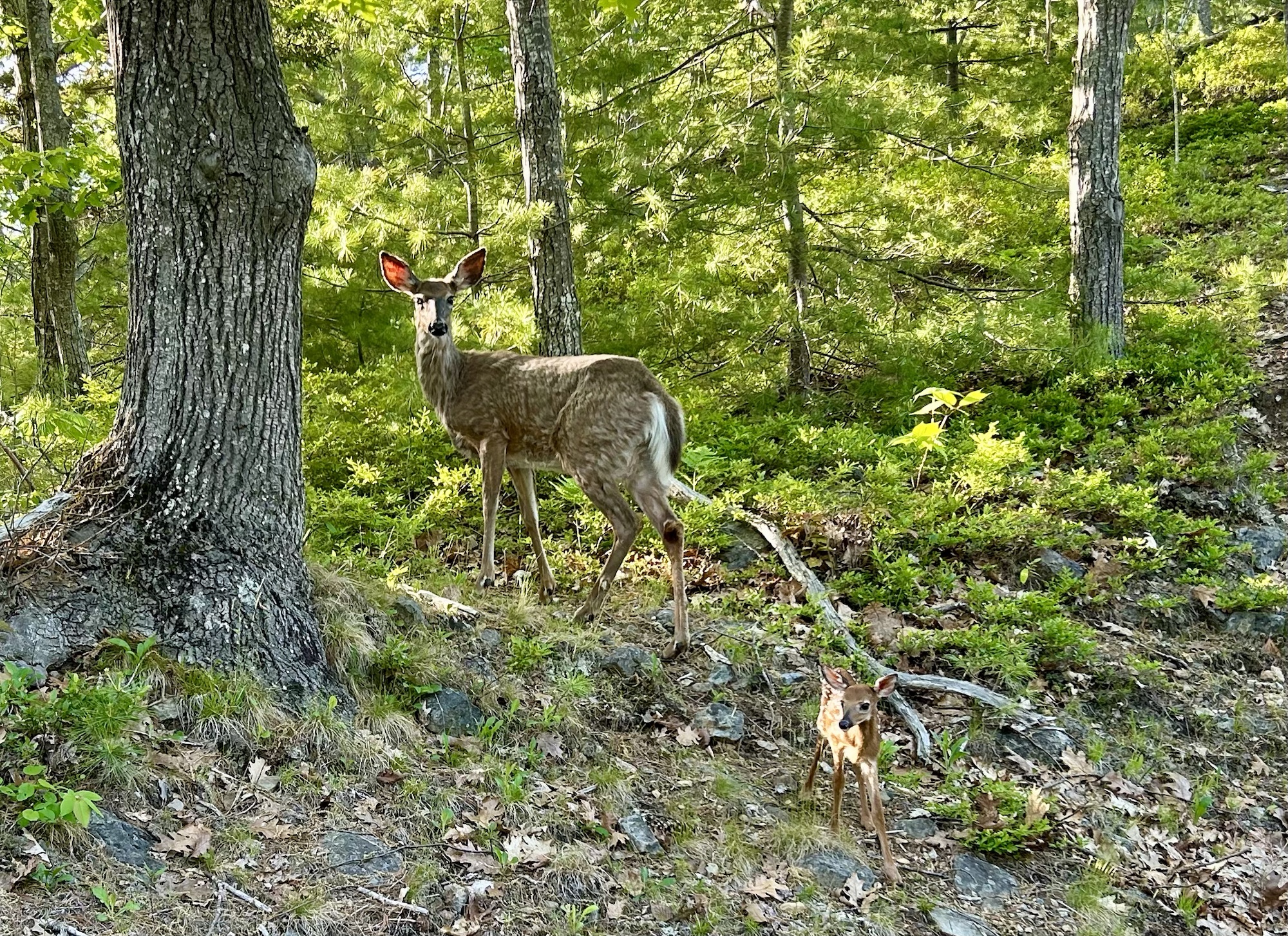
We are all on the side of the living. I am as I write this, and you are as you read it. We eat, breathe and have a pulse, and we have a common enemy: death. When we are in nature, we feel an affinity with the living creatures around us. When I was a boy, a large deer jumped out of the brush, stopped on the trail in front and looked, silently assessing me for a few seconds. As I looked into his large brown eyes and listened to his breath, I recognized our shared experience in being alive. We eat, breathe and have a pulse, and we have a common enemy: death. 

When we encounter other forms of life, we share a living affinity, and perhaps we curiously wonder about our differences. Lichen also photosynthesizes, respirates and circulates nutrients, and it constantly clings to life and struggles to survive. Even predators and prey are on the same side, ultimately. The prey understands the predator’s hunger, even as they evade it. The predator benefits when their prey thrives and multiplies. Both are trying to live and avoid death. Even a parasite or pathogen fights to stay alive in a living host. Every living thing contains within it a recipe, the ingredients and the drive to cheat death and stay alive, even if only for a brief time.

Recognition that all living things are ultimately on the same side is a revelation, a comfort and an inspiration. We are alive, akin to all living creatures who eat, breathe and have a pulse. We are human—all of us the same species, fundamentally members of the same tribe and all on the same team—, so we must want humanity to succeed. We may be a newer species, but we, like all living creatures, evolved in a diverse natural world. Nature sustains us, and our future is inextricably linked to how well we sustain nature.

And yet, somehow, we have chosen to stay on a path that will lead to mass extinctions. Many of us now fail to feel a part of the living world. A few of us are broken, fearful, violent and incapable of empathy, even with our fellow humans. Some are greedy, and selfishly don’t care that they are causing the natural world to become unbalanced. Many deny the need to change sufficiently to stop excess carbon pollution, irrationally believing we can ‘adapt’ to a climate in continuous, precipitous decline. Too many just give up, not bothering to make an effort, which perpetuates the problem. These unnatural views are myopic, and the path we are on leads only to regrets.

Each of us wants to live in a better world, with more life and less death. We don’t want more droughts, floods, hurricanes or wildfires. Our human conflicts are transitory tragedies, that we should try to resolve as a family, however distant or estranged we may feel. But our conflict with nature is existential, with consequences that will last forever.

Each one of us should reduce our carbon footprint, saving both money and life on earth. My car costs less to operate than any internal combustion car. Even when I charge in a state that still burns some coal for electricity, it still produces less carbon overall. Every switch to renewable electricity further simplifies our global task of replacing the fossil fuel infrastructure. And yet, people still resist making any effort to change, even though delay only makes the future worse.

So what madness has tricked us into extinguishing most life on earth? Were the coral reefs not beautiful when they still brimmed with colorful creatures? What temporary insanity has convinced us that making our only world uninhabitable for most forms of life is somehow desirable for us? Have we forgotten that we are part of the natural world we evolved within, inhabit and that sustains us? Do we no longer recognize the beauty of trees? Are we now cruel to animals?

As living beings, we eat, breathe and have a pulse, and our common enemy is death. Why are we allying ourselves with our common enemy against life on earth? When did we switch sides? 

”Our survival is affected as the abundance of life is diminished.” 

Unknown

Whale Blubber & Vineyard Wind

Butler Flats Light (above) has marked the entrance to New Bedford Harbor in Massachusetts since 1898. It was a clever bit of engineering by a marine architect using a caisson or box to pump out the water for construction, and every day it’s used for navigation by the famed scallop fleet, ferries, the occasional tall ship, and many other boats passing through the hurricane barrier. When the light was built, New Bedford still dominated the whaling industry, sending ships on long voyages to harpoon whales, melt their blubber into oil and return to fuel America.

Behind the light are two wind turbines, which provide electricity today without extinguishing any species. Despite the preposterous claims of fossil fuel industry funded politicians, there is no such thing as ‘windmill cancer’ and bird strikes are rare. But folks who live near the turbines complain that they cast shadows, are noisy or are ugly, so new wind turbines are now built far offshore, south of Martha’s Vineyard. The current project is known as Vineyard Wind, with 62 turbines each generating 13 megawatts when complete. Currently, there’s a pause after a blade broke, requiring inspections and clean up. Massachusetts recently committed to roughly quadrupling wind projects in the area.

The turbine assembly is based in New Bedford, with final installation of the towers at sea. Interestingly, to protect whales from construction noise, they create a circular curtain of bubbles rising up from around the foundation on the seabed. They got the idea from whales, who create a circular curtain of bubbles underneath schools of fish to herd them together into a bite sized meal. Thousands of locals work on the project, in a boon to the economy, and the first project will provide relatively cheap, green energy to 400,000 homes. I’ve observed the gimbaled tower segments and long blades being transported out to sea by huge construction ships on the same routes once used by whaling ships.

Progress is beautiful, especially when it helps save so many different species on earth from extinction. Back in the day, whalers would have argued that smelly whale oil was ‘indispensable’ and ‘higher quality’ than alternative fuels, and they resisted progress. Today, that seems absurd, although now the fossil fuel industry lies routinely to protect its profits. Ironically, during the Civil War, the US government helped launch the fossil fuel industry by buying their new fuel and taxing alternatives to save the Union. Now we need the government to help us transition quickly to green energy to save life on Earth and leave the smelly old fuels unburned.

Pilgrims v. Puritans

Recently I returned with my kids and my Mom (above right) to Duxbury in Massachusetts, where she grew up. Duxbury is a pretty seaside town with a large harbor on the north end of Plymouth Bay, reflecting the long history of our seafaring roots. When the Pilgrims arrived on the Mayflower in 1620, they first landed in Provincetown on the tip of Cape Cod, skirmished with the natives and then moved to Plymouth. The military commander, Miles Standish, settled in Duxbury, and his statue stands there atop a large viewing tower on Captain’s Hill. Longfellow wrote a romantic poem about a love triangle between Standish, the cooper John Alden and a recently orphaned teen named Priscilla Mullins. John and Priscilla Alden lived on the homestead above, which is still owned by their many descendants as a National Historic Landmark.

The Aldens were Pilgrims, not Puritans. The Pilgrims had separated from the Church of England, while the Puritans did not. Just before arriving in Plymouth to form a new colony, while awaiting royal permission, the Pilgrims and others aboard wrote an independent contract, the Mayflower Compact of 1620, which was the first self-governing document by British settlers in the now USA, although the British colony of Jamestowne was founded first. The Puritans arrived around 1630, settling in Boston and Salem. Contrary to the ‘mind your own business’ ethos of the Pilgrims, the Puritans were so strict that many left their colony for religious freedom. Such historic differences may seem inconsequential now, but freedom versus loyalty to England would become a big issue in Concord in 1775. And still today, there are conflicts between those who would impose their strict religious beliefs and those who prefer more freedom to make our own choices.

Driving back over the bridge from the beach, we got a glimpse of Miles Standish looking out over the harbor once famed for ship building and a large merchant fleet, before we went to dinner at a haunted restaurant, built before the Revolution. Moments like these improve our perspective, remembering the breathtaking leap of faith our ancestors took to settle here. While not part of the NPS, I recommend visiting the reconstructed living history museum in Plymouth, now called Plimoth Patuxet Museums, as well as other historic sites in the area like Alden House in Duxbury where we enjoyed an excellent tour.

Why Do We Need the NPS to Help Us Tell Our History?

Often, there’s a local reluctance to allow government outsiders to tell ‘our’ history. Communities will occasionally refuse to cooperate or turn over any control over their sites to the National Park Service. Reagan’s boyhood home famously stays independent, concerned that his legacy might be tarnished. Sometimes politicians get involved directly in changing the way history is told, and even bend the narrative away from self-evident facts, such as at Andrew Johnson’s site. 

Debates often become heated with charges that one side is “revising history” to fit preconceived views. But honest historians do not rewrite history to suit their tastes. A good historian should try to revise their understanding of history, always to make it more accurate. In the UK, “revising” means “studying for exams”, meaning reviewing the material to understand it better. Sometimes a new fact comes along, such as a DNA test proving who is related to Thomas Jefferson. Views and interests change too, which also require us to revise our understanding of history, as we have new questions to answer. Future history books must be updated to include the most accurate information and to address the needs of future generations. 

Bad historians ignore new facts, preferring the old version they learned, even if false. Some even intentionally mislead children to try to hide shameful episodes, claiming to protect them from the truth. Some dishonestly smear historical figures or downplay historic events in order to promote a world view based on propaganda, such as what happened with General Grant. Lying to kids or trying to brainwash the public to further a dishonest agenda is never acceptable. 

But the park service has experience and expertise to help sites reach more people accurately and effectively. They hire researchers to find more information to expand everyone’s knowledge. They conduct renovations carefully to restore sites to how they appeared at specific times. They know how to create films, displays and foreign language brochures. Sometimes the park service gets it wrong, prompting debate, review and new efforts. Sometimes the site is best managed by a specialized local group, often in partnership with the park service, such as the Tenement Museum in NYC. Still, the park service’s job is to preserve, inspire, educate and make sites more fun for all. So typically, it’s at least worth letting them help. 

I have a good education, do extra research on each site and form my own views, but I also try to understand, verify facts and frequently ask questions. Almost always, the park rangers can quickly disabuse me of erroneous views, since they are experts. Occasionally, I meet the odd ranger with views in contradiction to the facts or find errors on display, and I bring those to the attention of other park service employees. Getting the stories right can be difficult, but almost always the park rangers are determined to do their best to tell the story correctly, effectively and well. That’s what they do. 

I mention this now, after visiting the Gulf Islands site. In both Mississippi and Florida, the park service does a good job in accurately telling the history of the gulf coast, including the dark history of the Civil War. Unfortunately, the US military turned over the most important historical sites, Forts Gaines and Morgan, over to the state of Alabama, where I’ve observed troubling patterns. I believe the national park service would do a much better job telling the history.

Visitors to Fort Morgan might not learn which side won the Battle of Mobile Bay or why that matters. The information may be there, but it is not presented effectively. Here are my recent notes. 

  • Website focuses on the history of old fort Bowyer more than the Civil War era Fort Morgan. 
  • Park brochure timeline covers fort’s history but buries highlights in obscure details. 
  • The Battle of Mobile Bay battery site and plaques are not shown on the map. 
  • Civil War panel neglects critical Union victories at the end, such as Richmond, Petersburg and the surrender at Appomattox. 
  • Flag pavilion plaques show the US flag as only operational in 1813, ignoring the period from 1864 to the present.
  • Posters in gift shop celebrate the sinking of the Union ship Tecumseh and the early success of the CSS Tennessee. 
  • Bookstore focuses on Confederate defense of Mobile 50 miles away, rather than on the pivotal Union naval victory of Mobile Bay 50 yards away. 

There are only two ways to reach the Battle of Mobile Bay battery site.

  • 1) go straight through to the far side of the fort, enter a series of tunnels (use your phone for light) on the right, wander through a maze of passageways, pass through several huge empty rooms, find a small doorway around a corner leading outside, return on the grass between the inner and outer walls, cross the moat, climb a ramp (no handholds) to the top of the outer wall, climb steps through some fortifications, climb some more steps, and go around the outside of the fence that appears to block your path. Or…. 
  • 2) go behind the restrooms on the far side of the parking lot, climb up through a different battery of fortifications, walk along to the far left, find a narrow stairway up a hill, climb it even though it appears to be blocked at the top, wander along the top of the outer wall to the outer edge of the fence mentioned in step 1, circumvent it and climb up to the top above Battery Thomas.  

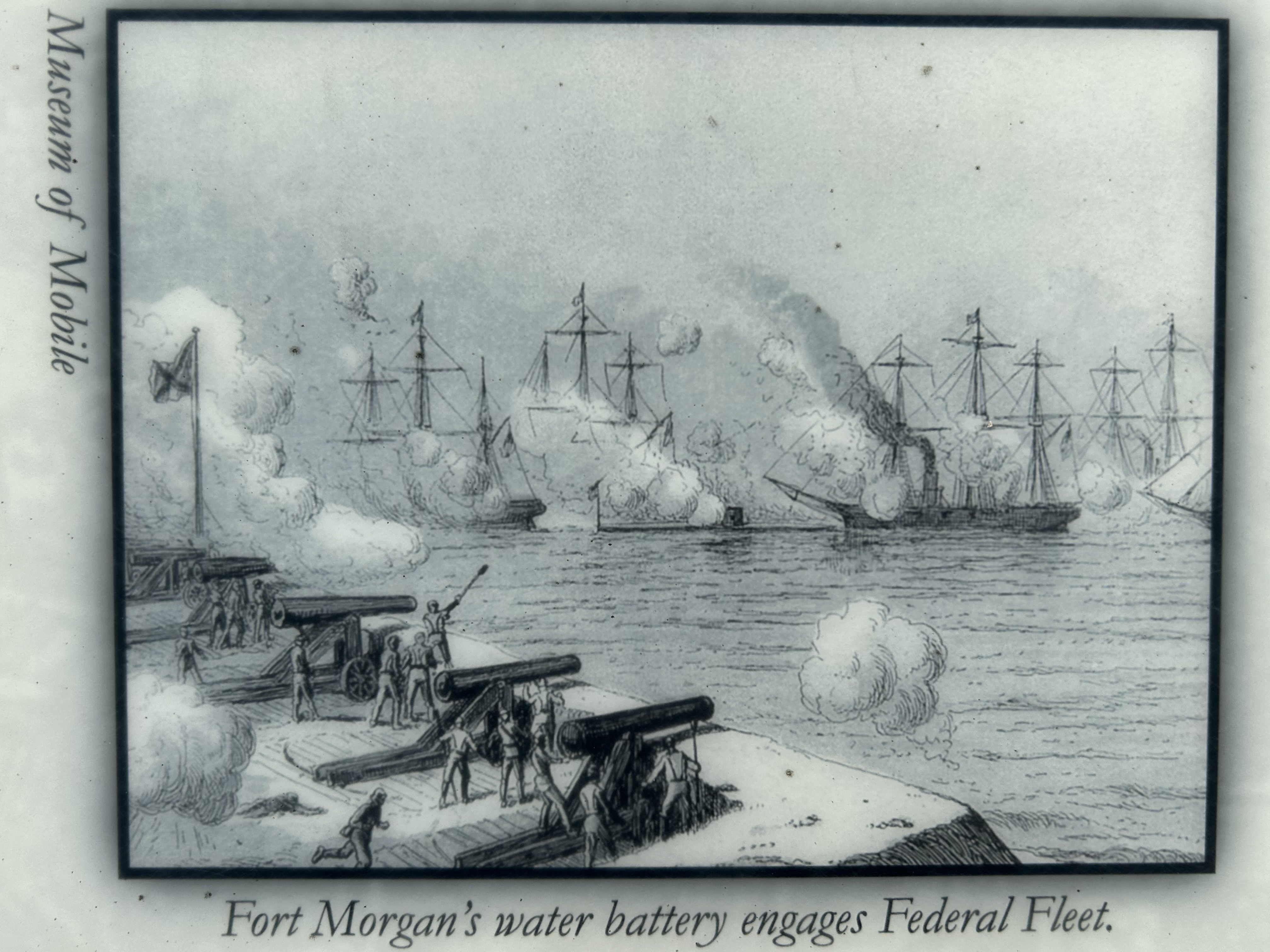
In neither case are there any signs, arrows, map references, guideposts or signals to find the spot, and it’s best to wear sturdy non-slip shoes. Finding the well-written and illustrated displays (e.g. photo above) was a nice surprise, as I only climbed up there because I got lost exploring and wanted to get a look at the ship channel. Frankly, hiding the panels appears to be an intentional effort to obscure or erase the true and important history that led to the end of the Confederacy and slavery. 

If the park service managed the site, I’m sure they would tell the story of one of our country’s greatest naval victories accurately and effectively, preserving that important history, inspiring, educating and delighting future generations. Especially today, on the first day of Black History Month, it’s critical to get history right. That’s why we need the NPS to help us with our history. 

What’s the Point of History?

What’s the point of history? Why bother learning all those boring facts and dates? Sure, there are some interesting characters and conflicts, but surely all that old stuff doesn’t have much relevance to today’s problems with AI, mass shootings, war in the Middle East and global warming. The world changes so quickly now, so what’s the point dwelling on the past, when we need to fix future problems? 

Glad you asked. 

There’s a common misconception that we have some sacred obligation not to judge the past and just to record it as it happened without questioning it. Out of vanity, many people like to study the history of their ancestors, believing that they were virtuous and victorious, in order to be inspired. We’re passive spectators, taking note of past events, and maybe defending the actions and beliefs of our own ancestors, as if we were cheering for our home team. If someone criticizes part of our history, then we say that nobody should judge what they did using hindsight. We read history in order to validate our beliefs that our origins were honorable, and by not questioning anything, we declare ourselves honorable historians. 

That is all lazy, narcissistic nonsense that wastes our time, misses the point entirely and prevents us from learning anything useful. We do not study history in some vain attempt to feel better about our selves due to something our ancestors did. We study history to make better choices now, so that we can rightfully feel proud that we are doing our best. The dead can suffer some honest criticism, and they do not enjoy being excuses for our mistakes. Rather than being forgotten, I’m sure they’d prefer being inspiration for our future successes. 

The point of studying history is to learn from the past—both admirable actions and atrocious mistakes—in order to make better decisions today. History didn’t have to happen the way it did. As today, people made mistakes, were driven by greed or hate, and acted out of ignorance. They could and often should have made better decisions, but, no matter how flawed they were, we should not simply dismiss and forget them. We must learn from their mistakes. We must constantly apply our highest moral judgements, use our imagination creatively, and draw the most logical conclusions possible, whenever we study history. That way we will learn as much as we can, so that we can apply the lessons of history to our future decisions. 

Above is a Ghost Dance Shirt from 1890, decorated with eagle and owl feathers, worn by a Lakota (Sioux) warrior who hoped that it would protect him from bullets. That December 29th, at Wounded Knee, under a flag of truce, the US Cavalry, driven by settlers’ often imaginary racist fears, machine gunned 250 to 300 men women and children to death. The point of history is neither to let such facts sit dryly without emotion or judgement in a book, nor to toss it in the dustbin, nor to argue that the massacre was inevitable, nor to compare whether your ancestors were more mistaken than mine or anyone else’s. The point of history is to learn from past mistakes in order to avoid the doom of repeating them. 

620,000 men, roughly 2% of the population died in the line of duty during the Civil War. If we apply no judgement as to why they died, then we learn nothing useful. If we are dishonest or allow ourselves to be confused by old misinformation, then we will draw the wrong conclusions. If we understand the plain truth—that the war was fought over slavery—, study its racist roots, and apply our best judgement, then we can fight racism better and perhaps avoid a future war. Learning to be better must be our main goal, after considering the consequences. 

Some lessons can be applied immediately, and others are evergreen. For example, if the safety lessons of Port Chicago had been learned immediately, another similar disaster could have been prevented. The deeper lesson, that bias kills and that diversity can save lives, is one many of us are still struggling to learn. If you can’t learn anything useful from history, you’re not trying hard enough. 

Today’s problem of AI replacing skilled labor can be better understood by studying labor history. The most intractable conflicts today can be understood better by studying hatred and injustice from our past. The climate crisis can be better understood by studying evolution, archaeology, and our few remaining intact ecosystems. History is the reservoir of our past experiences and knowledge, and we must draw on that as thoughtfully as possible, always driven by the need to improve ourselves. That’s the point. 

Forest Wildfires

I know it’s winter, but we need to talk about wildfires. There is a common, simple-minded view—popular among those who deny climate change—that overzealous park employees unnaturally suppressed fires, causing wildfires today. End of story. Once we ‘catch up’ on the ‘fire deficit’ everything will be fine. This is bunk.

Last year Canada had a record-smashing year of wildfires, and the frequency of wildfires far exceeds what is normal, considering the naturally slow growth rate of trees in boreal forests. Most of these fires were in remote northern Canada, where historic fires were not even reported, let alone suppressed. The estimated number of fires was not too high, but many of the fires were mega fires, burning over seven times as many acres as the modern historic average. There is only one explanation for the scale of the wildfires last year, and it isn’t Smokey the Bear. The primary cause of increasingly severe forest fires is carbon pollution. 

The first humans to change natural fire ecology in North America were natives who for centuries used fires in the valley for agriculture and to attract game with new grass. The most destructive humans by far were loggers who clear cut whole forests. During the Great Depression, roads and campgrounds were developed in both old and regrown forests, bringing millions of visitors who parked their hot cars on dry grass, dropped their cigarettes on pine needles and left their campfires unattended, causing a dramatic increase in forest fires. Firefighters responded by putting out fires when they threatened nearby communities.

We changed forest fire ecology in complex ways over centuries, so the simple ‘fire suppression’ explanation is false. We don’t know exactly what the forest’s natural ecology was like before man started playing with fire here, but man’s brief experiments for a few decades last century—causing wildfires due to camping and suppressing some fires at the edges—all account for maybe 2% of the life of a Giant Sequoia. Yosemite park rangers tracked all fires within the park since the 1930’s, and for decades none of the fires were large enough to matter to the overall health of the forests until recently. Past fires were often 100 or maybe 1000 acres, but recent forest fires are 100,000 or 1,000,000 acres. Our hotter climate has changed everything. Now we need to change our perspective from our recent past to the consequences of our carbon pollution on the future. Extinction is not a mistake we can correct later. 

California has the most national parks with 28 park units, and about 12 of them have some type of large forest, often wilderness. I’ve been in all of those forest parks in the past year or so, and 9 now have huge swaths of dead trees from recent wildfires. 

Only Muir Woods, a small coastal redwood forest park along a creek surrounded by wealthy suburbs, has been spared. Pinnacles has had multiple wildfires in the past three years, but firefighters managed to contain them quickly. Even foggy Redwood park lost 11,000 acres in 2003 due to the Canoe Fire. 

This level of wildfire is not normal; it is out of control, and it is getting worse. Discussing past firefighting efforts and increasing the rate of manmade fires is not going to fix the problem. If we do not stop our carbon pollution, then 100 years of environmentalists’ efforts to save these forests for future generations will be wasted. 

No Time To Wait

The warmest time of the day is from 3-5 pm, not noon when the sun peaks. The warmest week of the year is between mid July and mid August, not the summer solstice in June. Similarly, the peak year of manmade global warming will come years after we stop increasing carbon pollution. The delay in feeling the full effects means, if we wait until the climate gets intolerable before acting, then we will have to endure many years beyond that intolerable level before our actions take effect. 

We know we are abruptly shifting our climate out of the comfortable zone that enabled human evolution, and we don’t know how bad it will get. We only know that we must act long before the climate becomes intolerable, in order to avoid catastrophe. 

Some say we should wait for more evidence about global warming before acting, such as scientific proof showing the damage caused by carbon pollution. This is like refusing to stop smoking and start taking medicine, until after the disease kills you. Climate scientists have already diagnosed the problem and prescribed the solution, but too many of us are unwilling to face the truth, change our behavior and take our medicine. 

Standing On the Shoulders of Giants

100 years before I started this trip, my grandfather and two of his rambunctious young friends drove a 1919 Hudson Essex convertible on a summer road trip from Massachusetts to Wyoming and back.  Dreaming of Zane Grey’s purple sage, they packed their pistols and loaded their camping gear into a trailer.  Every other day or so, they had to fix either the car, the tires or the trailer.  The three of them took turns driving 50 miles each per day, while one rode in the trailer.  I know this, because he kept a journal, which my uncle has lent me.

They evaded two likely robbery attempts, and enjoyed free meals from curious folks along the way.  They hunted, fished, rode horses and slept under the stars.  One shot himself in the foot while trying to draw on a rabbit, and once, near the end of the trip, two of them had a bare-knuckled brawl.  In many towns out west there were more “Indians” than anyone else, and they observed a bank robber caught by cowboys before he could escape on horseback. Tough guy that he was, my grandfather wrote his mother regularly, describing their adventures, asking for money and enclosing pressed wildflowers. 

“I would not go by train if they gave me free rides both ways.
We have lived and seen life in its rawest phases and have lived each state as it came along.
We have been right with nature and also have seen real life among all classes of people.”

— F. Marsh, ‘somewhere between Meadow and Chugwater Wyoming’, July 19, 1921

An avid birder and naturalist, he carefully recorded his sightings: “many big red headed woodpeckers” in Ohio, Illinois “full of small screech owls”, “hundreds of wild pigeons and red headed woodpeckers” in Iowa, “villages of prairie dogs”, elk, beaver, bear, a badger, a pine marten (weasel), various ducks, whiskey jacks, flocks of “blue and spruce” grouse, yellowlegs, “flocks of whippoorwills” and a wolverine in Wyoming (with deep snow in August at 10,000’). Several of these species are no longer seen where he saw them. They spent a month camping in Wyoming and neighboring states and also stopped in many of the same places I’ve been: Seneca Falls, Indiana Dunes, Devil’s Tower, Mt Rushmore, along the Oregon Trail, the Custer battlefield, Wind Cave, the Badlands and Yellowstone.

The trip changed my grandfather. By the end of his journal, his writing is a bit bolder, more confident and even defiant. The adversity, rough roads, lack of funds, gruff humor and necessity of keeping in good spirits while solving practical problems creatively, must have changed all three friends for the better (despite the fisticuffs). 30 years later, he took his two kids across country on another epic journey recorded by my uncle. Another 20 years after that, and he was still telling great stories and reading The Roosevelt Bears (see photo) to me and my siblings.

On this Father’s Day, I’m thinking of my Dad, who either took me or sent me on field trips as a kid to almost every park in New England and many more on the way down to DC. He got along great with his father-in-law, and they loved sharing stories and laughing. For them, adventures were one of the most important parts of life, and I wish I had told them more how much they inspired me to see the world and learn. So, if you have the chance to tell your father (or any father-figure for you) how they have inspired you to be better, then please do so. Thanks.