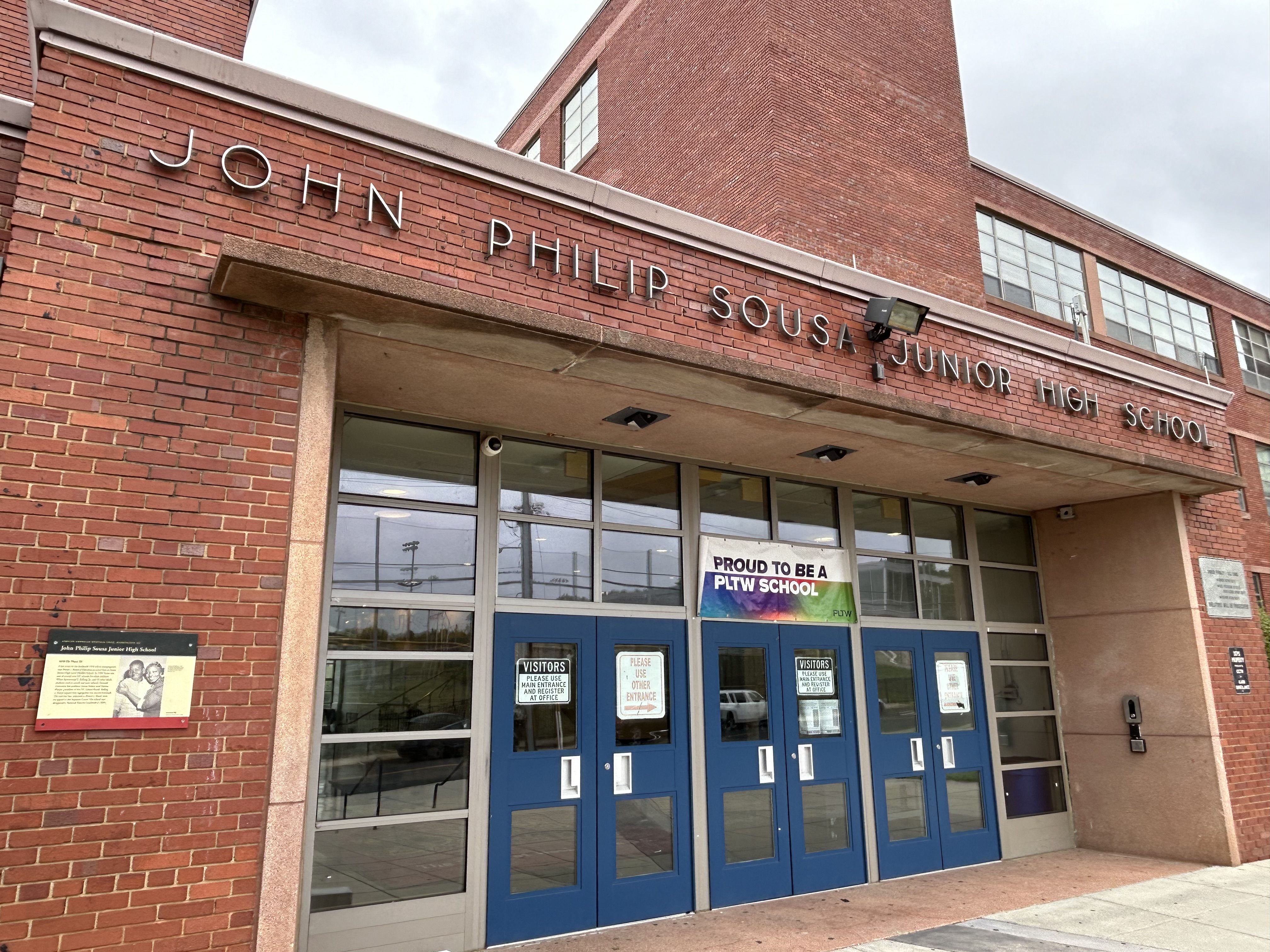
In 1950 a group of black students were denied admission to the then white school above (now a middle school in a predominantly African American neighborhood). At the time, black schools were severely overcrowded, while white schools had plenty of empty seats for students. Integration was proposed to make education more fair. A law professor at Howard University sued the DC school board president on behalf of one of the students, Spottswood Bolling, pictured to the left of the old entrance above. Bolling v Sharpe became part of the landmark Supreme Court case Brown v Board of Education. This park is affiliated with Brown v Board NHP in Kansas, and it is the only NPS affiliate site in DC.
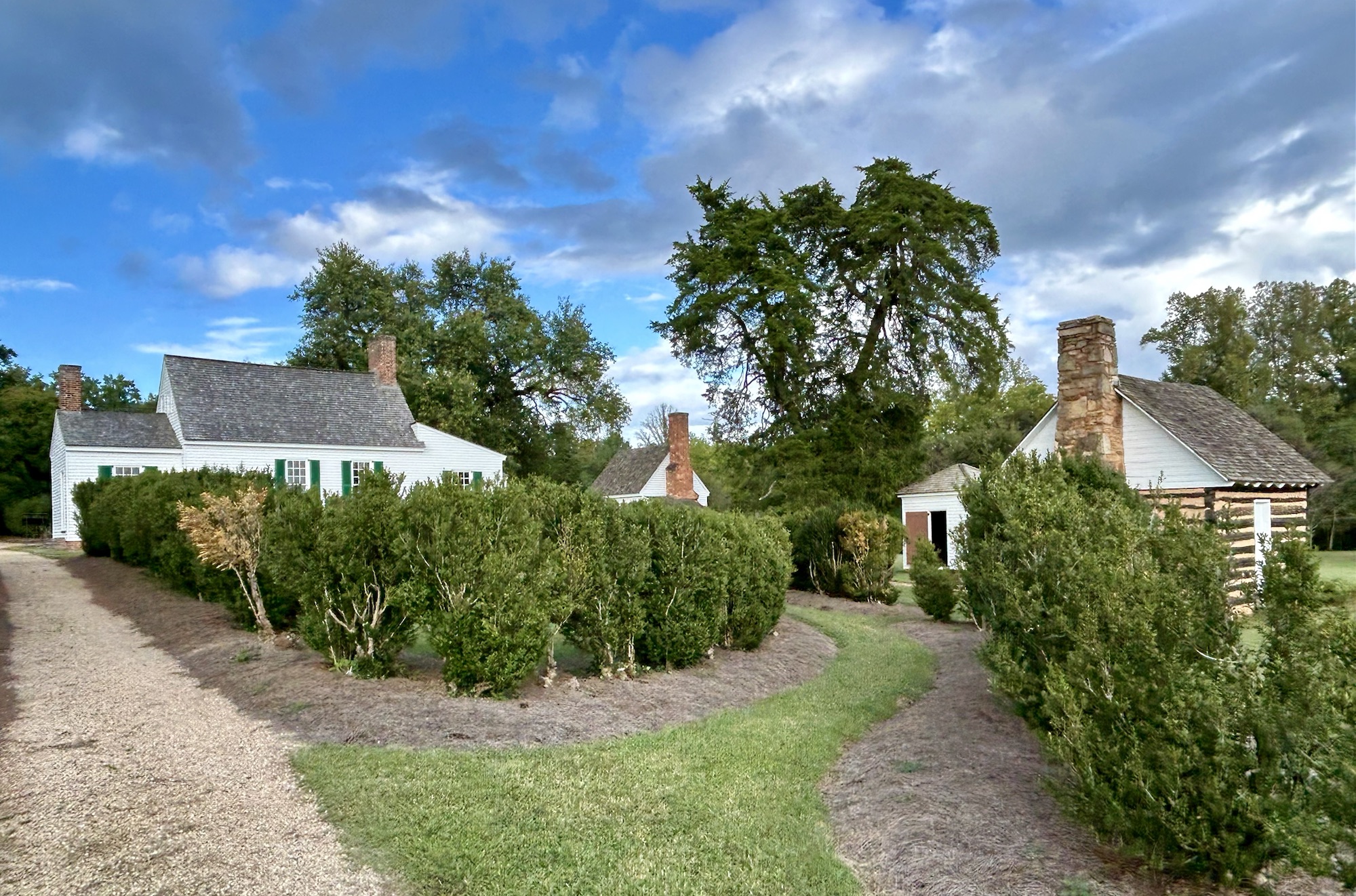
Patrick Henry Jolly, a direct descendant of his namesake, greeted me at Red Hill (one of my favorite affiliate sites, above), where his ancestor is buried on a 1,000 acre estate in Virginia. We discussed Jefferson, a man infamous for his many long, bitter personal grudges, and I learned that Jefferson called Henry “the greatest orator that ever lived”. Speaking to Daniel Webster, a well known orator himself, Jefferson described Henry’s gift as being almost magical, delighting and moving him, even when he spoke in opposition to Jefferson, and yet Jefferson, a genius, thought, “what the devil has he said?”
Henry has been described by biographers as the Prophet or Voice of the Revolution, but the title that strikes me is Demosthenes, the greatest orator of Ancient Greece. Ogilvy, the father of modern advertising, wrote, “When Aeschines spoke, they said, ‘How well he speaks.’ But when Demosthenes spoke, they said, ‘Let us march against Philip’”. You may have heard a mistaken version of this quote with the Roman Cicero as Demosthenes’ rhetorical rival, but, of course, Cicero lived hundreds of years after Demosthenes, and attributed some of his success to adopting Demosthenes’ techniques and phrases. Patrick Henry, through his spoken words, ignited the hearts of our country’s founders to declare independence, prepare for war and give their lives and sacred honor for the cause of liberty against tyranny. And they recognized him for it contemporaneously. Jefferson said that “no man was as well suited for the times”, that he didn’t know what they would have done without Henry, and that he was “far before all in maintaining the spirit of the revolution.”
Of course, Henry accomplished much in his own right, including supporting George Rogers Clark and being elected Governor of Virginia five times. But it his speeches with many lines that still resonate today, especially his most famous speech 250 years ago—as a slave owner speaking to fellow slave owners—boldly stealing and reimagining a line from the play Cato, A Tragedy, that make Henry immortal. With Jefferson and Washington listening attentively, Henry convinced the Virginia Convention to fund troops in anticipation of the Revolutionary War, punctuating the final line by dramatically plunging his (blunt) letter opener against his chest. The letter opener was preserved by Patrick Henry Jolly’s family and is now on display at Red Hill.
“Is life so dear, or peace so sweet, as to be purchased at the price of chains and slavery? Forbid it, Almighty God! I know not what course others may take; but as for me, give me liberty or give me death!”
His large marble statue sits in a marble rotunda at the Franklin Institute in Philadelphia, a private museum that promotes science, making this an affiliate site. This 20 foot statue was made in the ‘30s by Fraser, sits on an imposing pedestal, in a room modeled after the Pantheon in Rome. There’s an expensive new light display, which accounts for Ben’s odd pallor, and there are some quotes. The memorial is free, as is parking for a short time.
Franklin’s print shop and post office are 2 miles away in Franklin Court—as is the recommended Benjamin Franklin Museum—, which is part of Independence National Historical Park. There’s also an older, well known bronze statue of Franklin at U Penn, which he founded. He also founded the colonies’ first successful public lending library, first public hospital, and first insurance company. Franklin was Governor of Pennsylvania and led the state’s abolitionist society. He helped draft the Articles of Confederation, the Declaration of Independence, the Treaty of Paris, and the Constitution. He was an author, printer, inventor, scientist, musician, diplomat and founder, when he wasn’t busy doing other things. We will never see the likes of him again.
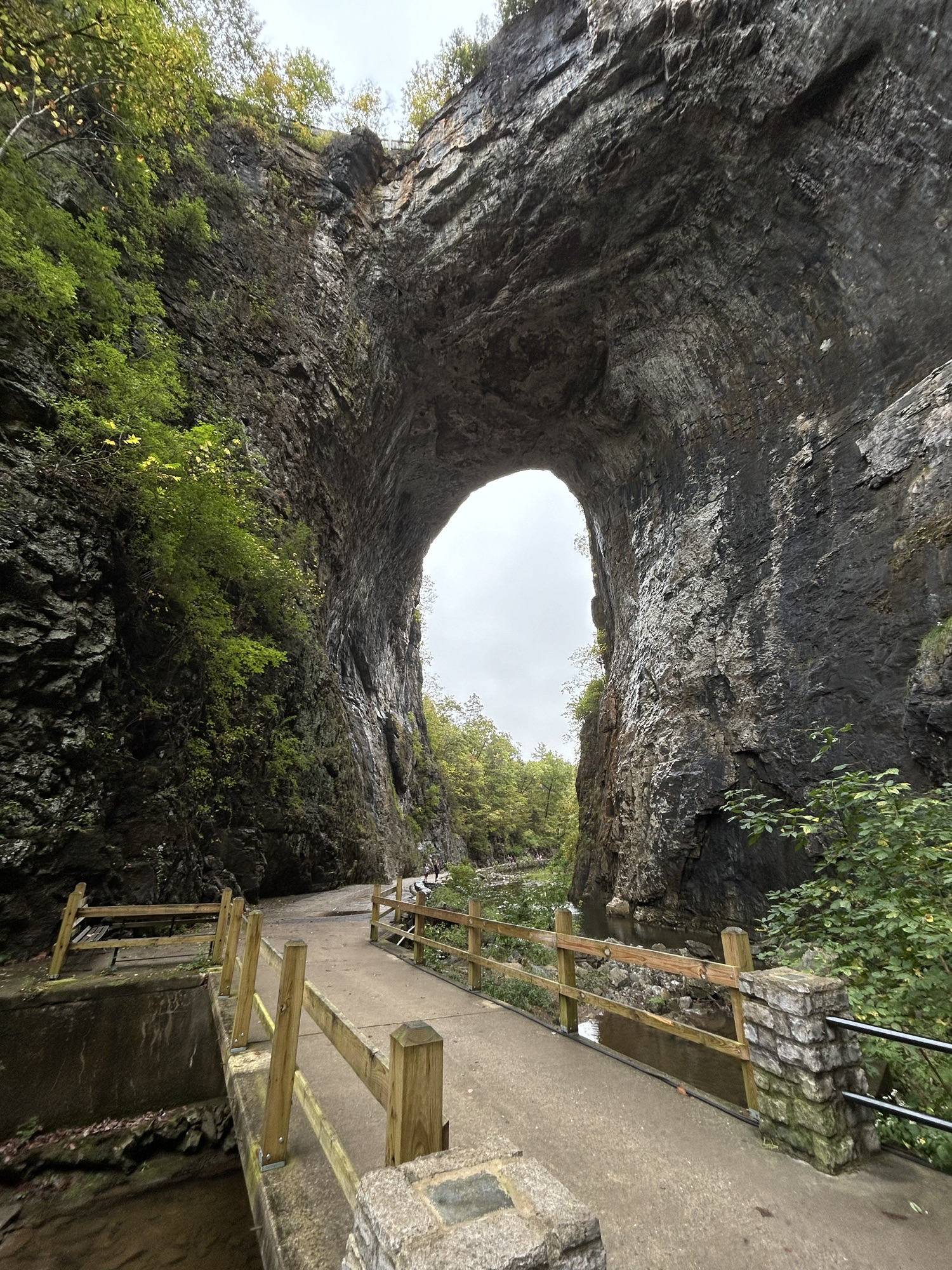
George Washington surveyed it in 1750, and Thomas Jefferson bought the largest limestone arch in North America above in 1774. At 200’ tall, it’s higher than Niagara Falls. See if you can find the people in the photo. It’s an NPS affiliate, managed by Virginia State Parks. There’s a pretty 1.7 mile trail up under and past the arch along Cedar Creek, with many steps, interesting rock formations, heron below, woodpeckers, chickadees and other birds.
What a beautiful place! A Canadian horticulturalist, Dr Henry Moore, deserves credit for the idea creating a peace garden—built during the Great Depression—on the Manitoba / North Dakota border. America has far more war memorials than parks devoted to peace. Chamizal on the Mexican border is dedicated to diplomacy, and Perry’s is both a war and peace memorial. As we begin a new year, we should not take peace and diplomacy for granted, given all we sacrificed in wars.
This affiliated park, a favorite of mine, is a neutral zone with the entrance between each country’s border security. You will need proper id either to continue on or to return to your home country after your visit here. The park is not far from the small town of Rugby North Dakota, which is the geographic center of North America. It’s a bit of a trek from the nearest US supercharger in Grand Forks, but there are a couple car dealers on the way that offer CCS charging if you have the adapter. Also, the park itself has a free electric 1772 car charger at the drop off entrance to the Conservatory, which has a massive collection of succulents donated by local enthusiasts.
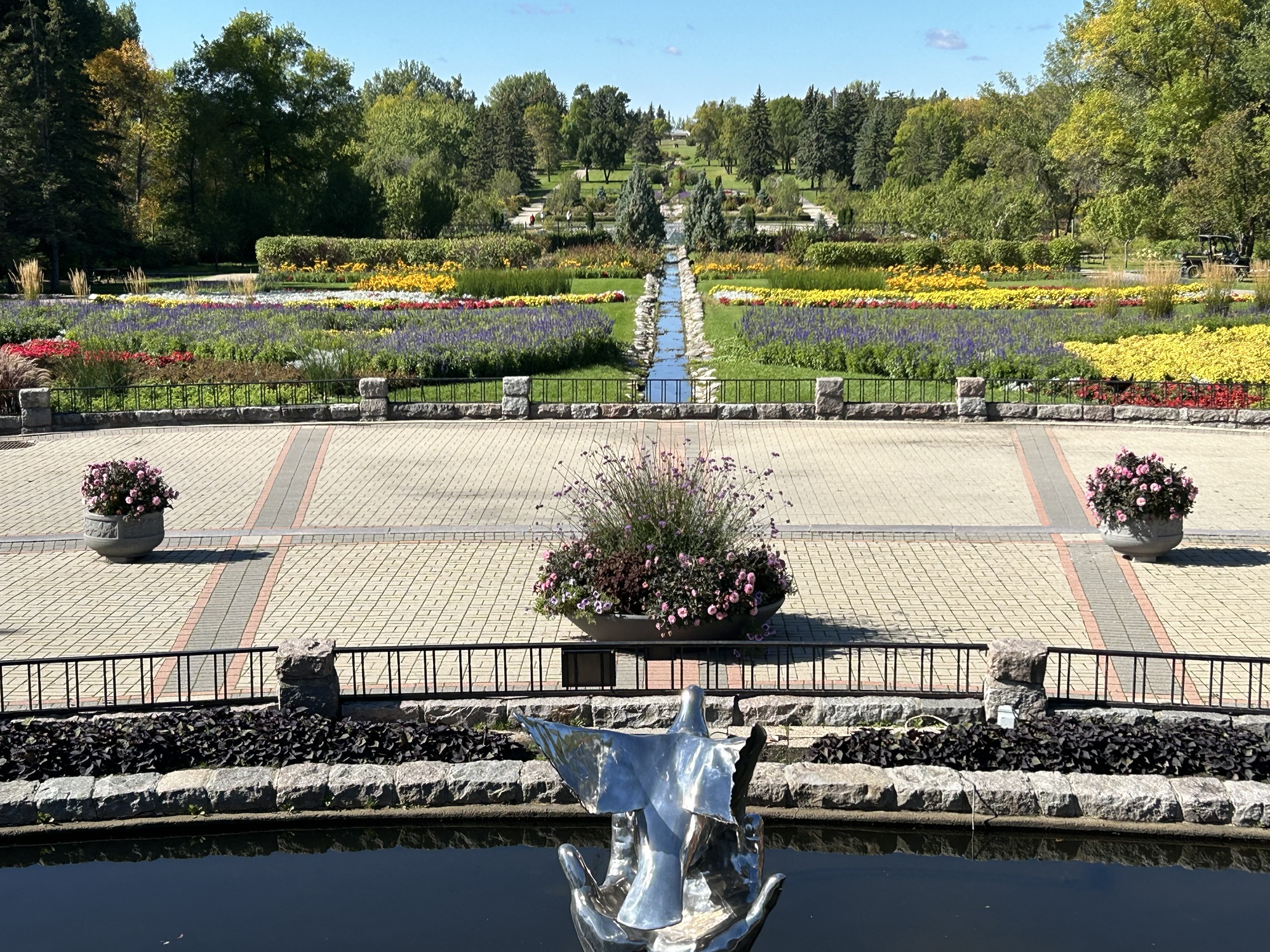
Technically I missed the peak season, but as you can see above, there were plenty of flowers still in bloom at the end of September. There’s a long winding drive through the woods with lakeside picnic grounds below, a campground and a few cabins and more around the central border gardens. And if you walk the length of the formal garden above, the building at the end is the Peace Chapel, which is the perfect place to find inspiration and hope for peace in the quotes from famous leaders and philosophers carved inside its walls.
There are five affiliated sites in the North Atlantic region: Kate Mullany NHS, Lower East Side Tenement NHS, Roosevelt Campobello IP, Thomas Cole NHS and Touro Synagogue NHS. Campobello (above) is actually in New Brunswick Canada, just across the Maine border. Touro is in Newport Rhode Island. And the others are in the Empire State.
All five are among my favorite sites in the country.
The congregation at Touro predates our country, and they have the promise of religious equality made by George Washington in writing.
Take the tour, sit in the pews, and listen to the stories of freedom to believe.
In the early 1800s, Cole painted romantic landscapes and historical scenes, inspiring a school of painters.
Tour his house and studio, see the exhibits and listen to the stories behind his work.
From the late 1800s to early 1900s, the garment district immigrants toiled in sweaty tenement buildings and built futures in their new country.
Go to a neighborhood deli, tour the tiny rooms, and listen to the stories of strikes and hope.
FDR’s summer home in Canada immaculately preserves over 100 years of precious memories.
Tour the estate, have a cookie at Eleanor’s tea, and listen to the stories of recovery and advocacy.
The newly open Mullany house tells the little known story of the woman who started the first official female union in the country.
Make a reservation for a tour, see the history of American labor on the walls, and listen to the stories of the workers who built our country.
Happy Labor Day! The beautiful cast iron stove above was made in Troy, NY, near Albany at the eastern end of the Erie Canal, but the site recognizes a different type of iron work: ironing the popular detachable collars that were invented almost 200 years ago by a Troy housewife. The ladies who ironed the collars were mistreated and poorly paid, so, despite the Civil War, they went on strike. The ringleader was the 19 year old, irrepressible Irish American Kate Mullany, who quipped, “don’t iron while the strike is hot”. Successful, her groundbreaking all-female Collar Laundry Union persisted long after the strike, unlike earlier women’s labor organizing in Lowell. After leading that union, Mullany earned national recognition and responsibilities, breaking many other glass ceilings in the American Labor Movement.
Teacher, labor leader and executive director of the affiliated site, Paul Cole has similarly rallied the people to support his efforts to save this important historic home and legacy for the American people, who too often are taught neither their own labor history nor women’s history. He was kind enough to take time to give me a personal tour, including the restored 1860s era rooms on the top floor. I highly recommend folks who are interested in our rights as Americans contact the site to schedule a tour by appointment. Hopefully this important park will be elevated from NPS affiliate to a full park unit soon.
I recently completed EV visits to all five NPS affiliated sites in the Midwest, which were interesting and educational. Wisconsin is a good place to learn about drumlin hills, kettle lakes and moraine at the various park interpretive centers in the Ice Age National Scientific Reserve. The story of Father Marquette’s voyages and the Chicago Portage stretches through several states. Toledo Ohio keeps history at the Fallen Timbers Battlefield and Fort Miamis (see the fort’s footprint above) on the banks of the Maumee River. And Nebraska protects Chimney Rock on the pioneer trails.
Much more coming soon, including three national parks, biospheres, and heritage areas as I wrap up the Midwest region. And I reveal my secret project. Stay tuned!
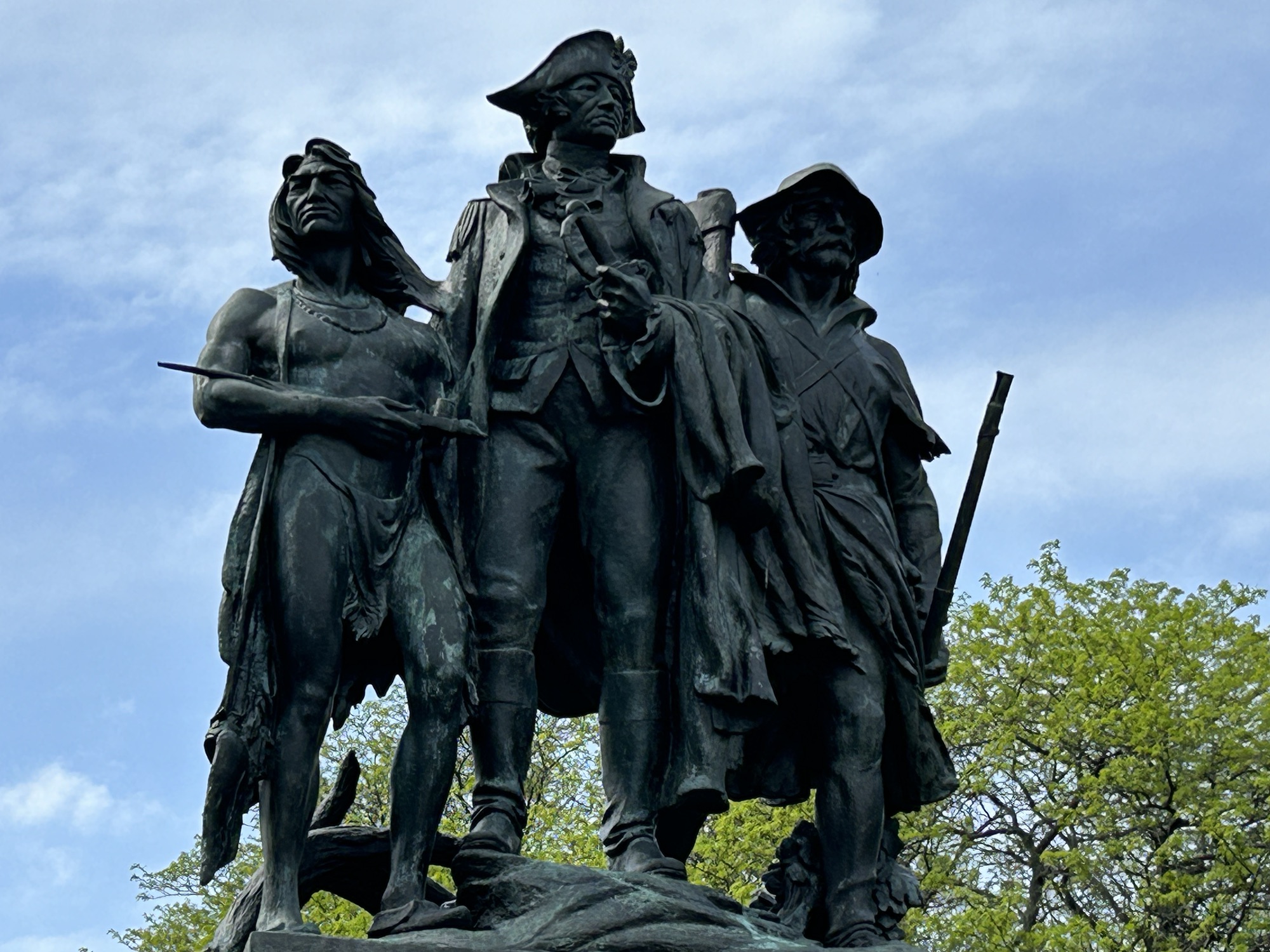
The much disputed western frontier was once here in Ohio, where the British Fort Miamis guarded the crossing point and last navigable stretch of the Maumee River to Lake Erie, backed by their confederation of Native American allies. George Washington sent General Wayne (above center) here after his previous general had been defeated. In 1794, Wayne’s troops met over 1,000 native warriors in battle, and prevailed, resulting in much native land being ceded to the US.
In 1811, Indiana Governor William Henry Harrison provoked the natives into fighting again. When the War of 1812 broke out, the British reforged their native alliances and used their naval power to reoccupy Fort Miamis. Now General Harrison—later the 9th President—built a new fort on the other side of the Maumee River and held it against attack. The fighting then moved north, where Harrison’s troops killed the Shawnee leader Tecumseh and defeated the British on the Canadian side of Lake Erie, ending both the British occupation and native land ownership in most of the northwest.
The site is affiliated with the NPS and managed by Toledo. Due to an early mistaken account of where the battle occurred, the statue above is neither on nor facing the battlefield, which is behind them over a bike bridge in the woods. There are plenty of bike trails connecting different riverside parks, and there’s an Audubon island with heron in the middle of the river. The earthworks of Fort Miamis are still clearly visible overlooking the Maumee. History and nature await us.
While not the largest rock formation in the west, Chimney Rock above, was the first exceptional one seen by the pioneers on their journey across the wide open prairie, so many pioneers elaborately described it in their journals. Judging by the old photos, it has lost some of its point, but it still towers over the landscape. Chimney Rock also made a clear landmark for the prairie schooners navigating on the Pioneer Trails from the Platte River to the nearby pass at Scotts Bluff. The site is affiliated with the NPS, but it is managed by the Nebraska State Historical Society.





 Zero Carbon Travel