I have visited over 90% of NPS affiliate sites. The three remaining are in the Aleutian Islands, on the north coast of Alaska, and in Saipan, the only affiliate unit in the western region.
This is an affiliate site in Tennessee focused on Nathan Bedford Forrest, who fought most of his Civil War battles in the Volunteer State. At the end of 1862, Forrest was in the midst of his guerrilla warfare destroying railroads, bridges, raiding supplies, recruiting rebels, taking prisoners and attacking the Union. Union troops moved near a key railroad and roadway crossing in the middle of western Tennessee to cut off Forrest’s escape south across the Tennessee River. Forrest attacked, was repelled, and tried to flank the Union troops. But more troops arrived behind him, so he ordered his men to ‘charge both ways’ and withdrew in the confusion. Forrest lost more men in the battle, but he escaped as the Union failed to cut him off.
If you visit the site, you might get the mistaken impression that this was a great victory for Forrest, who is compared with Napoleon in the park film. This is ironic, since ‘Napoleon’ is synonymous with having delusions of grandeur. The grounds are well kept, but there’s not really much to see. The cabin below was moved to the site later, as were examples of cannon and a caisson. There are reenactments held here. There are also many romanticized images of Forrest in the museum. As he later became the first Grand Wizard of the Ku Klux Klan, this hagiography of Forrest is both tragic and an embarrassment for the great state of Tennessee, which was divided during the war. Forrest was a brutal leader responsible for perhaps the worst atrocity of the Civil War, which I will summarize next week. History must endeavor to tell the truth.
This was one of the final battles for inland South Carolina, in September 1781. Nathaniel Greene’s Patriots were battle hardened and his forces included Francis Marion, Andrew Pickens, and William Washington. The British were equally disciplined veterans. What unfolded was a brutal battle between evenly matched sides that descended into hand-to-hand combat. Finally, the British line broke, and the Patriots entered their encampment.
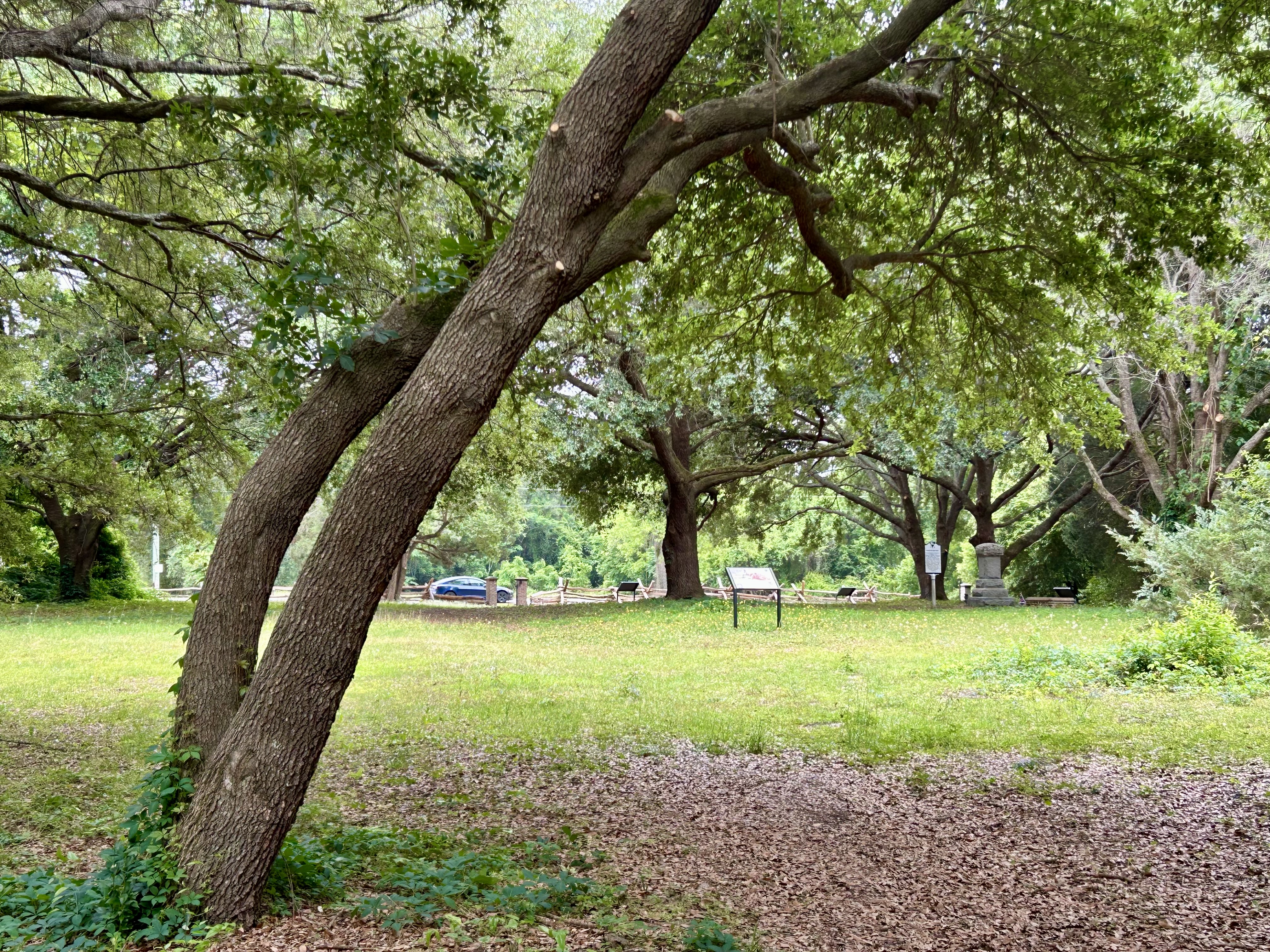
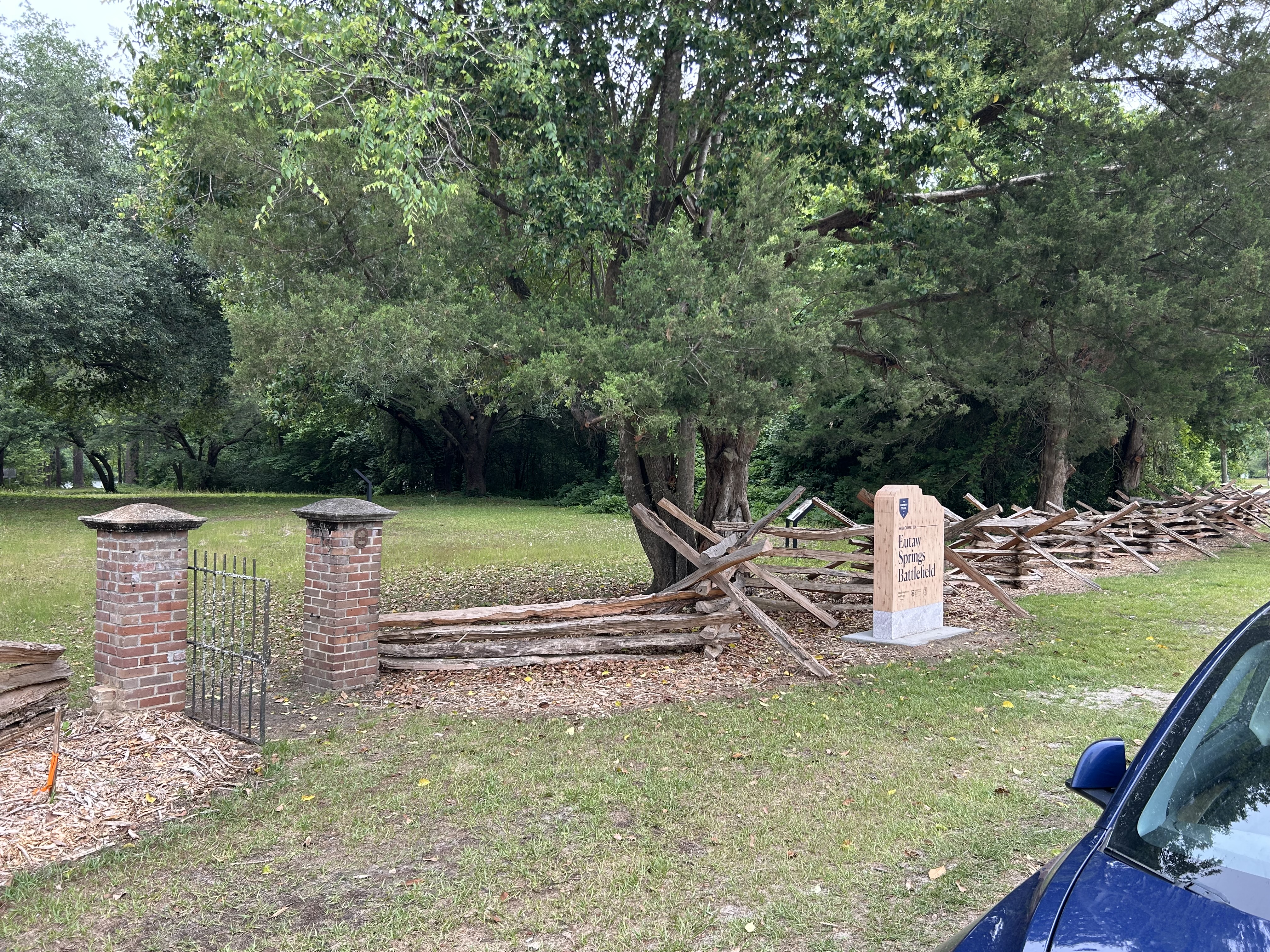
While it seemed that the day was won, the British formed a defensible position between a stout brick house still marked by a garden gate and the Santee River, now Lake Marion behind the trees below. Stymied, Greene was forced to back off and wait. Both sides claimed victory—technically the British held the field at the end—, but clearly it was a strategic loss for the British, who lost more troops, were forced to withdraw to Charleston and never again advanced in the back country.
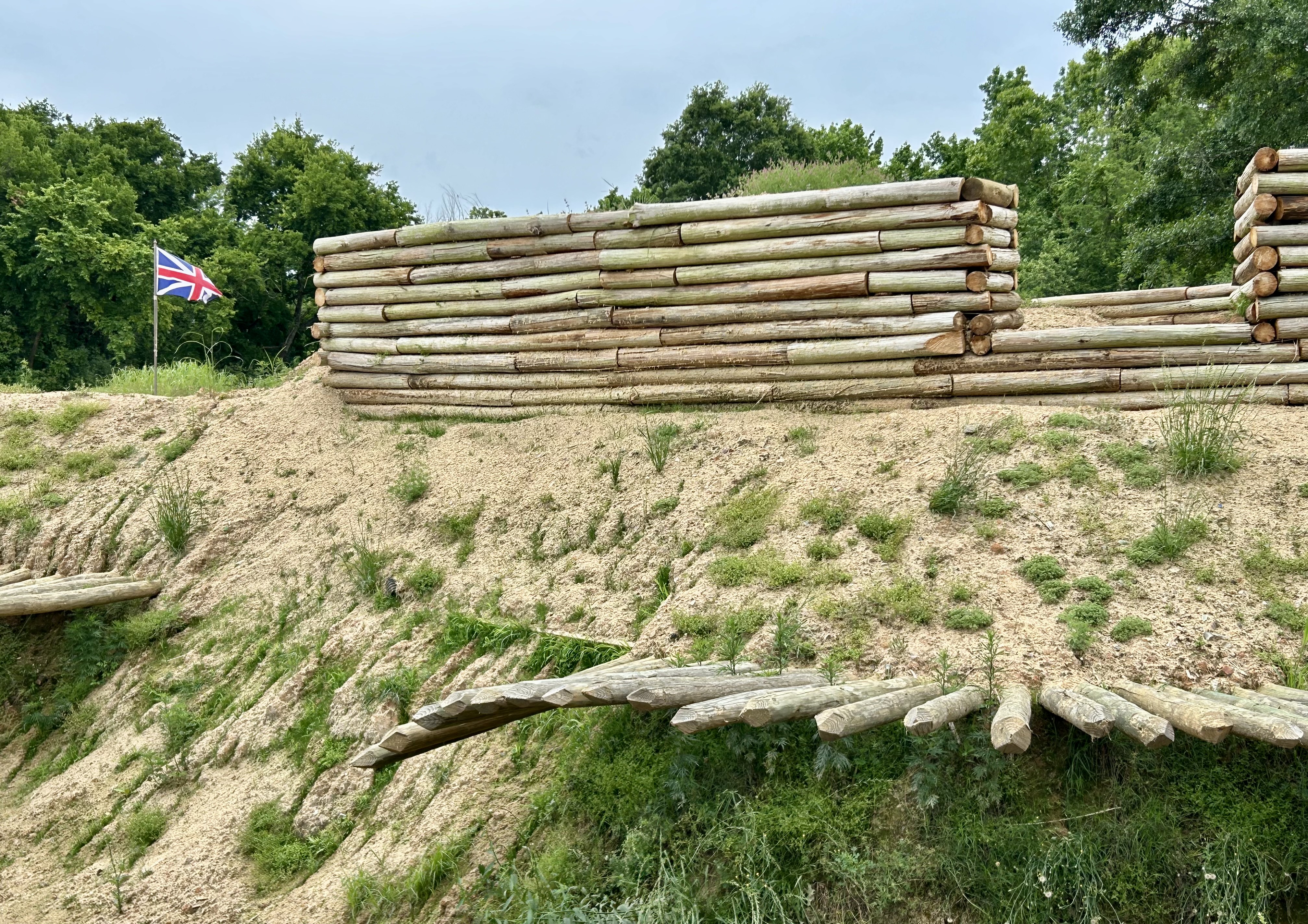
This privately managed affiliate site is one of the best revolutionary war sites in the Carolinas. On over 100 acres of battlefield and early townsite, they have reconstructed Cornwallis’ HQ, one of the redoubt forts (above), a historic tavern, and many other buildings that bring life to history. While separately managed, there’s also a visitor center next door that explains the whole course of the war in the Carolinas, which I will cover in a separate post next month.
Camden was on the Kings Road from Charleston across the low country into the back country. Here it joined with Native American trading routes and the Great Wagon Road from the northeast to Georgia. The British were determined to manage their colonies inland, and not just occupy coastal cities. They also wanted to control trade, tax the rich, hire Native Americans to fight for them, and raise militias of loyalists. Cornwallis fortified Camden as his supply hub.
General Gates, of Saratoga fame, was tasked with attacking Cornwallis. The Battle of Camden in August 1780 was a disaster for the Patriots. Gates put inexperienced troops on his left, who were wholly unprepared to meet the best British troops Cornwallis put on his right, as usual. The French General Baron de Kalb fought to his death at Camden. Gates withdrew to North Carolina. He was later replaced by Nathaniel Greene.
Many of the losses were due to diseases like dysentery, and there’s a detailed exhibit in Cornwallis’ HQ, where a docent answered my various questions. Captured prisoners from British victories in the area were often initially held in Camden and then marched to Charleston where they were imprisoned on ships in dangerously unsanitary conditions.
In 1781, Nathaniel Greene, having recruited Catawba warriors and run a cross country guerrilla campaign disrupting the British, returned to Hobkirk’s Hill near Cambden in April for a rematch. While the British won the day, they decided they could no longer defend Cambden and retreated to Charleston. Cornwallis had already moved north on his way to establish a new base at Yorktown.
This affiliate site memorializes a key Revolutionary War battle in Georgia in mid February 1779. The British had been moving freely through Georgia with some 600 loyal colonial forces, until 350 Patriots came across them west of Augusta at Kettle Creek. The smaller force of Georgians and South Carolinians had the element of surprise and attacked, under the command of Andrew Pickens. The British quickly climbed a hill and sought cover, but their leader was shot and mortally wounded. Fearing they were being surrounded, the British retreated back across the creek in some disorder and most escaped. This battle was a significant defeat for the British who lost 3 times as many men, including their Colonel Boyd. The markers above are cenotaphs, placed about 60 years ago, in memory of American veterans of the battle who are buried elsewhere. There are several hiking loops in the woods to give you a sense of the hilly, difficult terrain, with crosses marking actual graves.
So, a couple years ago, I visited Old Swedes church, the oldest original Swedish church in the new world dating back to 1698, and I confirmed that it was a national park site before taking the interesting tour complete with silly ghost stories. And I checked it off my list and posted it on this website. But I was wrong. A careful reader messaged me—to avoid public humiliation—and explained that I had the wrong Old Swedes church.
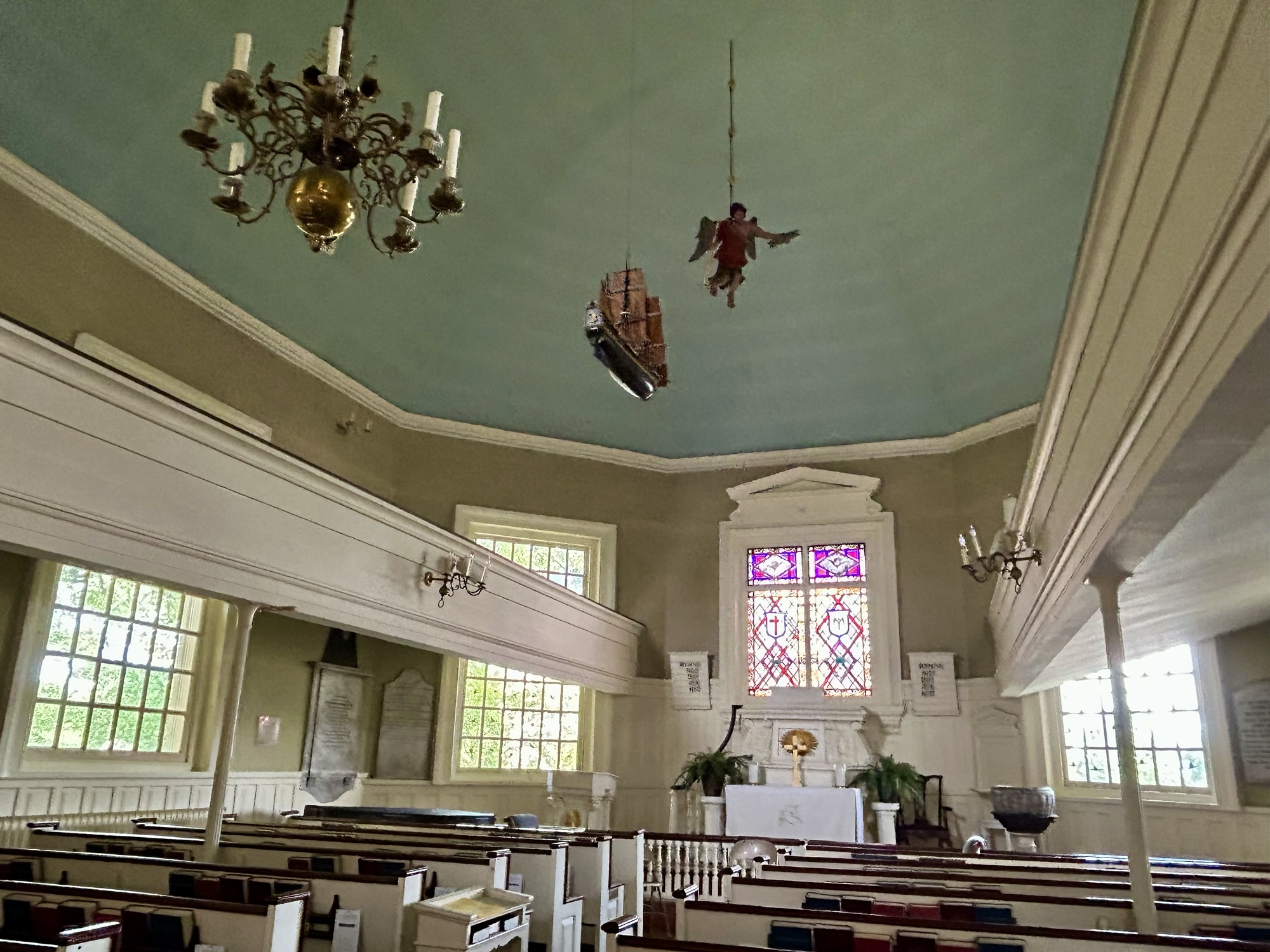
So, last month, I went to Philadelphia and finally visited the Old Swedes church above, built in 1700. I spoke with the pastor, and he explained that this is the oldest Gloria Dei Lutheran church in America and the oldest surviving church in Philadelphia (not Delaware where I foolishly was before). The pastor forgave me, and I hereby offer my humble public confession.
The moral of the story is that if you look up NPS Old Swedes church, you are likely to get the one in Delaware, which is an affiliated part of the First State NHP, but if you look up NPS Gloria Dei church, you are likely to get the affiliate NHS church above in Philadelphia. Also, the stone and brick work on the two facades are obviously different. As an act of contrition, I offer the following photo of the inside of the Philadelphia Old Swedes, complete with the Kalmar Nyckel sailing above the congregation.
I don’t expect every site to be Yellowstone, but this one is very disappointing.
In 1935 the NPS acquired development rights to the land from property owners in this historic area of Piedmont in Virginia, making this an affiliate site. Green Springs is known for a healthy mineral spring, for some horses bred 200 years ago, and 3 dozen historic farms and other buildings dating from 1735 to 1920. The oldest is Boswell’s Tavern, frequented by Jefferson, Madison and Patrick Henry. Lt Col Banastre Tarleton raided the county with his cavalry in 1781 during the Revolution.
However, the historic properties are all owned privately and are not open to tourists. So there’s nothing for visitors to see now. Boswell’s Tavern now looks like an unremarkable, updated private residence with an old chimney. There’s no museum or guide, and many of the houses, like the one above, are behind fences, hedges and hills, to be invisible from the public roads. Someday, perhaps, this will be a worthwhile place to visit, but for now, there’s no point.
Delaware has three schools that are recently designated NPS affiliate sites of the Brown v Board of Education NHP in Kansas.
The very small school in Delaware above, Hockessin Colored School #107C, was funded by one of the du Ponts—owners of palatial Longwood and Nemours estates nearby—for the purpose of segregating black students from their extravagantly outfitted white schools. Hockessin students were also given cast-off old textbooks and denied transportation. Louis Redding sued on behalf of one of the students in Bulah v Gephart in 1951, winning the case in 1952, and later combining several other cases on appeal to argue Brown v Board of Education at the Supreme Court.
Claymont High School below, now a community center, allowed 12 African American students to attend in 1952, the first students effectively integrating into a segregated state school system after a legal challenge that became a key part of Brown.
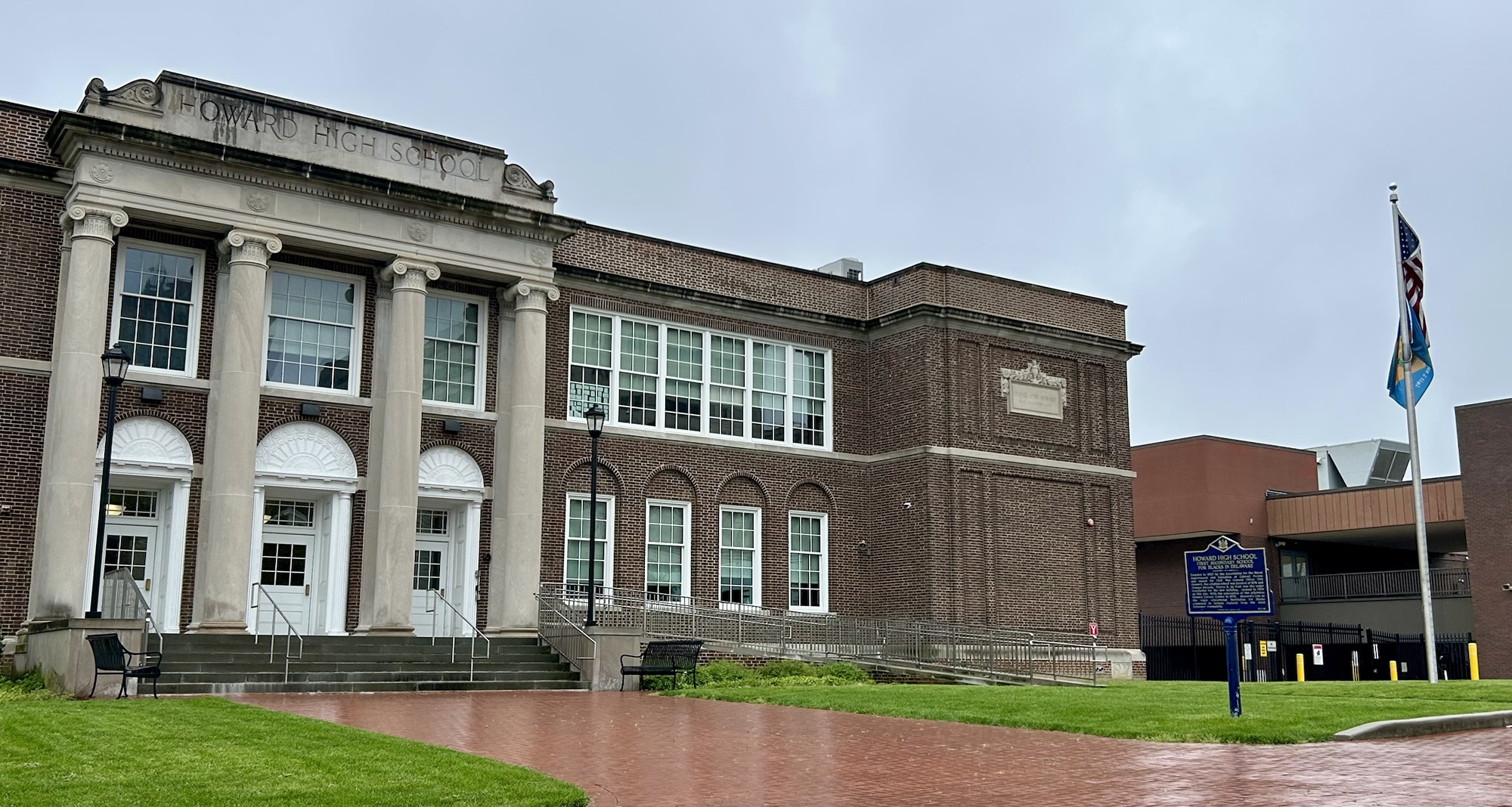
Previously, African American students from all over Delaware could only attend Howard High School below, often without public transportation. Brown recognized that segregation in and of itself was illegal discrimination in public education. Read more about the road to equal education.
Equality is the ideal we have yet to achieve. Jefferson wrote of equality in our Declaration of Independence. Our Constitution did not recognize it. Lincoln guided the country through a Civil War for equality, but then the country slid backwards again. But we must try.
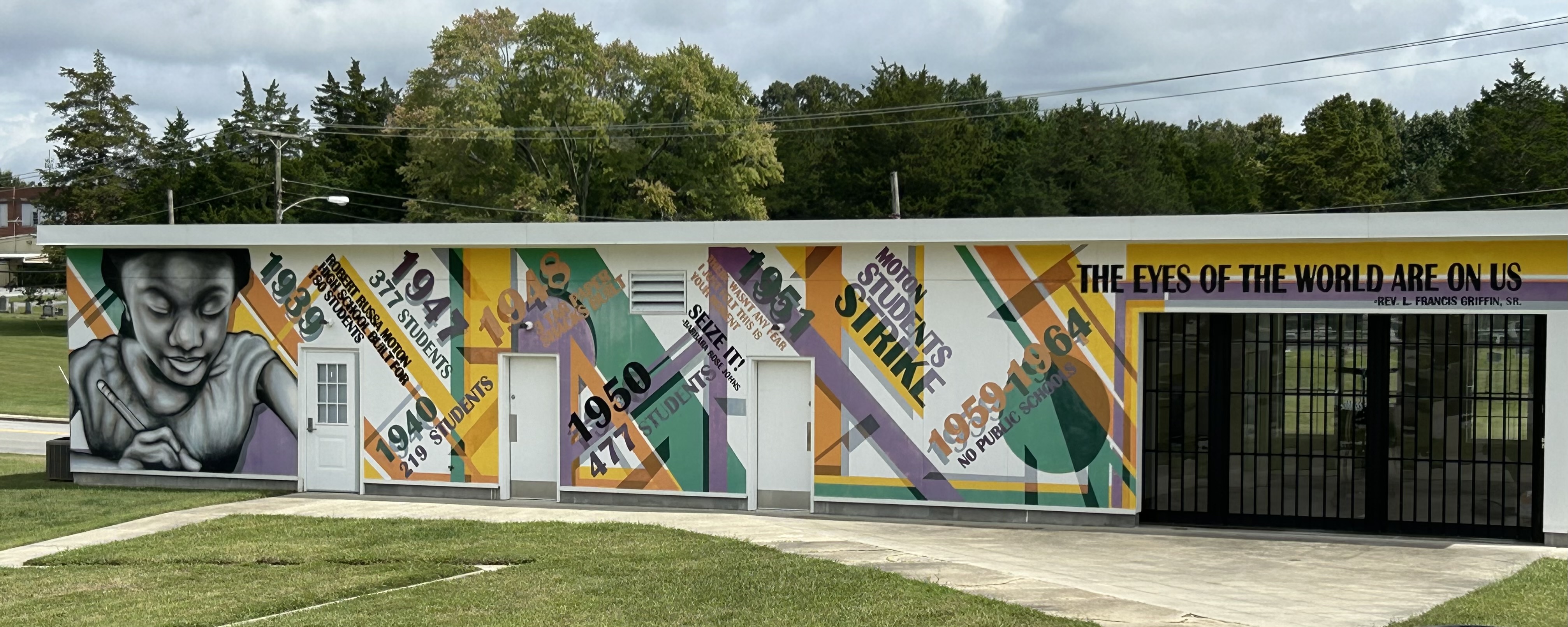
W.E.B. Du Bois had supported and tracked inequality, progress and hope for schooling in the African American community of Prince Edward County in 1898. The state of Virginia revised their post Civil War Constitution in 1902 to permit racial segregation. In 1951, the inequality had long been unconscionable. While white students had cafeterias, gymnasiums, school busses and laboratories, black students needed warm clothes and umbrellas inside tar paper shacks.
Frustrated by the systemic racism that prevented adults—who faced retribution for asking for change—from fixing the problem, the students decided to act by themselves. 16 year old Barbara Johns addressed her fellow students, banging her shoe on the podium, and called a strike, asking for cooperation and saying “don’t be afraid”. The students all went on strike, and their minister said they should contact the NAACP. Barbara Johns called Richmond lawyer Oliver Hill to help.
Their case, which lost, became part of the Brown v. Board of Education appeal, but the Prince Edward County school district refused to follow the Supreme Court ruling. A new school was built, but rather than comply with integration, even after Little Rock, the Governor of Virginia closed schools for five years. Martin Luther King visited in 1962. JFK and RFK publicly excoriated Prince Edward County in 1963. Finally, the Supreme Court ruled again, saying “time… has run out”.
Every student should know this story, which began with a student walkout to demand a new school building. I was moved to tears listening to Barbara Johns’ recreated speech in the school auditorium and thinking about their courage in the face of terrible injustice. If you can visit, go and listen for yourself. This affiliate site, a favorite of mine, in Virginia is a powerful part of our Civil Rights history.








 Zero Carbon Travel