Speaking Out

[Good news! I will philosophize less often for the rest of the year. So when I miss a Thursday post, you will have more time to think and act on your own.]

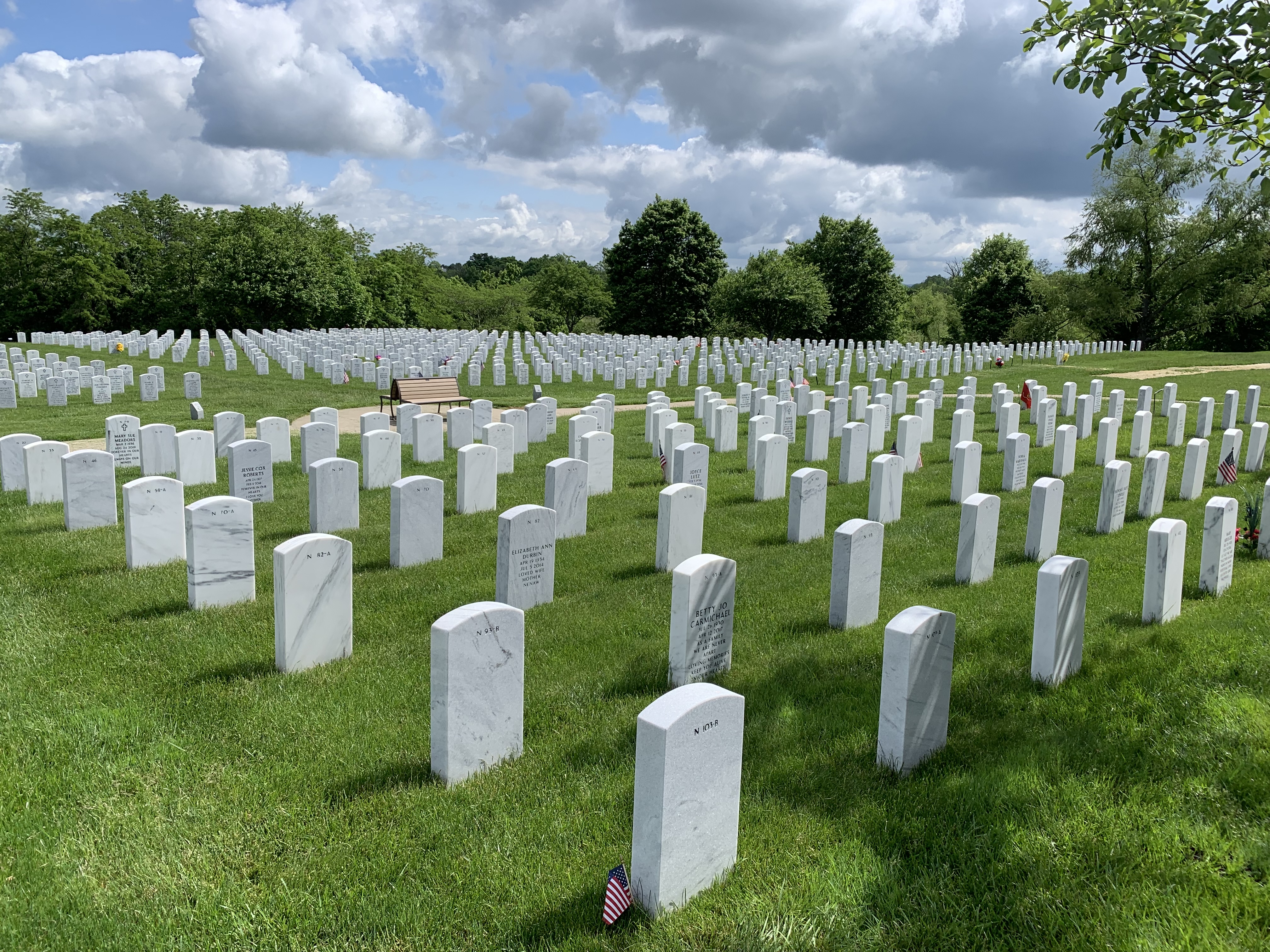
Moral thinking, unlike philosophy, demands action. Figuring out the right thing to do and why, has no purpose if nothing is actually done. While in some cases doing nothing is the best course, moral thinkers benefit from a bias to act. Our focus on solving a moral issue builds a moral case which most frequently contains a moral imperative that compels people to effect change.

Sometimes it is too late to prevent a tragedy, but moral thinking then demands that we learn from what happened, that we speak for the dead and that we act both to prevent any recurrence and to hold those responsible to account. In 1889, the Johnstown Flood killed 2,208 people. For their own convenience, a small group of extremely wealthy industrialists modified a private dam unsafely, without paying to reinstall pressure relief valves & pipes or reconfigure spillways. Due to weak liability laws on negligence, none of the members were ever held accountable. But liability laws were changed after the tragedy, due to public pressure, and they are now more strict. We all benefit when we learn from our mistakes.

There is a new, dangerously foolish and ignorant policy now being applied to our national parks, that asks citizens to report any national park unit that provides information that is “negative about either past or living Americans”. Apparently, those in power view the purpose of national park units to be solely positive propaganda outlets designed to boost patriotic fervor.

If you go to the Oklahoma City National Memorial, you will learn about two Americans, Timothy McVeigh and Terry Nichols, who committed a heinous act of domestic terror. Must the affiliate park unit now cease saying anything negative about them? Should the 168 bombing victims—including 19 children—memorialized there now be forgotten, because leadership in DC will no longer allow the story of the bombing to be told fully? Must future students lose the opportunity to learn about this tragedy and the anti-Semitic, white supremacist ideology behind it?

On “December 7th, 1941–a date that shall live in infamy—”, 2,403 Americans were killed in a sneak attack on Oahu by the Imperial Japanese Navy. 21 US ships were sunk or damaged in the devastating battle at Pearl Harbor. Are we no longer allowed to remember that critical loss? Is it verboten to study the mistakes made in lining up 8 battleships in a small harbor on the eve of war? If you go to Hawaii and visit the USS Arizona are we no longer permitted to recognize the sacrifice of the 900+ crew members still entombed on the ship underwater? Are they now to be considered “suckers” and “losers”?

On July 17th, 1944, 320 people were killed in a munitions accident at Port Chicago in California. Rather than learn from their mistakes, the US Navy protected the white officers in charge and imprisoned the African American workers. Less than 4 months later, almost 1,000 were killed in an extremely similar accident at a US Navy base in New Guinea. More people die when the lessons of history are ignored.

The US Army lost twice at Manassas during the Civil War, and the first loss could only be described as grossly incompetent. Are the park rangers no longer permitted to criticize the poor military tactics of the Union Army leaders there?

For that matter, are they still allowed to discuss the cause of the Civil War, slavery? Perhaps all the Civil War battlefields and military cemeteries should be paved over and signs put up saying, “nothing bad involving Americans ever happened here”? If current leadership insists that there were “fine people on both sides”, perhaps the Civil War should be renamed the Civil Conversation?

And are Civil Rights and race riot memorials to close? What about the history of equal education? If no Americans ever did anything negative, what was Brown v. Board about? Why did Eisenhower have to send in the 101st Airborne to integrate Little Rock Central High? Why did so many people walk from Selma to Montgomery? Why were four little girls bombed at a church in Birmingham? Who was MLK? The refusal to make any moral judgement against any Americans, past or present, means that we must accept murderers, terrorists, insurrectionists, and racists and not criticize them, even if they are the most evil of criminals. Must the KKK’s violent history be respected, while massacres of Native Americans must be erased?

What greater affront to moral thinking can there be than to deliberately erase our history?

Authoritarian Kings once demanded that they be portrayed in the most flattering light. Then King Charles I of England was executed by a Parliamentarian revolutionary named Oliver Cromwell. A famous portrait artist had drawn a flattering portrait of Cromwell, before inviting him to sit for a more complete portrait. Cromwell saw the other picture and famously demanded that the artist paint him as he really was, “warts and all”.

Whitewashed history is a lie, which is designed to mislead us. Real events must be studied as accurately as possible in order to inform us. Every generation must go back to history to gather the lessons they need to inform their moral thinking for the decisions that must be made tomorrow.

”The past is never dead.
It’s not even past.”

William Faulkner

Overmountain Victory National Historic Trail

The trail stretches from Virginia, through a corner of Tennessee, south through North Carolina and into South Carolina at Cowpens and Kings Mountain (below). Revolutionary War re-enactors and enthusiasts follow parts of the trail on foot and by car annually, ever since some Boy Scouts walked the whole length in 1975. I’ve crisscrossed the area, and it’s beautiful country with whitewater rivers and some steep mountain slopes. Both the Appalachian Trail and the Blue Ridge Parkway cross and run along near the trail, and the Biltmore Estate is near the middle.

Many of the colonial settlers in the highlands here were descendants of Scots-Irish lowlanders, and their families still held grudges against the British, especially those who fought to extend the Empire by force. The British sent officers to the Carolinas to bribe and intimidate their subjects to remain loyal to the crown. They sent mercenaries, regular soldiers, and raised local militias to threaten settlers, particularly in the foothills. Their heavy-handed tactics provoked the Appalachian settlers. One particularly offensive leader was Major Patrick “Bulldog” Ferguson, who had ordered the bayonet slaughter of sleeping Patriot troops at Little Egg Harbor, NJ. He also designed the Ferguson rifle, a breach-loading rifle, and was wounded in the right arm in the Battle of Brandywine against General Washington, after which the British took Philadelphia.

The trail commemorates the pursuit of Ferguson’s army from north to south, by the citizen militias that rose up from Georgia, Tennessee, Virginia and the Carolinas against the overbearing British threat, culminating at Kings Mountain. Immediately before and after the events of the Overmountain Victory, the Patriots also won decisively at Musgrove Mill and Cowpens, respectively. These Appalachian Patriots turned the course of the Revolutionary War.

Normally, high ground is superior during fighting, but the ridge at Kings Mountain is steep, fairly straight and narrow. Once the patriots managed to get on both sides, the British became easy targets on top. Ferguson was shot off his horse, shot a young soldier asking him to surrender, and was finally shot multiple times and urinated upon before being buried in an unmarked grave where he lay. A headstone was later placed in the woods not far from the large monument at Kings Mountain below.

Best of DC

Before the 4th of July tomorrow, let me point out a few highlights from the 23 national park sites in our nation’s capital. Although this was my first region completed, I’ve returned several times for reopened exhibits and other sites. There’s lots to see and do in this compact city.

Best historic site: the Frederick Douglass home has much to teach us about the 19th century Civil Rights leader. (The recently refurbished Belmont-Paul house is also well worthwhile).

Best park: Kenilworth Park & Aquatic Gardens is beautiful, especially from lotus & lilies blooming in summer, with birds and reptiles and more to see all year.

Best presidential memorial: the Lincoln Memorial, with French’s statue inside, overlooking the reflecting pool outside.

Best tour: the White House. Contact your Congressperson and get a ticket.

Best view: top of Washington Monument. I know it’s a pain to get tickets, that it’s cramped and the windows are small. But Washington hired L’Enfant to design the city & mall, and from here it all makes sense.

Best war memorial: the Vietnam Veterans Memorial takes you beneath the green grass to grieve.

Hope you have a happy Fourth of July!

Cape Lookout National Seashore

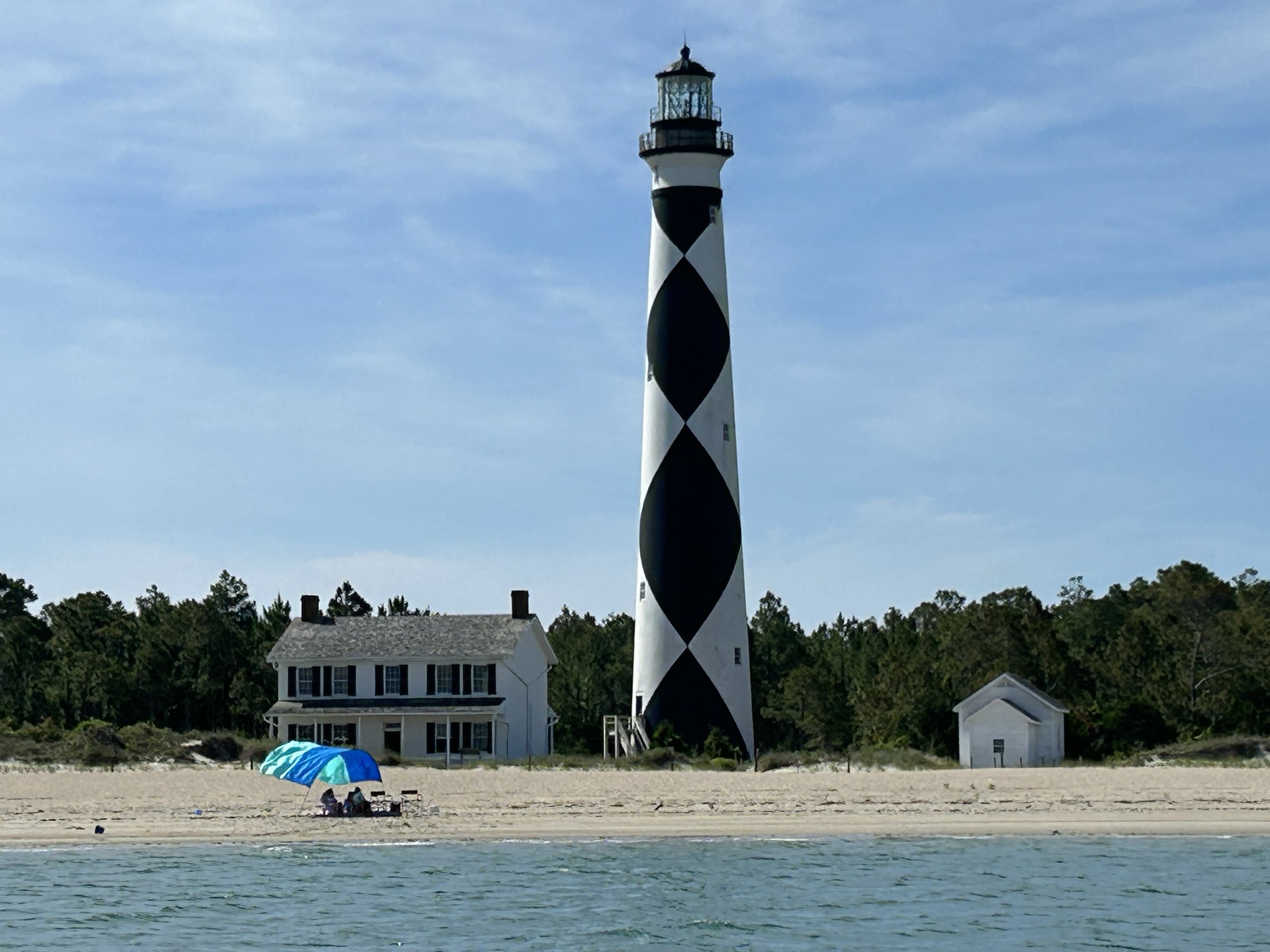
The ferry pilot told me that this is the best view of the Cape Lookout Lighthouse, so there you go. Seeing wild horses was quite simple at Shackleford Banks, as there aren’t many places to hide. And the horses don’t seem to mind photos while they’re grazing.

A few decades ago, I came through the Beaufort Inlet on a boat to resupply. The docks and front street of Beaufort NC—not to be confused with Beaufort SC—haven’t changed much, although everything is quite a bit busier and pricier now. I don’t remember seeing any horses, although we knew they were there.

Unlike the rest of the Outer Banks to the north, Cape Lookout’s barrier islands have no paved roads. A few fishermen and visitors bring cars over on a vehicle ferry from Davis to Great Island Bay, and there’s another vehicle ferry from Atlantic to beach camping on North Core Banks. There’s also a passenger ferry from Ocracoke to the north end of this seashore at Portsmouth Village. And concessionaires run ferries both from Beaufort to Shackleford Banks and from Harkers Island—where I left from—to both Shackleford and the lighthouse. Yes, that’s five different ferries from five separate locations to five disconnected destinations, depending on your plan.

The seashore is quite casual, parents with babies, school groups, many folks bringing their dogs, tourists looking in the light keeper’s house, campers, sporty teens, and some older folks appreciating the natural beauty while reminiscing. The beaches have many shells, and you are allowed to take a few home. Many boats cruise around the bays from nearby marinas tucked into the coast’s rivers, and I heard several small planes going overhead. I drove up when the Harkers Island visitor center opened, got a ticket, hopped off on Shackleford, hopped on the next boat for the lighthouse, hiked around a bit and returned to find some seafood. Of course there are miles of beach to walk. Very pleasant.

Pennsylvania in Photos

Celebrating all the parks in the Keystone State! Allegheny Portage Railroad NHS, Benjamin Franklin NM (affiliate), Delaware Water Gap NRA, Edgar Allan Poe NHS, Eisenhower NHS, Fallingwater WHS, Flight 93 NMEM, Fort Necessity NB, Friendship Hill NHS, Gettysburg NMP, Gloria Dei (affiliate), Hopewell Furnace NHS, Independence NHP, Johnstown Flood NMEM, Steamtown NHS, Thaddeus Kosciuszko NMEM, Upper Delaware SRR and Valley Forge NHP are all above, plus Pennsylvania has 8 National Heritage Areas, parts of the Middle and Lower Delaware River parks, parts of the Appalachian, North Country and Potomac Heritage NSTs and of the John Smith Chesapeake, Lewis & Clark and Washington Rochambeau NHTs.

Improving Moral Thinking

[Apologies for the long post. My next on this topic will be much shorter.]

Perhaps the most woefully neglected aspect of our thinking trouble is our moral thinking. Most often we begin thinking about the morality of an issue with our minds already made up.  Our gut may have decided on the issue instantly.  Your boss may have already told you that the project is good, and that if you do not see it that way, you can look for employment elsewhere.  As Upton Sinclair wrote, “It is difficult to get a man to understand something, when his salary depends on his not understanding it.”

Of course, most believe ourselves moral—even some professional criminals claim to follow a code. Some instinctual thinkers follow their hearts, making moral choices based on sympathy or disgust. Some follow the crowd, believing that their church provides sufficient moral guidance, that the path they were taught years ago is righteous, and even that everyone should follow that path as they assume the beliefs of others are wrong. Rational thinkers learned that rational, self-interested choices benefit society optimally and that all problems have rational solutions. A few believe that their worldview justifies acts that others believe are abominations.

All of those folks are wrong, at least in part. It is not moral to pick and choose which rules to follow, according to your convenience. Instincts are often deeply biased and can result in ugly vigilantism. While many religious traditions are filled with valuable moral lessons, blindly following one faith while denying all others has resulted in centuries of bloody religious wars. Rational government scientists conducted an unethical experiment for 40 years until 1972, and rational pursuit of profit has caused pollution killing many humans and other species. Any act of terror is unfair to the innocent victims, and as a rule they do not achieve any positive goal.

Many lazy, soft-headed ‘thinkers’ have given up on moral thinking, using excuses that there are no universally agreed upon moral facts and that all morality is relative. Some self-serving cynics use these excuses as permission to do whatever they want, consequences be damned. Nonsense. I already presented an incontrovertible moral baseline for humanity, the side of life, and next I explained it’s logical corollary, that life requires diversity and that the purpose of knowledge is to pursue the same universal moral objective to further life. This simple moral framework, based on the Golden Rule, makes many moral choices obvious.

No other way of thinking is disqualified before it can defend itself.  I see no perfect rational utopia, yet people still try to think rationally.  Instinctual thought is riven with conflict, yet people still make gut decisions.  Dismissing the reality of moral thinking appears to be an instinct-driven defense, by people who do not want to feel guilty or who want their self-interested way of thinking to prevail.   

Real moral thinking requires making moral determinations for moral reasons. If a culture has a traditional practice that causes severe pain to children with long-term suffering as adults, solely in order to enhance the power and control of one gender over another, then it is morally wrong, on the basis that it destroys much of the enjoyment of life from one group without improving life significantly for others. It does not matter how many people support the practice, what the laws or government say, or what the cultural or religious tradition of the country has been for however many centuries. The practice fails the basic premise of allowing life to thrive fully and joyously without unnecessary cruelty.

Simply because a cultural practice exists, does not mean that it has a moral right to continue. Our country has a long history of racism, including genocidal war and slavery. Many books and laws were written in the past attempting to justify these official policies, and the policies were popular in (unfair) elections. The cultural heritage of slavery does not, in any way, justify its existence morally. When foreigners complained that our institution of slavery was barbarically inhuman, they were not culturally insensitive, they were correct. The purpose of moral thinking is to challenge all policies on moral grounds and to change immoral policies, no matter how popular or profitable.

Once we view moral thinking as independent from other ways of thinking, such as instinctual or rational, then we can separate those feelings or arguments when making moral decisions. We can recognize an argument as being based on a common human desire and judge the morality of that desire as we judge the morality of the issue. Perhaps a common human behavior is no longer useful in modern society, is obsolete and deserves to be forgotten. We can recognize a rational argument for profitability or efficiency and still dismiss it as not relevant to the moral choice. Once extraneous ways of thinking are identified and treated separately, then moral thinking becomes clearer.

The primary problem with moral thinking is that people begin with the wrong type of thinking. If you try to make moral decisions with rational thinking, your decisions will be cold, profit-seeking and cruel, even if you use euphemistic terms such as acceptable collateral damage, euthanasia or eugenics. If you try to make moral decisions with the instinctual goal of reinforcing your own power or that of your group, then your decisions will be self-serving, not moral. Such mixed-motive thinking is confusing and often wrong.

Moral thinking should take into consideration human needs and desires, without allowing them to drive the decision, and it must often overrule short-run wants for long-term good. Moral thinking should be driven by the broadest love of life and humanity, while firmly able to deny base instinctual desires or herd behavior. Moral thinking should be as critical of bias and skeptical of ulterior motive as any scientist, while having the courage to defend the powerless few against the powerful majority.

Moral thinking should understand relevant rational assessments such as numbers of people involved and economic costs, without allowing strictly rational analysis to drive the decision, and must often overrule short-run profits for long-term good. Moral thinking must be as adept at analysis as rational thinking, but use that analysis to achieve a moral result, not the most efficient solution.

Moral thinking must learn the lessons of the past to avoid repeating those mistakes in the future. Most mistakes are not original. We have a long history of human error to teach us. Many old texts have profound moral lessons that only require some effort to apply to current problems. Each generation needs to go back to historic and even religious texts to reinterpret the old lessons for their new problems.

Religious beliefs may vary or be relative, but they are not the same as moral thinking.  Some religious texts reflect centuries of accumulated moral thinking, worded by our inspired ancestors for future generations to make better choices.  Just as engineers don’t reinvent the wheel, moral thinkers use the best tools they have.  Sometimes a moral decision is as simple as recalling a dictum and applying it.  But usually moral thinking requires more than looking up the answer in a book.  If you begin with a commandment already chosen, then you are simply applying a religious rule, not necessarily thinking extensively about the morality of the situation.  Your religion may require unquestioning obedience, but moral thinking requires more.  

Morality requires both flexibility to respond to new situations and backbone to stand on principle. One way to achieve this is to use techniques which were designed to facilitate good moral decisions. You might put yourself in each position and imagine how you would feel. You might ask whether one side would be equally happy to switch sides with the opposing party or if that would seem unfair then. You should prefer to take the long view and be the voice of silent future generations.

To summarize the key take-away, clear moral thinking should begin with a quick check that none of the other ways of thinking are driving it.  The method will almost certainly require a review of the facts, an exploration of the possibilities, and an understanding of what people want.  You need an open mind, not an empty one.  But the moral intent needs to be pure.  If you start with the belief that economics must decide the outcome, then that may be rational but not moral.  If you start with the belief that what pleases the most people will be best, then that may be popular but not moral.  If you start with your own idea in mind, then no matter how much you like it, it may not be the best solution for others.  You must commit to find the best long-term outcome in the most important respects, without regard to greed, fantasy, pride or other vices.  Well begun is half done, but moral thinking requires discipline, honesty, and may require significant time and effort, before you are prepared to make the best choice possible.

Gloria Dei National Historic Site

So, a couple years ago, I visited Old Swedes church, the oldest original Swedish church in the new world dating back to 1698, and I confirmed that it was a national park site before taking the interesting tour complete with silly ghost stories. And I checked it off my list and posted it on this website. But I was wrong. A careful reader messaged me—to avoid public humiliation—and explained that I had the wrong Old Swedes church.

So, last month, I went to Philadelphia and finally visited the Old Swedes church above, built in 1700. I spoke with the pastor, and he explained that this is the oldest Gloria Dei Lutheran church in America and the oldest surviving church in Philadelphia (not Delaware where I foolishly was before). The pastor forgave me, and I hereby offer my humble public confession.

The moral of the story is that if you look up NPS Old Swedes church, you are likely to get the one in Delaware, which is an affiliated part of the First State NHP, but if you look up NPS Gloria Dei church, you are likely to get the affiliate NHS church above in Philadelphia. Also, the stone and brick work on the two facades are obviously different. As an act of contrition, I offer the following photo of the inside of the Philadelphia Old Swedes, complete with the Kalmar Nyckel sailing above the congregation.

National Capital Trails

There are 3 National Historic Trails in the beautiful District of Columbia below. Enjoy!

There are also 3 park units in the region that are different types of trails: sections of the Chesapeake & Ohio Canal NHP, George Washington Memorial Parkway, and the Potomac Heritage NST.

Trails are a great way to explore multiple parks in a region, especially when linked thematically.

Carlisle Federal Indian Boarding School National Monument

This is a new national monument on the 18th century Carlisle Army Barracks in Pennsylvania, which also hosts the Army War College and the Army Heritage and Education Center. The base is currently open to visitors on weekdays, but there are no park site visitor services yet.

“All the Indian there is in the race should be dead.
Kill the Indian in him, and save the man.”

Richard Pratt, founder & superintendent

From 1879 to 1918, towards the end of its War on Native America, the US Army established a boarding school here, a re-education camp far from native reservations. There are only a few Native American graves left on base, as many were repatriated by law after 1990, but otherwise, not much remains of the school that once set the standard for ‘assimilation’. Around 8,000 children from 150 tribes were taken from their parents and shipped off to this school—as happened at other schools across the country—for the expressed purpose of ending their culture. Considered a step forward from massacres, forcing natives to become white was the primary goal from day one. While today, many such students might gain PhDs in Native American studies in recognition of the value of their cultural contributions to our civilization, prejudice meant there was practically only one way for these students to excel: on the field.

Unlike college admissions or job hiring, there is no effective way to cheat by race in sports like track & field. Once allowed to compete, the results are judged fairly, regardless of color. The field above is still known as ‘Indian Field’, but officially it is named after Frank MT Pleasant Jr, a student—and member of the Tuscarora Nation—here for 12 years around 1900, known for his prowess in football and track. In 1908, he placed 6th in two events at the Olympics in London. He earned his degree in 1910 at the neighboring Dickinson College, the first native to do so. He served honorably in WWI and later played semi-pro football. While he and other athletes like baseball hall of famer ‘Chief’ Bender are remembered here, they’re all overshadowed by another classmate.

In 1907, a Sac & Fox youth was walking by the track above when he stopped to watch the high jumpers. He had been to many different schools growing up, and he had run away from most. This was his second time here; the first cut short by the death of his father. Jim Thorpe walked up to the bar and jumped 5’9”—a school record—in his street clothes. He would excel at virtually every sport he tried: ballroom dancing, baseball, boxing, handball, lacrosse—a native sport—, and tennis. The football coach, ‘Pop’ Warner, didn’t want his school’s track star injured, but Jim asked for a chance to play. He ran through the opposing team back and forth, and then said, “coach, nobody is going to tackle Jim”. And nobody did. Jim set all kinds of college football records, rushing almost 2,000 yards a season, scoring hundreds of points with over 25 touchdowns a year, according to incomplete records.

At the Stockholm Olympics in 1912, Jim Thorpe competed in the two most challenging competitions, the pentathlon and the decathlon, which require mastery of 5 and 10 different events respectively: 100 m, 400 m, long jump, high jump and shot put for the pentathlon and the same five plus the discus, javelin, 110 hurdles, pole vault and 1500 m for the decathlon. Despite someone stealing his shoes before the competition, Thorpe found two mismatched shoes and still won 8 of 15 events outright, winning the gold medal in both combined events. Later, Thorpe would go on to play professional baseball, basketball and football. Considering how well-rounded he was, in my opinion, Jim Thorpe is the greatest athlete in history.

So, if you want to take a lap on the same track where Jim Thorpe began his athletic career, bring a map and your real id and go to the base visitor center between 10 am and 3 pm on a weekday—not a Federal holiday—and get your criminal background check. But consider the cultural cost of Indian schools, the families broken, the languages silenced, the oral histories lost, the natural and medicinal secrets forgotten, and the songs and dances not taught, just so white people would feel more comfortable with Native Americans. Fortunately, the Sac and Fox Nation survives in Oklahoma—they were removed from the Great Lakes region in the 1870s—and many other tribes still thrive today as well.

Maryland in Photos

Celebrating the Old Line State! Antietam, Assateague Island, Catoctin Mountain, Clara Barton, Fort McHenry, Fort Washington, Greenbelt, Hampton, Harriet Tubman Underground Railroad, Monocacy, Piscataway Park, and Thomas Stone are all above.

Appalachian Forest NHA, Appalachian Trail, Chesapeake, C&O Canal, GW Parkway, Journey Through Hallowed Ground NHA, Harpers Ferry, Potomac Heritage, Rochambeau Route, Star-Spangled Banner are all partly in Maryland, and several of these parks and trails are part of the Baltimore and Southern Maryland NHAs.