New Brunswick, Nova Scotia and Prince Edward Island, the three provinces known as the Maritimes, have three world heritage sites and three biospheres recognized by UNESCO. Well, almost all the sites are in Nova Scotia, but I enjoyed driving around all three provinces.
With plenty of great seafood, hiking, Celtic & Acadian culture, wildlife, history and miles of picturesque coastline, this region is highly rewarding for travelers, especially an electric road tripper. With a CCS adapter and the ChargeHub app, it’s not difficult to explore the entire region and well worth the drive.
World Heritage Sites
Grand Pré conveys the tragic history of the British expulsion of the Acadians. The landscape is lovely, and be sure to try the Tidal Bay local wine in a coastal town like Wolfville home to Acadia University.
Joggins Fossil Cliffs reveals an impressive geologic record of the coal age. Take a hard hat tour at low tide and find fossils.
Lunenburg is a beautiful, well-preserved seafaring and fishing port. Spend the night and eat all the local seafood you can.
Biospheres
Bras d’Or Lake is open to the sea through small channels making it an important fish and bird habitat. Try a local restaurant and maybe listen to some Cape Breton fiddle at a céilidh (kay-lee).
Fundy has the world’s largest tides with dramatic coastline, shorebirds and forests. The biosphere is on the New Brunswick side of the bay around the eponymous national park.
Southwest Nova protects many species, including the piping plover and blanding’s turtle. The biosphere has both a coastal and a forest component with plenty of hiking.
Bonus: Green Gables is home to LM Montgomery and her beloved characters. Prince Edward Island is the smallest province but very charming.
New Brunswick also has Kouchibouguac and Fundy National Parks, plus Campobello. Nova Scotia has Kejimkujik and Cape Breton Highlands National Parks. And Prince Edward Island has the new Pituamkek and Prince Edward Island National Parks.
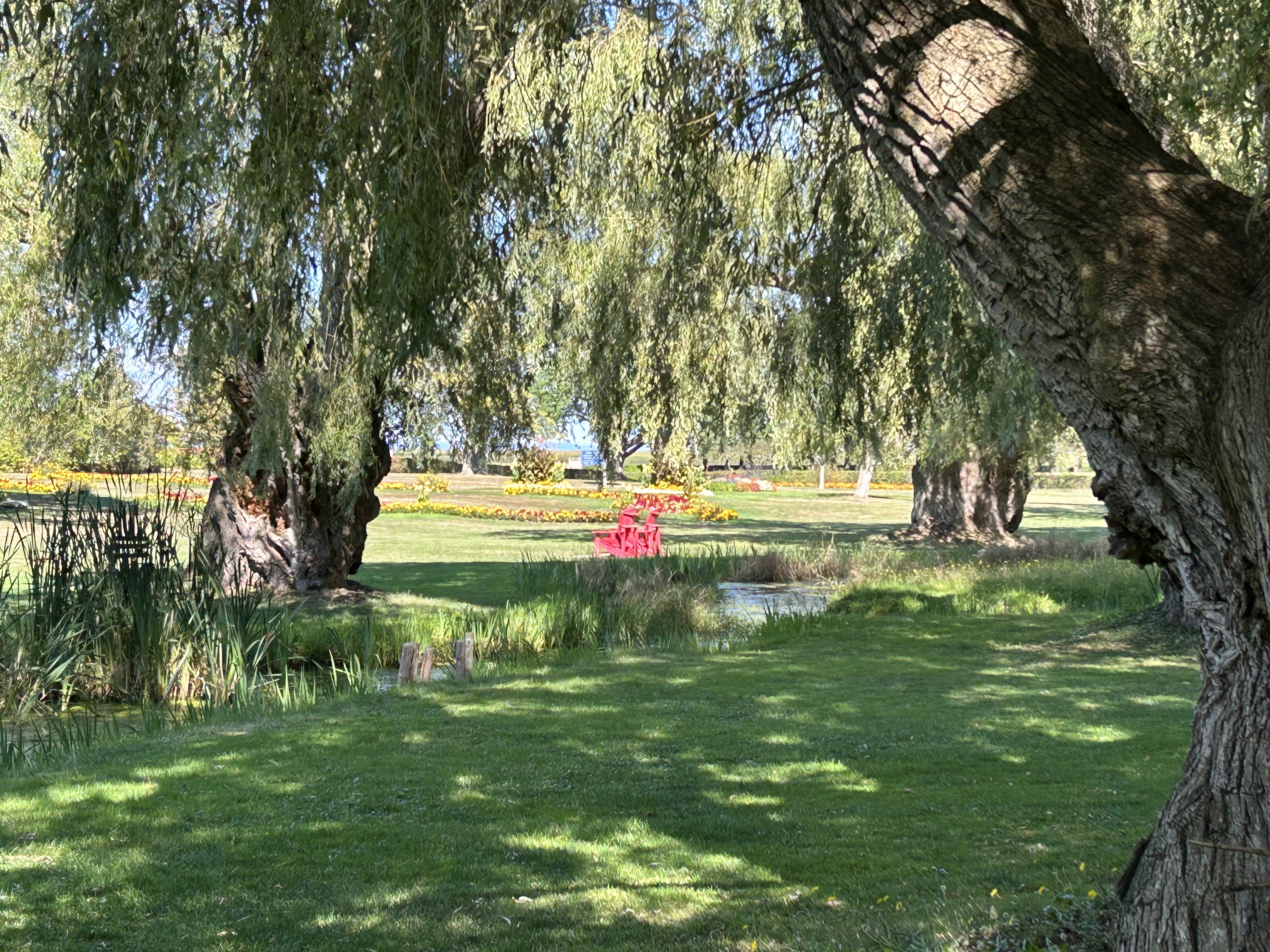
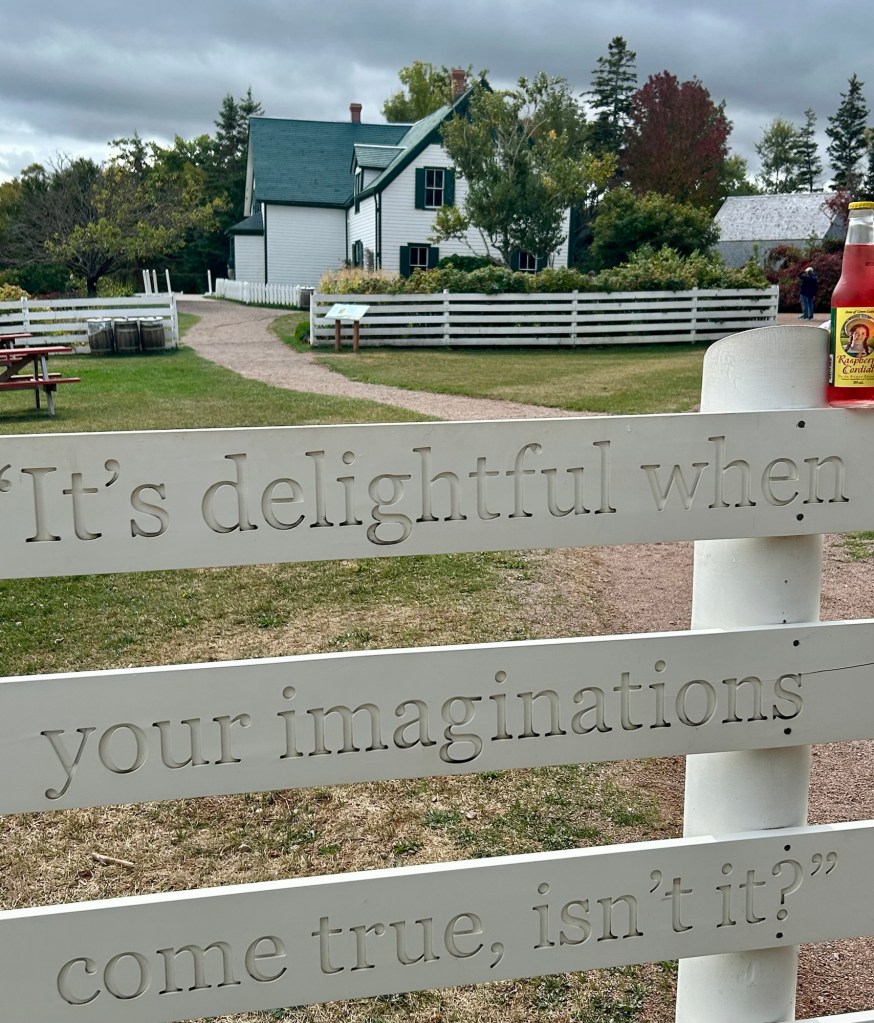
LM Montgomery walked through the woods here trying out dialogue for Anne, her adoptive parents Matthew & Marilla, and her friends Diana & Gilbert. Nature was her kindred spirit, and this home on Prince Edward Island inspired her greatly in writing Anne of Green Gables. The author’s own modest home is almost 10 miles away still in a simple rural village, while the heritage area above is now in the middle of an entertainment district with kiddie rides, candy shops and themed merchandise. At the time Montgomery wrote the book in 1905, it took courage, imagination, determination and hard work to figure out how to inspire people with her delightful story of a girl who embodies those characteristics in a practical, conservative and mundane setting. Five times her manuscript was rejected, before being accepted 3 years later.
While this site is not a world heritage site (yet), I wanted to visit. Anne is a romantic, who fills herself with ideals from literature, and she has to make a place for herself in a stern, reserved household. The themes of youthful dreams, belonging, love, making something of oneself and of wisdom are timeless and precious. When I lived in Japan, I saw Anne interpreted and adapted into a different culture, yet still simply relatable on the other side of the world. There’s great power in imagination, including creating characters that take on a life of their own and also in re-imagining ourselves to live better. Driving past the old farms and churches made me appreciate Montgomery’s imagination all the more, although I suspect she would be less impressed by the summer crowds of kids eating ice cream and riding around in circles. There’s not much imagination involved in doing the same as everyone else.
Because you burn carbon, you exacerbate the climate crisis, which causes rising seas and more disasters. The US is responsible for more total carbon emissions than any other country, creating refugees and increasing migration globally. Maybe you neither know nor care about people in other countries, but your carbon emissions are driving migrants to the US. Nicaragua alone has over 100,000 climate refugees due to increasingly violent hurricanes and severe drought wiping out crops and cattle. These problems increase poverty and weaken their government, causing many to flee to other countries, especially the US. If you don’t want a lot more immigrants in the US, then you should stop burning carbon and vote for carbon reduction policies.
Understand that the unprecedented scale of these disasters is man-made, climate-driven and increasing at a rate that humanity has never faced. The problem is not just the disasters we are seeing now. The problem is that we are continuing to make even more disasters even worse every year. Carbon pollution makes disasters more deadly, driving dramatic diasporas and magnifying violent conflict, which causes wars and even more refugees. Wars burn even more carbon. Burning carbon increases border insecurity globally, so the underlying problems are accelerating.
Already, there are tens of millions of climate refugees globally, in Africa, Asia, the Middle East and South America. Extreme heat and drought drive violent conflicts in Somalia, Sudan, Syria & Yemen. But in 15 years, the number of countries with similarly extreme climate crises is expected to rise from 10 to 65. Flooding has already displaced millions of refugees in Afghanistan, Bangladesh and Pakistan. Many of the countries currently hosing refugees are already suffering or will suffer severe climate consequences themselves soon, including millions already displaced in China and the Philippines. As the climate crisis continues to worsen and intensify, the total number of refugees globally will increase dramatically.
Whether you care about the human suffering or not, more and more climate migrants will continue trying to reach the US every year. Increasing border security is extremely expensive. Last year the US allocated an additional $170 billion for more border fencing, Customs and Border Patrol, ICE, new detention facilities, surveillance, etc. Given that the global climate refugee problem is accelerating exponentially, future costs will continue rising even more rapidly. Spending more on solar and wind would lower both energy costs and future costs of dealing with climate refugees. Fixing the climate crisis is the most direct way to reduce the disasters that drive migrants here.
Refusing refugees is cruel. Desperate people historically have also found many ways to enter the country, including flying and overstaying their legal visas. Deporting long term residents to countries that they haven’t seen since infancy is also cruel and can be quite expensive with airfare and legal costs. Spending more on relief programs like USAID both saves lives and reduces the future costs of dealing with climate refugees. And of course, it is not moral to refuse assistance to hundreds of millions of our fellow human beings who will be displaced by our cumulative carbon emissions.
January is National Trafficking Month, and refugees are among the most vulnerable populations forced into human trafficking operations. So choosing to reduce carbon emissions is choosing to reduce human trafficking. Politicians may talk tough on border security, but if they deny the climate crisis, they may be worsening rather than fixing the problem. You may consider yourself anti-crime, but if you vote for people who call climate change a hoax, encourage cryptocurrencies and have personal history with sex-traffickers, then you are contributing to human trafficking on multiple fronts.
So don’t tell me you care about border security, prove it. Stop burning carbon, and vote for climate justice. Fix the climate crisis to increase global border security and human safety.
This UNESCO World Heritage Site is on the Nova Scotia side of the Bay of Fundy, and it is a remarkable area for fossils. The high cliffs in the background have tilted layers, so that if you walk north (left) you go back in time and south forward. I took the tour at low tide, because the high tide rises 30 feet over where I took the photo above. The tidal erosion is harsh, so that we heard and saw several small rockfalls in 90 minutes. As a result, new fossils are constantly being revealed.
Most of the discoveries date to the Carboniferous Period or the coal age. That’s after the age of fishes and before dinosaurs, although they did find a very small reptile here which was identified as one of the first reptiles to lay eggs out of the water, the first time our ancestors could live away from the sea. Most of the fossils are of marine life, algae and plants, including giant fern-like trees that grew over 100’ tall, leaving copies of themselves in stone that formed in their hollow trunks. We also found some 12” wide tracks of a giant 150 pound bug with lots of little legs.
Most of our fossil fuel comes from this 75 million year long Carboniferous Period. So when someone claims that fossil fuels are sustainable, ‘the same as burning an ancient forest’, you can tell them that we are actually burning maybe a million global forests every year at current rates. And then you can tell them that’s not at all sustainable and is obviously changing our global climate very quickly.
Many ages have ended in mass extinctions for various reasons including asteroid strikes. It’s sad that we, the first species with the capability of averting an asteroid-strike mass extinction, are currently causing a carbon-pollution mass extinction out of foolishness, rather than simply switching most of our fossil fuel to sustainable fuels like wind, solar and tidal power.
The fossil record and science is clear. We just need to pay attention, think and act before it’s too late.
Bras d’Or Lake Biosphere Region is the brackish waters and surrounding land that takes up much of the middle of Cape Breton Island in northeast Nova Scotia. The ‘Golden Arm’ lake area is famed for beauty, boating and seafood. There are many narrow channels dividing the lake restricting the tides which are extreme in the surrounding area, and several rivers reduce the salt content. Above is the Little Narrows cable ferry.
Alexander Graham Bell lived and worked here for many years, and his family still own his beautiful home on the lake. Among many inventions, he designed a hydrofoil that broke the world speed record here in 1919, and it can be seen at his historic site in Baddeck. I enjoyed a day here exploring and admiring the views. Many folks venture up into the highlands on the Cabot Trail or attend ceilidhs (‘kayleez’) to listen to Gaelic music. I enjoyed a couple fine seafood meals and some good local music in Baddeck.
In case you want to visit all the National Parks in the contiguous US, this year I’m sharing my recommendations for 3-5 National Parks to visit each month. By the end of the year, you’ll have a full list of all 51 parks, evenly spread out over the different seasons with as few compromises as possible.
Since January is typically the coldest month, it makes sense to visit southern Florida, the only tropical climate in the continental US. That means Biscayne, the Dry Tortugas and the Everglades. These are beautiful parks for enjoying snorkeling, beaches and nature outdoors, so January is a great month for avoiding the hot, humid weather with afternoon thunderstorms that would bother you much of the rest of the year.
Hurricane season is lengthening, and now some tropical storms form in May before the official season of June through November. I visited the Dry Tortugas in May with an eye on the weather, and I was lucky. Some see sea turtles up close, but I was not lucky. Nesting beaches are often off-limits, and the water visibility wasn’t as clear for snorkeling as it would be in January. If you want to see the turtles, take the short, low altitude seaplane out to the Dry Tortugas, and you will see them swimming all year long.
Sometimes a winter storm will bring winds down to the keys with cold snaps in the 50s, but they don’t last. Many places that rent snorkel gear will have various wetsuits to keep you comfortable, if needed, but the water temperature usually stays above 70° F. Day highs are around 75° F, and most evenings are very mild.
Since the Everglades are dry in January, wildlife tends to concentrate around reliable water sources, making them easier to spot. Birding is best in January, as many migratory birds are in the park, and large charismatic birds like roseate spoonbills and wood storks are laying eggs. And there are few mosquitoes in January.
Weather makes a big difference in how much we enjoy our park visits, so—despite the high season costs—, I recommend visiting these three tropical parks in January, when most other parks are cold, closed and difficult to access. Plan ahead, be flexible on where to stay, and be efficient with your time to save money. But enjoy your time on a tropical beach or amongst the mangroves while others are home shoveling snow.
For 2026, I resolve to complete all UNESCO sites in half of Canada’s provinces, make a third road trip to Mexico, find even more national monuments and recreation areas in the US, and drive to southeast Alaska. Logistical challenges and new site designations may thwart my plans, but I will do my best.
Weekly Monday posts will continue to be a new visit. Thursdays will still be sporadic summaries and viewpoints. The first Saturday of each month will be park recommendations. And mid-month on Saturdays I will highlight a climate issue. Hope you have a happy New Year!
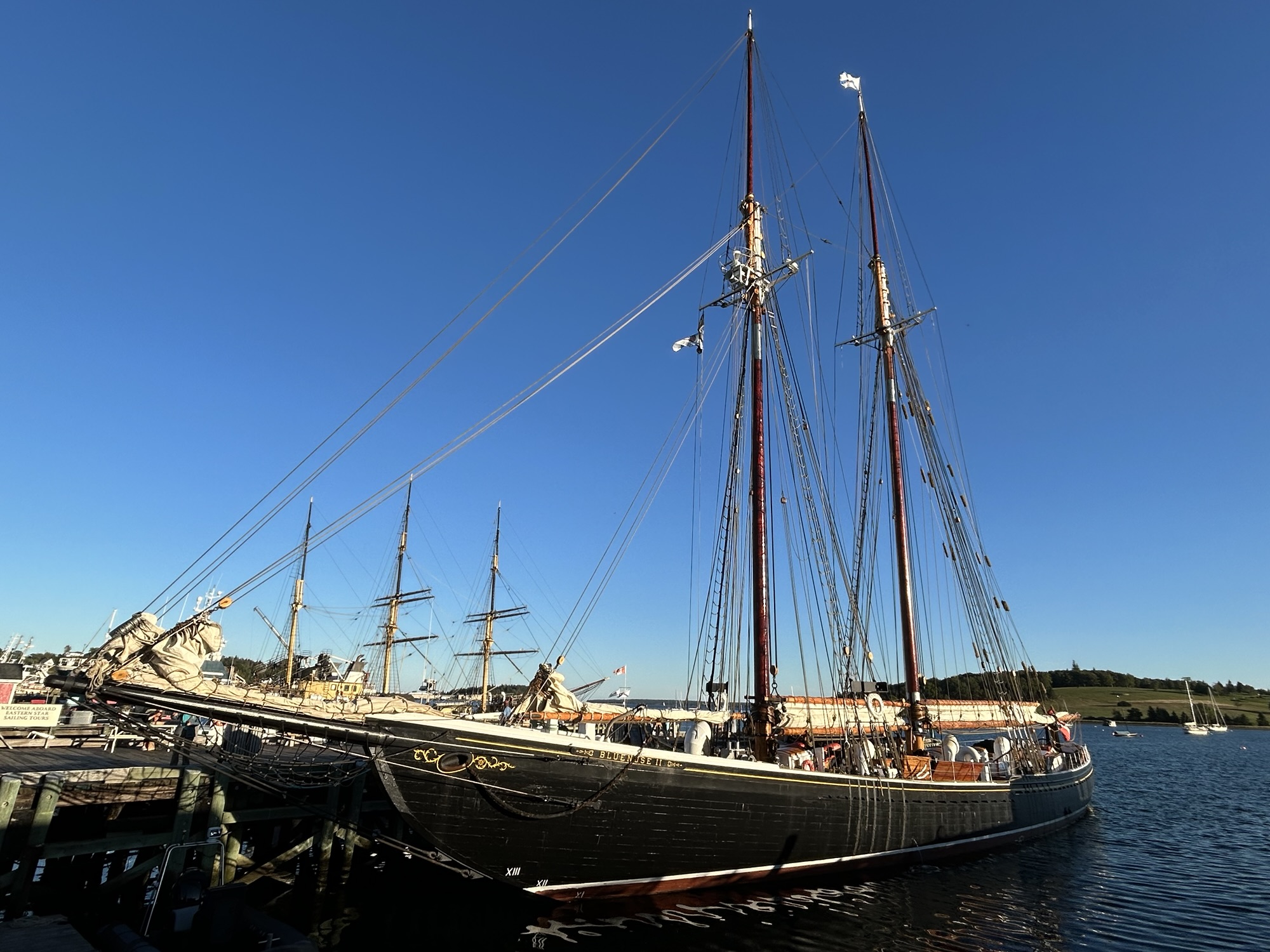
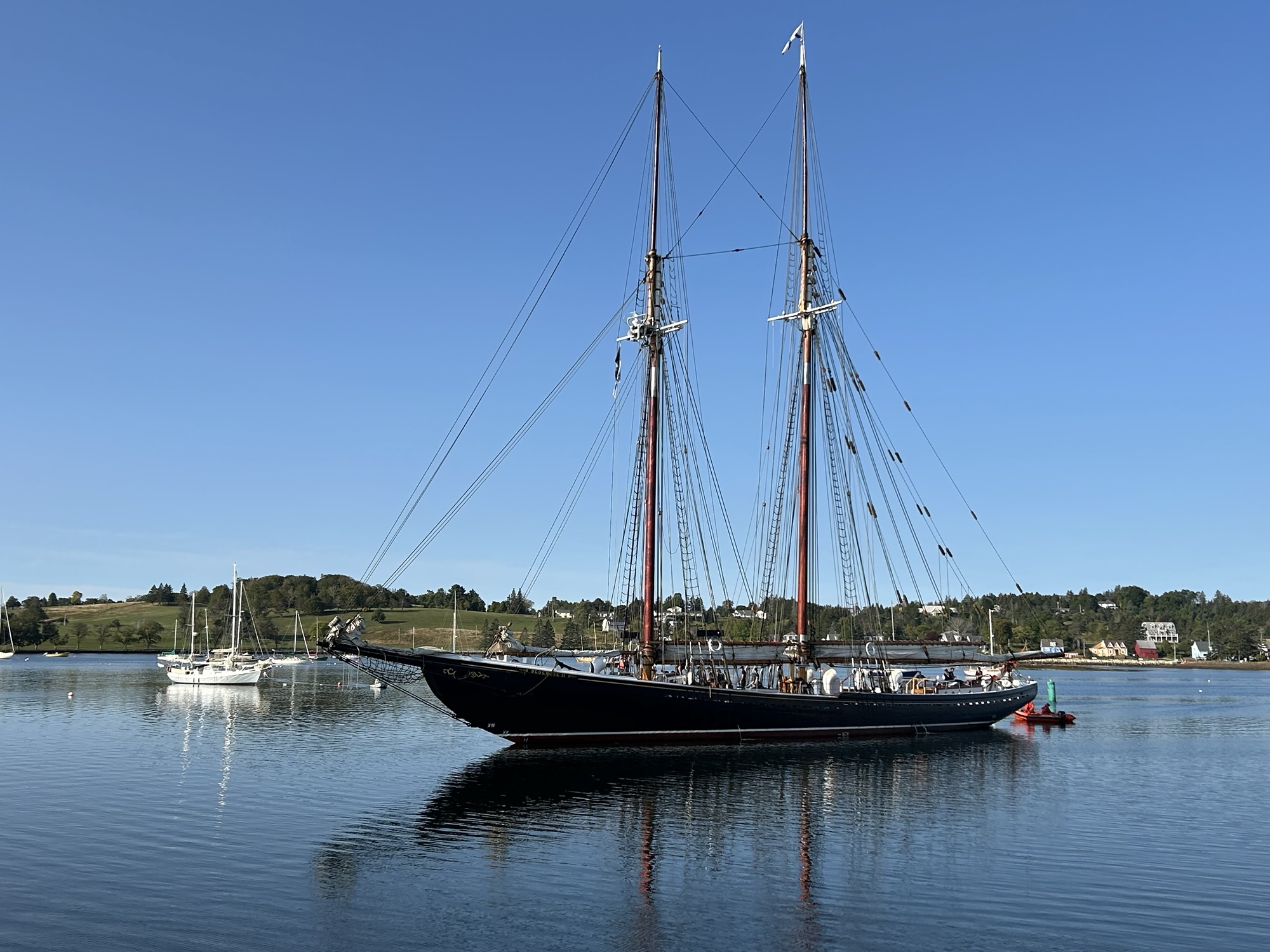
UNESCO recognized Lunenburg Nova Scotia for being a well-preserved example of a British planned town, including many lovely, colorful historic buildings. I think that’s missing the point. The town was a success due to its natural harbor, grew quickly and earned its fine buildings by fishing and trade during the age of sail. Plenty of other towns have grid streets and colorful Victorian architecture. But the beauty of the place is its harbor, where two large sailing ships were docked when I arrived. One, the Picton Castle, is a training ship (in background above), and the other is the Bluenose II (foreground), a replica of one of the fastest fishing sailboats in the world. The Bluenose won 5 consecutive world fishing ship races during the 1920s and 30s, before being lost in the Caribbean in the 40s.
If landlubbers come here to see an old church and some other old buildings, then they’re missing the best of Lunenburg. Sit by the harbor and watch the boats. Eat some locally caught seafood in one of the many harborside restaurants. Go to the maritime museum and learn about fishing during the age of sail. My hotel room had a view of tall ship masts to help me dream of adventures, and I caught the Bluenose II on its way out to sea early in the morning, below. This is one of my favorite places to visit.
Merry Christmas & Happy New Year! I’m introducing two new topics for next year, more at the end.
Nobody wants our climate to destabilize, and yet that is what we’re doing. In my last installment on better thinking, I wrote about how this blog is a product of imaginative thinking, and below are some more specific points.
Rational people base their thinking on logic and knowledge. The Farmer’s Almanac was able to predict the weather for over 200 years with remarkable accuracy simply by carefully recording weather patterns. Seasons used to be stable enough to plan your crops well. But, in a sign of the times, the old Farmer’s Almanac is going out of business. I don’t know whether climate change had anything to do with their decisions, but accurately predicting weather based on past history is now unreliable. (And, now that the National Center for Atmospheric Research is going to be closed, both climate and weather forecasting will suffer.)
In early June of 2022 I visited Theodore Roosevelt National Park in North Dakota, and as I was driving back to California, the weather changed. There was a late season heavy snowfall in the mountains, followed by heavy rain. I remember thinking that the return to warmth and rain would melt all that late snow very quickly, so I decided not to dawdle. A few days later, the Yellowstone River washed out a whole bunch of roads after I passed.
They called the Yellowstone event a ‘500 year flood’, trying to put the event into historic context. But terms like ‘100 year floods’ no longer make sense, because the climate has already changed so much that the floods happen far more frequently either than expected or than they ever did in our written history. A biennial ‘25 year’ flood is oxymoronic.
Bereft of precedents, we need to use our imagination more when we plan the road ahead. You may have planned to retire to some beachfront property like the Outer Banks, but rising seas and more severe storms may make that much riskier than expected. Or maybe you planned a cabin in the woods, but increasing wildfires risk that dream as well. Or maybe you planned to move to a desert retirement community, but rising heat waves and diminished water are making that unsustainable. Or snorkeling coral reefs, now irrevocably damaged. Or seeing glaciers, now disappearing. Of course, there will still be plenty of beautiful places to visit and wonderful experiences to have, but our poor carbon choices are diminishing some of them rapidly. So we need to think ahead.
And it’s not easy. The most arable land in Canada is already farmed for crops like wheat, and much of the rest of the soil is a poor thin layer over the rocky Canadian Shield. So any fertile farms lost to sea level rise in Alabama are not going to be replaced in Labrador. And warmer average global temperatures do not mean an end to winter. Winter is caused by our tilted earth’s angle to the sun, so Greenland will still be dark and mostly uninhabitable for long winter months. Instead, some places in the southwestern US may become practically uninhabitable for long hot summers.
Seasons will continue and will increase in importance as weather becomes more extreme. In the long evolutionary fossil records, the species that are small, light and highly mobile tend to do better than slow moving, heavy creatures that spend all their time in one place, especially in times of climate change. Obviously, being the first species theoretically capable of diverting an asteroid, it’s shameful that we’re not trying harder to avoid the mass extinctions that we’re going to cause with our carbon emissions.
Considering all this I am writing two new monthly series for Saturdays next year. At the beginning of the month I will recommend which national parks to visit in which months, with a few adjustments for the changing climate. And mid-month, I will write about relevant climate consequences. I encourage you to use your imaginative thinking to make the most of your road ahead.





 Zero Carbon Travel