The Plaza Santo Domingo in the historic center of Mexico City is the southern terminus of ‘The Royal Road of the Interior Land’, a World Heritage Site. As you can see above, some vendors still use traditional market stands on this trade trail first developed by pre-Columbian empires. The whole trail was originally a native trading route for turquoise, obsidian and feathers, and after the Spanish conquest, it was used for military, religious expansion and for silver. From this plaza, the road runs north through San Miguel de Allende and Guanajuato all the way through El Paso (‘the pass’) to Santa Fe (‘holy faith’). The US section—with the same Spanish name—is a national historic trail.
In the background is the Palace of the Inquisition, which arrived from Spain to punish the son of Hernán Cortés, Martín, who threatened independence in 1566. Public burnings of witches and heretics were common for ~250 years, until Mexican Independence ended the practice in 1820. The ‘palace’ now houses a UNAM medical museum, although there is a small gory museum of the inquisition a few blocks away. Mexico City is the largest and oldest city in North America, and it is well worth visiting to be able to walk in the footsteps of history.
There are only three NHAs in the Southwest Region, two in Louisiana and one in New Mexico. While not official park units, they are uniquely interesting and beautiful areas to visit.
Atchafalaya National Heritage Area in Louisiana runs from the Natchez NHP and Natchez Trace NST, down past Lafayette and Baton Rouge, to the Gulf Coast west of New Orleans. Culturally, the focus is on the Acadians or Cajuns. 150 years after settling Acadie, now Nova Scotia, the French speaking Acadians were expelled by the British beginning in 1755. Longfellow wrote his epic poem Evangeline about the tragedy. Skilled fishermen and wetland farmers, many settled in French Louisiana, growing rice, beans and catching crawfish. They mixed with Native Americans, slaves, freed blacks and other immigrants, but kept their French roots. The French pirate Jean Lafitte, a successful smuggler in the area, was captured, but offered to help the Americans in the War of 1812 in return for his freedom. Lafitte knew the swamps (waterlogged land) and the bayous (shallow waterways through the swamps) expertly, and Andrew Jackson employed him as his aide-de-camp. Lafitte also provided troops, cannon and ammunition. The Battle for New Orleans was won, and Jackson was credited as the hero. Lafitte was likely responsible for defeating the superior British forces, but he received no credit from the US military, just a pardon. But the Cajuns still thrive here, and their history and culture is preserved at the Jean Lafitte NHP & Preserve, which includes three different Cajun Cultural Centers in the NHA. Their music, Zydeco, is from the French word for beans, “Les Haricots” (say it fast). And Breaux Bridge, of course, is La Capitale Mondiale de l’Écrevisse, or the Crawfish Capital of the World.
Cane River National Heritage Area is the other NHA in Louisiana, and it is best known for the well preserved plantations of the Cane River Creole NHP. However, the whole river area from Natchitoches between the national forests, down past the plantations is fascinating. This is the northern terminus of El Camino Real de Los Tejas, one of the Old Spanish Trails that runs through Texas, and there are state historic parks highlighting the forts and cultural sites that predate the Louisiana Purchase. I try to get lost at least a few times every visit to Louisiana, as there’s always something surprising to find and plenty of delicious food!
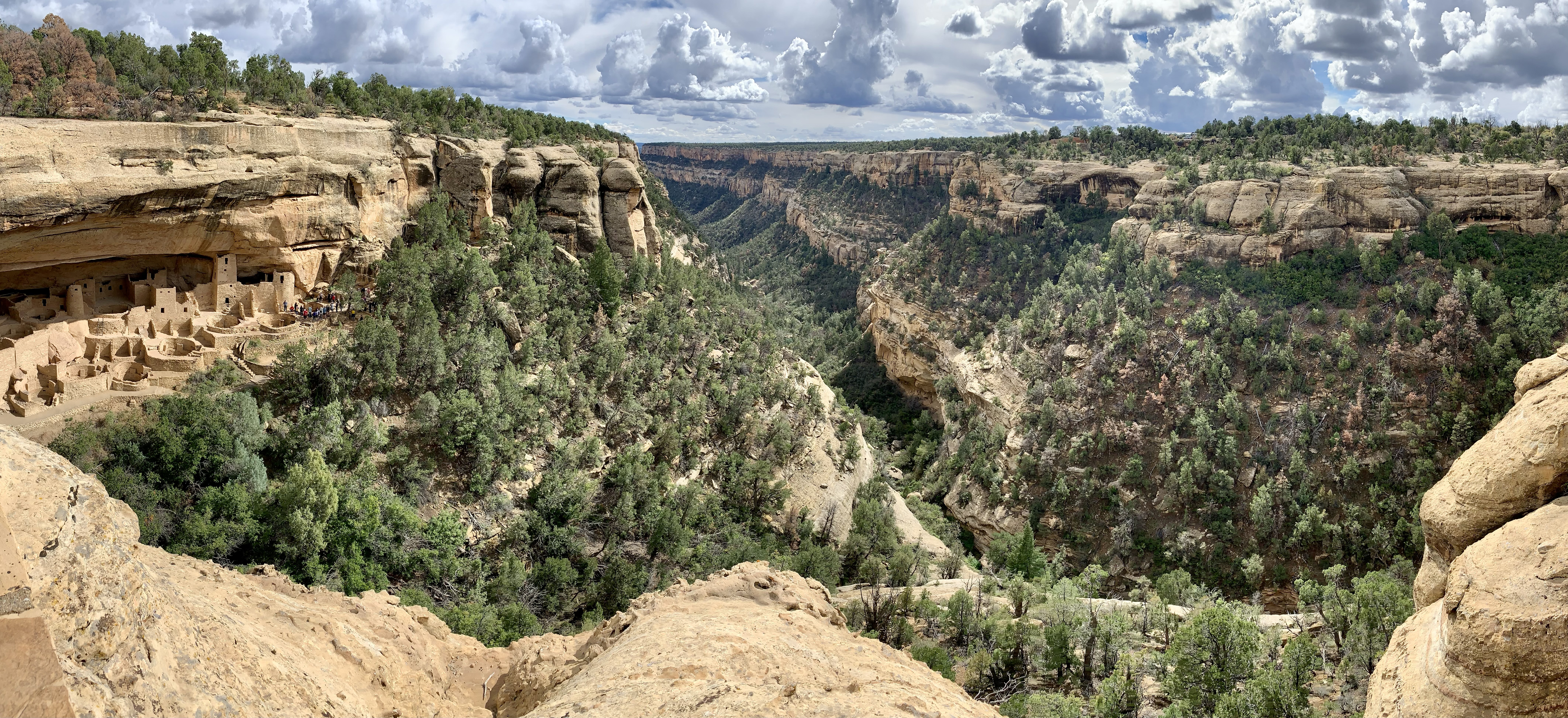
The Northern Rio Grande National Heritage Area in New Mexico is at the crossroads of both the ancient and old west. El Camino Real de Tierra Adentro connects Santa Fe to Mexico City. The Old Spanish Trails connect Santa Fe to Los Angeles, and the Santa Fe Trail connects Santa Fe to St Louis. Route 66 goes right through town. And before they were Spanish, they were all Native American trading routes. The natives once expelled the Spanish during the Pueblo Revolt, planned at Pecos. There are caves and Petroglyphs showing where people camped. Bandelier with its tall ladders to cliff dwellings is also in the NHA. But it’s not just history. Taos Pueblo (above) is still occupied today, continuously for over 1,000 years. All this I had seen, but then I got lost again, taking an improbable route through the mountains towards the headwaters of the Rio Grande in Colorado. And there are canyons, gorges, wild and scenic rivers, Georgia O’Keefe’s ranch, more cliff dwellings & petroglyphs, and even more storied trails. Some of my most memorable scenes of America are on the drives between official sites, intangible culture, storied heritage, true wildlife, and sheer beauty on the road not often taken.
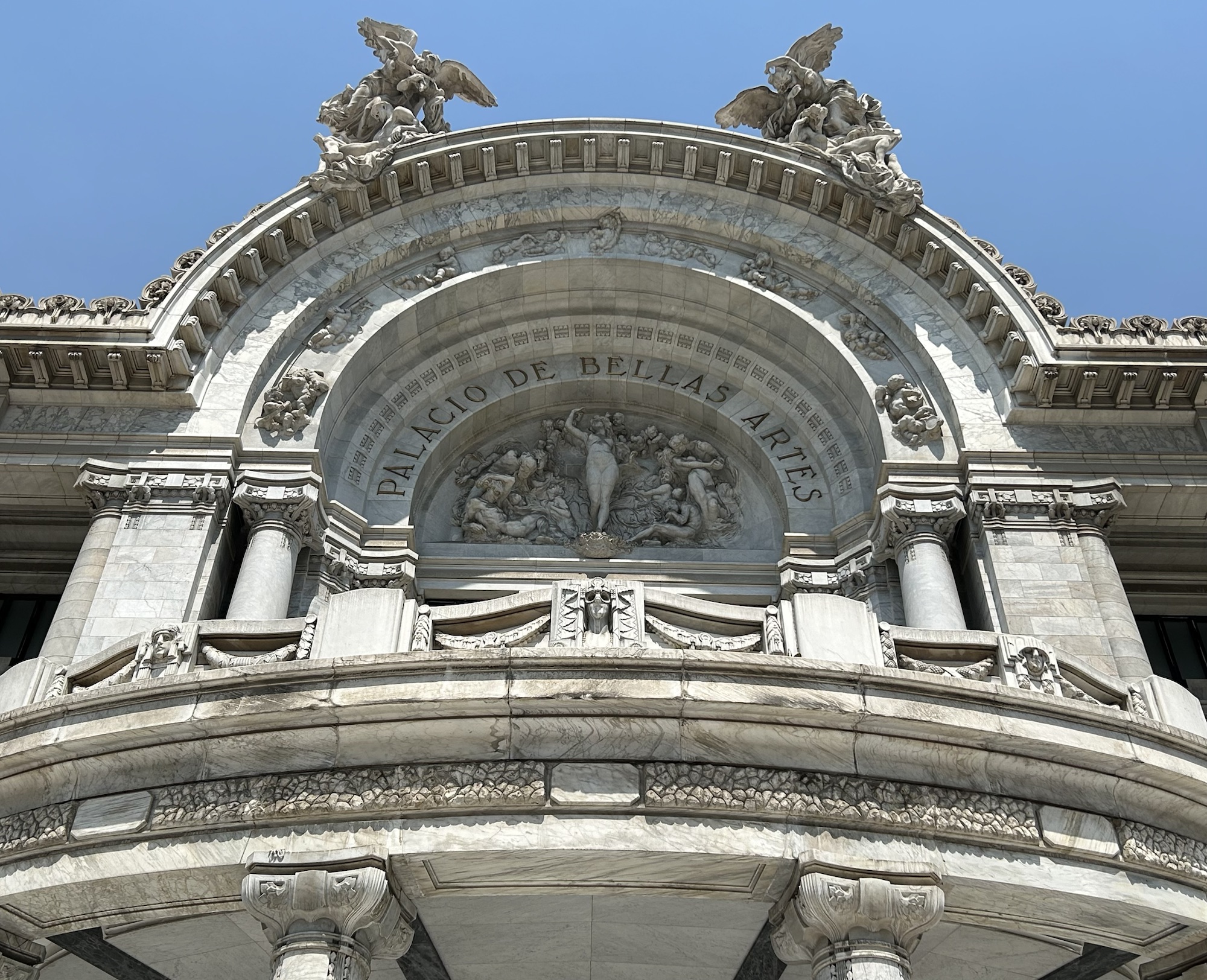
In the US, the Independence War means the same as the Revolutionary War, but in Mexico, they are two different wars. 100 years after Hidalgo cried out for Independence from Spain in 1810, the country was under the control of the dictator Porfirio Díaz, who ruled for 35 years over a growing gap between the elites and the masses. He commissioned the ostentatious building above to celebrate his rule, but it ended up celebrating the end of his rule after the Revolution of 1910-1920. Since the common people were uneducated, the new era of called for artists to paint huge public murals to tell the story of Mexico. The three great muralists were Diego Rivera, David Alfaro Siqueiros and Jose Clemente Orozco. All three have murals on permanent exhibit on the oversized second floor inside. Siqueiros uses stunning, clear images to depict the drama of human suffering and bondage. Orozco contrasts vivid lives with cold modern weapons. And Diego Rivera presents his profound understanding of social struggle, using historic figures, ancient images and modern allegories, to awaken people.
The historic center includes far more than one museum, but to appreciate it, you need to understand what’s buried beneath the metropolitan cathedral, grand government buildings and the huge public square. Once there was a lake ringed by volcanoes, and the Aztecs built an empire around an island, using landfill and bridges to create a moated city. Thousands of captured warriors were sacrificed publicly and walls of skulls have been uncovered. From this easily defended base, rich with food grown on floating gardens such as at Xochimilco, over 200,000 lived here, with a sophisticated canal system and extensive trading network. When Hernán Cortés arrived here in 1519, it was one of the largest cities in the world. After building boats and bringing in cannon, the besieged city fell, and the Spanish drained the lake, tore down the temples to make a cathedral, and paved the ruins of the temples and markets to make the huge, empty square Zócalo public space, where over 100,000 now gather to hear the President speak from the balcony of the National Palace or to listen to pop music stars perform. Begin in the Zócalo and take the walking tour to learn about the excavated Aztec ruins and much more in this fascinating, important and historic city center.
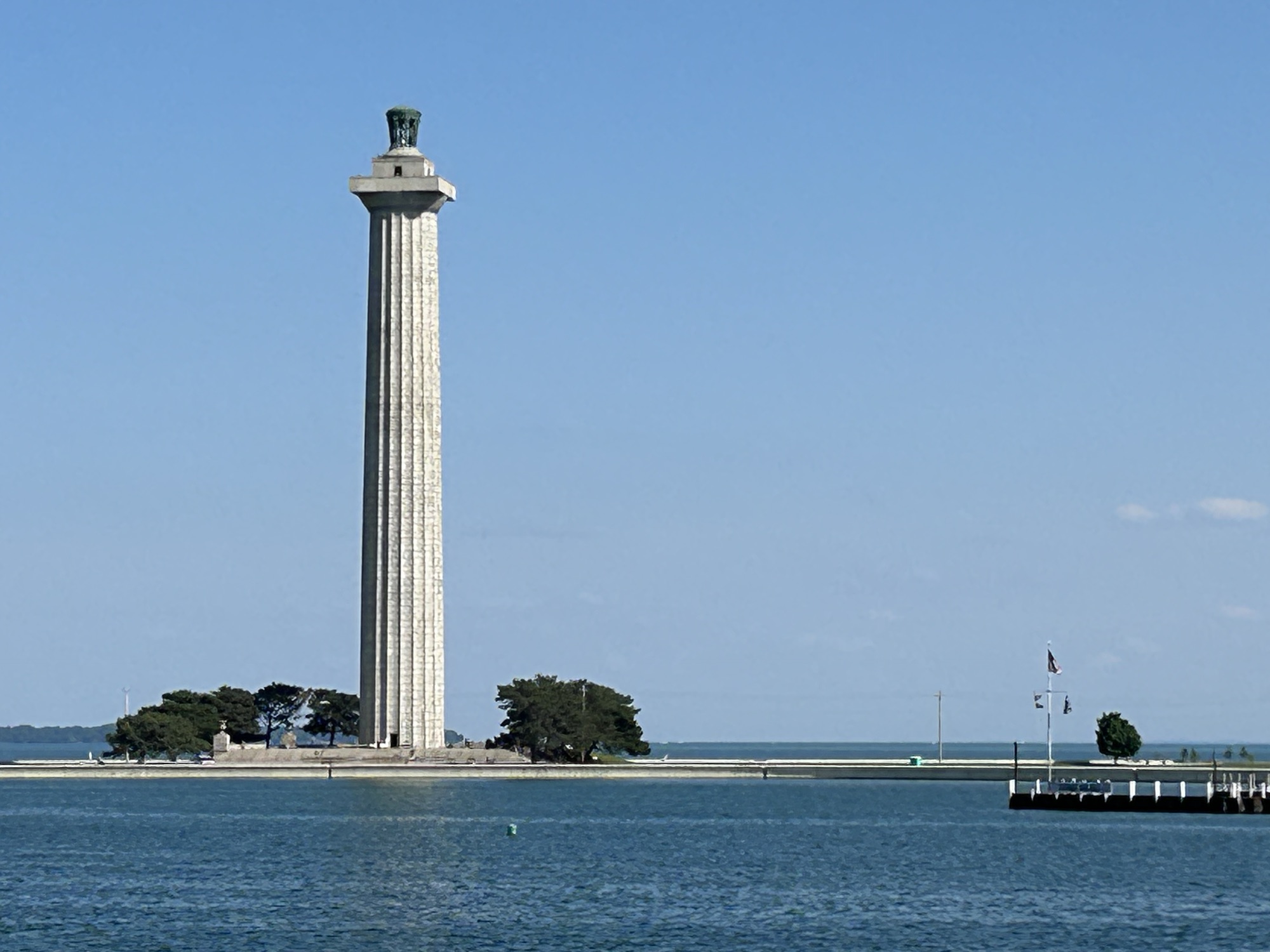
Captain James Lawrence was shot by the crew of a British ship blockading Boston in June of 1813. Dying, his last command was “don’t give up the ship”, but his ship was captured. Three months later, his friend Commodore Oliver Hazard Perry commanded the USS Lawrence under the flag “DONT GIVE UP THE SHIP” against the British for control of Lake Erie and access to the western Great Lakes. Despite balky support from the USS Niagara, Perry sailed up close under long range fire to bring his short range big guns to bear. The Lawrence suffered 80% casualties, was disabled, and Perry withdrew, taking command of the Niagara. He returned to the middle of the battle, pummeled the British ships and won the day. His fleet then ferried US troops across Lake Erie, where they forced a British retreat. US negotiators leaned heavily on these victories when negotiating peace, making Perry’s victory here perhaps the most consequential of the War of 1812 and for determining the US border with Canada today.
One of Perry’s younger brothers, Matthew, commanded the ‘Black Ships’ that sailed into Tokyo Bay and forced the internationally isolated Japanese Shogunate to open its country to the West in 1854. There are several ferry options for visiting the touristy island town of Put-In-Bay, and Perry’s monumental tower—the world’s largest Doric column—has great views of the surrounding islands, part of the longest undefended international border in the world, and the naval battlefield. Three British and three US officers are interred in the memorial, and the regular sailors killed were sewn up in their hammocks and committed to Lake Erie. Please take some time this Memorial Day weekend to remember those who gave their lives for our country.
South Park City, an old western summertime tourist trap in Fairplay Colorado, is only an hour and a half drive southwest from Denver, and yes, the cartoon is based on this tiny town surrounded by mountains. The mining and ranching town is at ~10,000 feet, and there’s an old railway roundhouse nearby. Some of the ranches organize riding tours, and there are plenty of scenic mountains, canyons, creeks and old mining sites to explore. The trout fishing is renowned. The South Park National Heritage Area is building a good track record of saving old buildings, protecting natural areas and boosting tourism.
About an hour drive north of Denver in Fort Collins is the Cache la Poudre River (French for Gunpowder Stash). Below is the Poudre River Whitewater Park, perhaps the best example of a how planning can turn an urban river into a recreational star. Due to a long-term cooperative water district that balances various stakeholder interests, the river is surprisingly well managed. The wild and scenic section up in the mountains preserves nature, protects wildlife and is enjoyed by whitewater rafters and kayakers. But I saw a kayaker preparing to raft the short stretch of whitewater in town, after changing out of work clothes. The Cache la Poudre River National Heritage Area also includes museums, historic sites and open natural areas in and around Fort Collins.
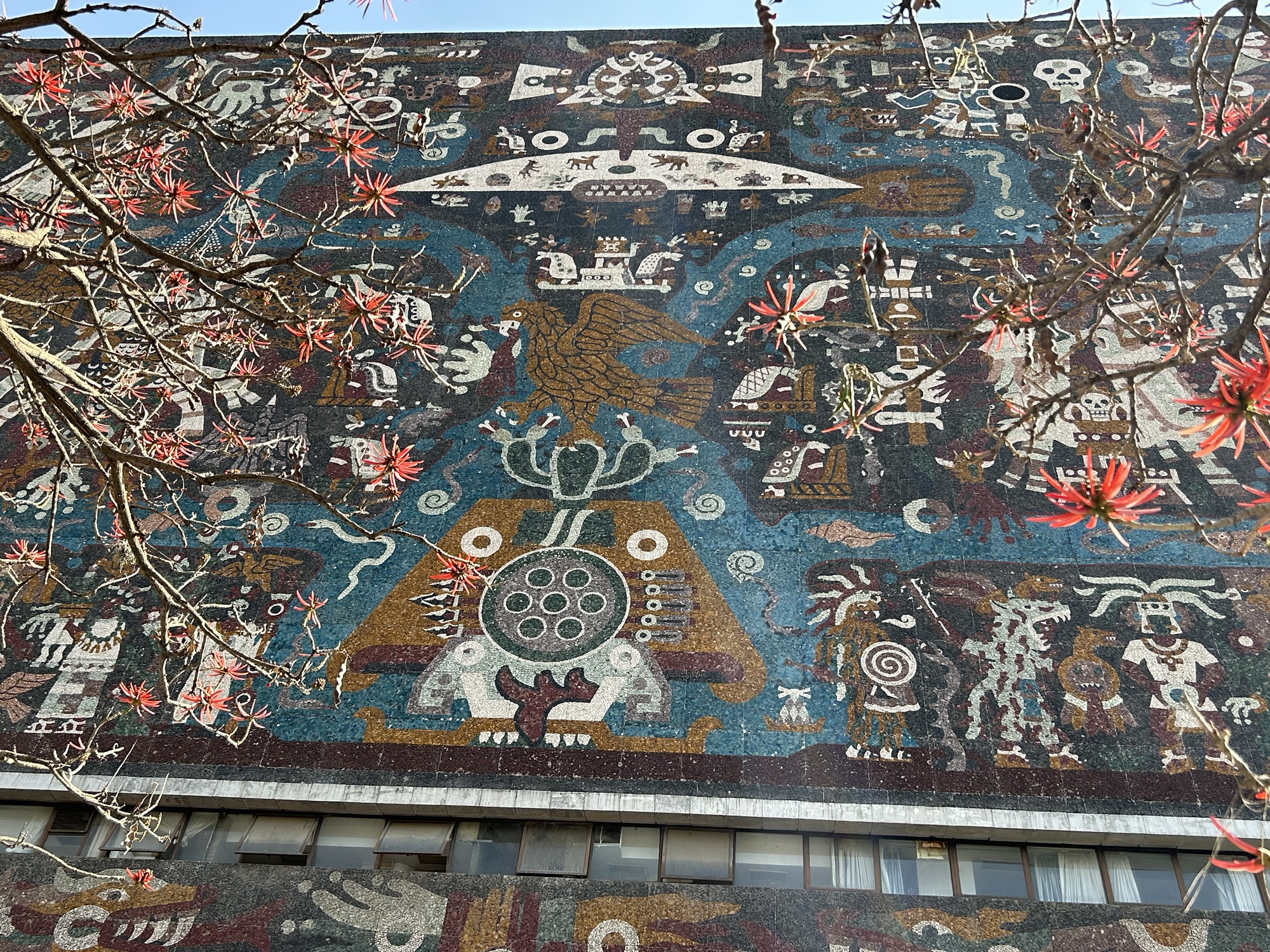
University City, the main campus of UNAM, the National Autonomous University of Mexico, is a World Heritage Site, and it was founded in 1551, just four months after the oldest university in the Americas was founded in Peru. It is autonomous, meaning free to teach without government interference, although the PRI government did kill hundreds of students in 1968, during the Tlatelolco massacre. The faculty and alumni include all Mexican Nobel winners to date. The north face of the 10 story Central Library (above) is covered with Aztec mural mosaics by Juan O’Gorman, friend of Diego Rivera.
If you’re visiting Montana, you may want to camp at Bannack, briefly the territorial capital, and now a ghost town. The sheriff and his deputies allegedly conspired with ‘road agents’ (highway robbers) to rob and murder gold miners and travelers, before being discovered and lynched by vigilantes. The truth is murky, but the town is well preserved as a state park. See the jail below.
[At the bottom of the web post, there’s a short video surprise! No peeking until after the story!]
Once upon a time, not far from the Black Forest in Germany, where many old fairy tales began, there were two friends, Johann and Eberhart, who believed that being inspired by God should be a personal experience. They shared their views with others, and many joined them, meeting under an old castle, happily. But other people were angry with them for being different, so some of their followers got on a boat and traveled to a new country, where people were free to believe whatever they wanted. The first place they settled grew too crowded and busy for them, so they moved again, to a magical land between two great rivers, where their friends and families settled in seven tiny villages in the middle, along the much smaller, but pretty little Iowa River.
Their way of speaking (High German) was difficult for others to understand, so they decided to call their first village Amana, since it was easy to say. The law made them buy a village called Homestead (near the train), but they decided to call their other villages High Amana, Middle Amana, South Amana, West Amana and East Amana. They really liked the name Amana, and others just called all their villages the Amana Colonies.
The Amana colonists worked hard, but kept to themselves. Like the other farms in Iowa, they kept some of the food they grew in Silos, that look like giant tin cans. Everyone in the villages worked together, cooked together, ate together and prayed together, happily. They learned to speak the language of their new country, but they also kept up with their old language. After many years, they spoke three languages: new, old and a mix of both that they invented themselves. They didn’t have much need for money, since mostly they stayed in their own village. But curious people would visit them to buy the interesting things they made, like eggs dyed dark brown with golden flowers on them (see picture).
Then, there was a dark time in the new country, when 1/4 of the people could not find work, and the President, who grew up in a Quaker village nearby, lost his job too. The village was worried that no more curious visitors were coming to buy their golden flower eggs, so they decided that some people should go out into the outside world and work for money. Unlike their friends the Amish, the Amana community believed in technology. One, named George, was very smart and invented a machine to keep food cold for a long time, so the village added a factory next to the river with Smokestacks to build his machines. Later his company made many other machines you may have in your home, like a magic machine for cooking food very quickly. George’s Amana household appliances became known around the world.
The people in the village were very happy. If they wanted to go outside the villages, they could go anywhere. But many villagers loved Amana and chose to stay. Every Sunday at 8:30 am, they have a church service in their old language, and at 10 am in the new language. They enjoyed preserving their old way of life and kept many of their old buildings just like they were over a hundred years ago. You can still go into the old general store in High Amana and even buy a dark brown egg with beautiful golden flowers. But the villagers also built some newer stores for all the curious people who came back to see their pretty little villages, like a toy store, an ice cream store, a chocolate store, and a store that only sells old-fashioned Christmas ornaments. They have restaurants too that cook food and special drinks just like they had in the old country.
And, on the first weekend in May, the ladies of the village dress up in their fanciest dresses, that their mothers and grandmothers saved and taught them how to make, put flowers in their hair, sing in their old language, and dance in the middle of the Main Street, pulling on long colorful ribbons tied to the top of a pole, just like their ancestors did in the old country many, many years ago to celebrate Spring. And do you know what? This whole story is actually and completely true, and not a fairy tale at all! The End.
Maifest 2024, “Mai the Fest be with you”, on Main Street in Amana, Iowa.
[And, no, I haven’t had a stroke, yet. If you think you’re too old for my favorite fairy tale post, then find a kid, and read it to them.]
This is only half of a World Heritage Site, Mexico City, even though it’s on the outskirts. Frankly it’s status is controversial. To the extent that it preserves the long cultural history of floating gardens and canals, then it deserves global recognition. Unfortunately, it’s also known as a place to get drunk with friends over the weekend on one of the colorful boats above. And the city has encroached on the area, overbuilding, developing, squatting, polluting and diverting the water. So, it’s at risk. Really the damage was mostly due to the Spanish who drained the lake to build a new city over the old Aztec city, so this is one of the few places directly linked to the extensive ancient Aztec canoe and irrigation canals. A few parts are preserved, some are threatened and many are gone. Restoration is difficult and expensive, but worth it in my view.













 Zero Carbon Travel