Adirondack Biosphere & Champlain Valley National Heritage Partnership

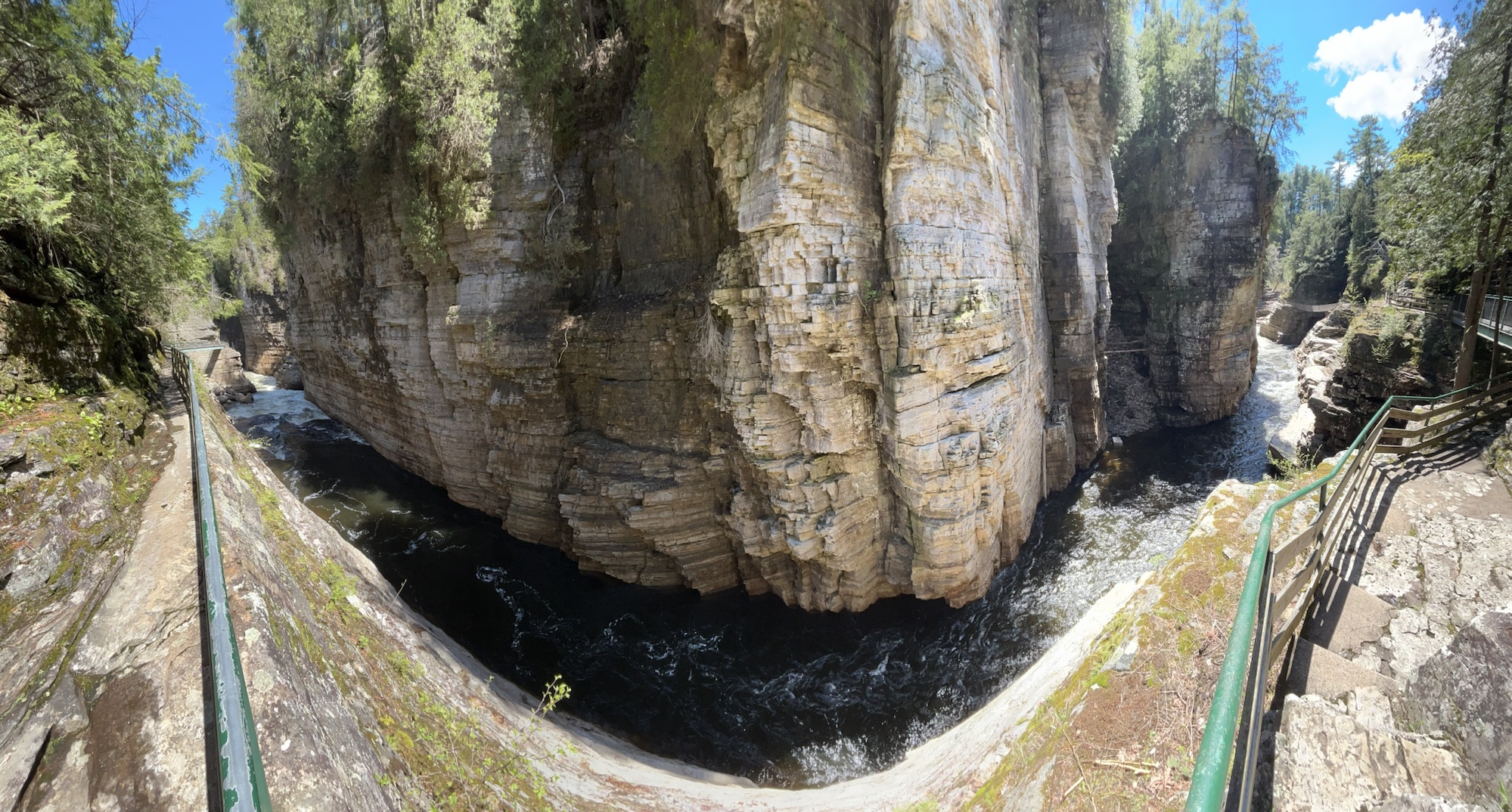
Much of upstate New York belongs to the Adirondacks, with old mountains, lakes, forests, wildlife and scenery. Two of the more famous tourist spots are the High Falls Gorge (above) and the Ausable Chasm (below), both on the Ausable River—from the French ‘au sable’ meaning ‘sandy’—which is fed from Lake Placid and flows down to Lake Champlain. Since they’re well developed old trails, walking along the secure walkways and overlooks costs about $20 each, but I think they’re still worth it, though neither is quite the scale I imagined for the ‘Grand Canyon of the East’.

Lake Champlain is part of the water route from New York City to Quebec, so several key battles were fought in the area, including at Saratoga and during the War of 1812. The British were winning in 1814, having sacked DC, but Thomas Macdonough won the Battle of Lake Champlain aboard his ship, the USS Saratoga, thwarting a British invasion down the Hudson in 1814.

This National Heritage Area preserves both history and beautiful nature, including Marsh-Billings-Rockefeller in Vermont. The Champlain-Adirondack Biosphere is also recognized by UNESCO for its forests, wetlands and mountains in both upstate NY and about 1/2 of Vermont. Unfortunately, the Trump administration ended the only other UNESCO Biosphere in the North Atlantic Region at New Hampshire’s Hubbard Brook hardwood forest research. Still, there are many other fascinating places to visit in this diverse heritage area, such as the Antique Boat Museum in Clayton New York on the St Lawrence River, as well as the scenic homelands of the Algonquin and Iroquois people near the Canadian border.
Whale Blubber & Vineyard Wind

Butler Flats Light (above) has marked the entrance to New Bedford Harbor in Massachusetts since 1898. It was a clever bit of engineering by a marine architect using a caisson or box to pump out the water for construction, and every day it’s used for navigation by the famed scallop fleet, ferries, the occasional tall ship, and many other boats passing through the hurricane barrier. When the light was built, New Bedford still dominated the whaling industry, sending ships on long voyages to harpoon whales, melt their blubber into oil and return to fuel America.

Behind the light are two wind turbines, which provide electricity today without extinguishing any species. Despite the preposterous claims of fossil fuel industry funded politicians, there is no such thing as ‘windmill cancer’ and bird strikes are rare. But folks who live near the turbines complain that they cast shadows, are noisy or are ugly, so new wind turbines are now built far offshore, south of Martha’s Vineyard. The current project is known as Vineyard Wind, with 62 turbines each generating 13 megawatts when complete. Currently, there’s a pause after a blade broke, requiring inspections and clean up. Massachusetts recently committed to roughly quadrupling wind projects in the area.

The turbine assembly is based in New Bedford, with final installation of the towers at sea. Interestingly, to protect whales from construction noise, they create a circular curtain of bubbles rising up from around the foundation on the seabed. They got the idea from whales, who create a circular curtain of bubbles underneath schools of fish to herd them together into a bite sized meal. Thousands of locals work on the project, in a boon to the economy, and the first project will provide relatively cheap, green energy to 400,000 homes. I’ve observed the gimbaled tower segments and long blades being transported out to sea by huge construction ships on the same routes once used by whaling ships.

Progress is beautiful, especially when it helps save so many different species on earth from extinction. Back in the day, whalers would have argued that smelly whale oil was ‘indispensable’ and ‘higher quality’ than alternative fuels, and they resisted progress. Today, that seems absurd, although now the fossil fuel industry lies routinely to protect its profits. Ironically, during the Civil War, the US government helped launch the fossil fuel industry by buying their new fuel and taxing alternatives to save the Union. Now we need the government to help us transition quickly to green energy to save life on Earth and leave the smelly old fuels unburned.

Pictured Rocks National Lakeshore

Superior is the biggest, deepest and cleanest of the Great Lakes, and our most scenic lakeshore park is on the north coast of the upper peninsula of Michigan. Within the park are ~10 miles of dramatic 200’ cliffs, painted by various minerals washed through the sandstone, and the best way to see is by boat. The pastels, turquoise shallow waters, green trees, blue skies and waterfalls (below) are spectacular.

Besides taking a popular commercial tour of the most scenic section of the cliffs in a couple hours, as I did, it’s possible to kayak or to hike along the edge. Lover’s Leap (above) has only 3’ of water below, so don’t take it literally. The lakeshore trail—part of North Country NST—is 40+ miles over dunes, creeks, and long beaches, with many side trails exploring forests, marshes, and lookouts. Short hikes can be done near the ends of the park, but the middle is roadless.

Midwest Region National Heritage Areas

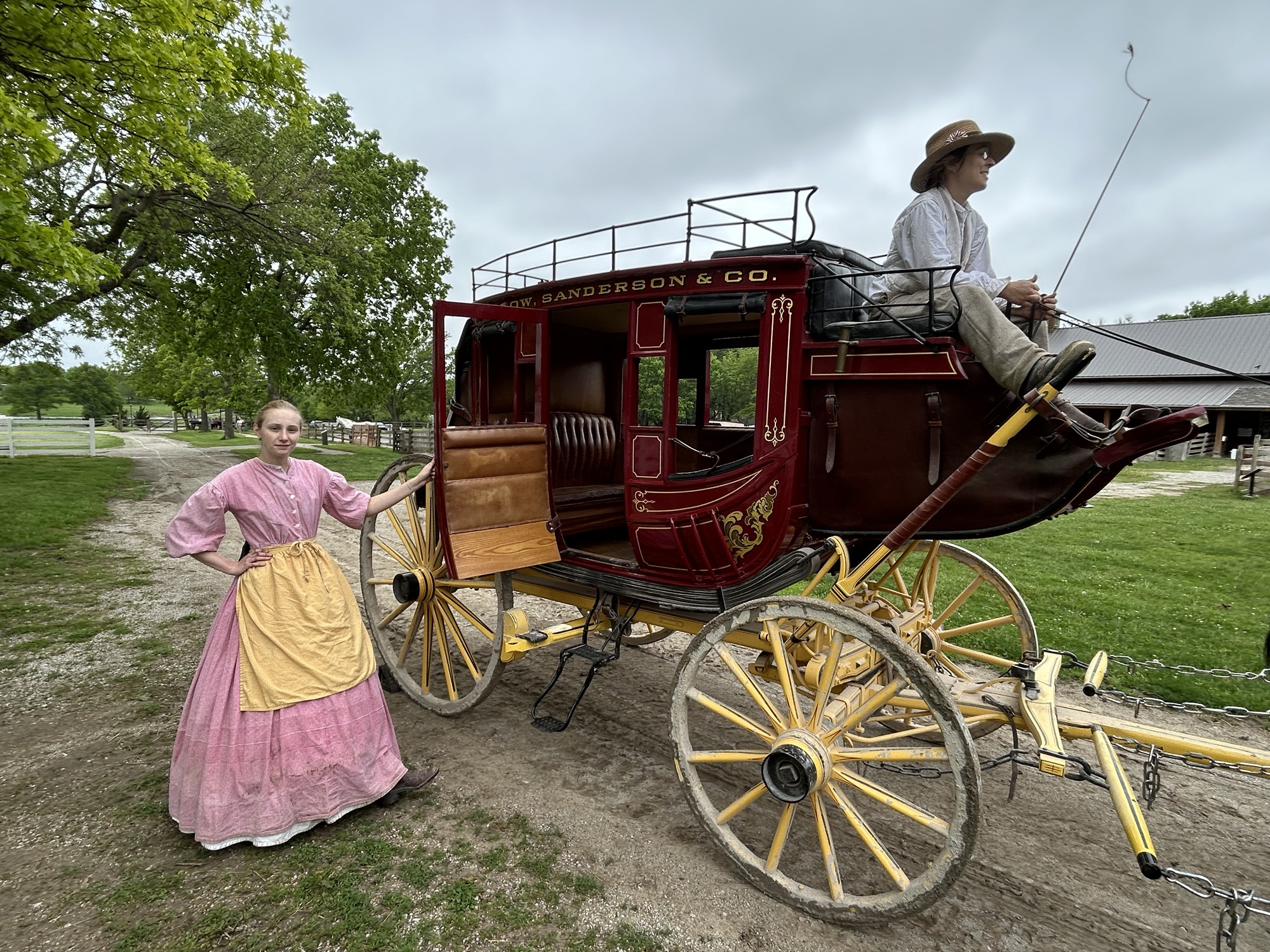
The Midwest region has 8 NHA’s—more than most regions—ranging from industrial to pastoral, and most are devoted to travel by horse, boat, car or plane. Each heritage area provides a unique way for us to learn our history and explore our diverse culture in vibrant and interactive ways, such as riding in a Santa Fe Trail stagecoach above. Parks travelers tend to focus on the most famous iconic national parks, but I found some of my most treasured experiences below.

If you missed any of the posts above, I encourage you to click on them now, especially the last one. I’m slowly filling in the map and will continue posting Midwest state photo summaries on alternate Saturdays. I only have a few more Midwest national park units to post before I complete all sites in the region, and look for a few more New York sites. Thursdays will alternate between summaries like this one and eclectic extras like last week.

Kate Mullany National Historic Site

Happy Labor Day! The beautiful cast iron stove above was made in Troy, NY, near Albany at the eastern end of the Erie Canal, but the site recognizes a different type of iron work: ironing the popular detachable collars that were invented almost 200 years ago by a Troy housewife. The ladies who ironed the collars were mistreated and poorly paid, so, despite the Civil War, they went on strike. The ringleader was the 19 year old, irrepressible Irish American Kate Mullany, who quipped, “don’t iron while the strike is hot”. Successful, her groundbreaking all-female Collar Laundry Union persisted long after the strike, unlike earlier women’s labor organizing in Lowell. After leading that union, Mullany earned national recognition and responsibilities, breaking many other glass ceilings in the American Labor Movement.

Teacher, labor leader and executive director of the affiliated site, Paul Cole has similarly rallied the people to support his efforts to save this important historic home and legacy for the American people, who too often are taught neither their own labor history nor women’s history. He was kind enough to take time to give me a personal tour, including the restored 1860s era rooms on the top floor. I highly recommend folks who are interested in our rights as Americans contact the site to schedule a tour by appointment. Hopefully this important park will be elevated from NPS affiliate to a full park unit soon.

Pilgrims v. Puritans

Recently I returned with my kids and my Mom (above right) to Duxbury in Massachusetts, where she grew up. Duxbury is a pretty seaside town with a large harbor on the north end of Plymouth Bay, reflecting the long history of our seafaring roots. When the Pilgrims arrived on the Mayflower in 1620, they first landed in Provincetown on the tip of Cape Cod, skirmished with the natives and then moved to Plymouth. The military commander, Miles Standish, settled in Duxbury, and his statue stands there atop a large viewing tower on Captain’s Hill. Longfellow wrote a romantic poem about a love triangle between Standish, the cooper John Alden and a recently orphaned teen named Priscilla Mullins. John and Priscilla Alden lived on the homestead above, which is still owned by their many descendants as a National Historic Landmark.

The Aldens were Pilgrims, not Puritans. The Pilgrims had separated from the Church of England, while the Puritans did not. Just before arriving in Plymouth to form a new colony, while awaiting royal permission, the Pilgrims and others aboard wrote an independent contract, the Mayflower Compact of 1620, which was the first self-governing document by British settlers in the now USA, although the British colony of Jamestowne was founded first. The Puritans arrived around 1630, settling in Boston and Salem. Contrary to the ‘mind your own business’ ethos of the Pilgrims, the Puritans were so strict that many left their colony for religious freedom. Such historic differences may seem inconsequential now, but freedom versus loyalty to England would become a big issue in Concord in 1775. And still today, there are conflicts between those who would impose their strict religious beliefs and those who prefer more freedom to make our own choices.

Driving back over the bridge from the beach, we got a glimpse of Miles Standish looking out over the harbor once famed for ship building and a large merchant fleet, before we went to dinner at a haunted restaurant, built before the Revolution. Moments like these improve our perspective, remembering the breathtaking leap of faith our ancestors took to settle here. While not part of the NPS, I recommend visiting the reconstructed living history museum in Plymouth, now called Plimoth Patuxet Museums, as well as other historic sites in the area like Alden House in Duxbury where we enjoyed an excellent tour.

Apostle Islands National Lakeshore

Above is the northeast point of Devils Island, the park’s northernmost island. The sandstone is more finely layered here, a bit softer and exposed to Lake Superior, so it erodes into caves, arches and beautiful shapes, under the lighthouse, quite photogenically. I briefly considered taking my own boat, but the distances are more than I realized. The largest island (left out of the park) is roughly the size and shape of Manhattan, with “1.5 hundred residents”. One does not simply paddle into the Apostles without serious preparation and proper gear. So, like most tourists, I took the efficient new catamaran from Bayfield. (While I arrived without burning carbon, I sometimes use park transport to enjoy places). The tour lets you see many of the 20+ islands in just a few hours. Guided kayak tours are also available.

Several of these beautiful Wisconsin islands are off limits, but most have one or more individual primitive campsites accessible by kayak, private boat or water taxi. Some of the wildlife is very difficult to see; martens weren’t seen on one until wildlife cams were installed. But from the comfort of the tour boat, we stopped to turn around and get a good look at a bald eagle nest, with a nesting pair visible. We also saw mergansers, nesting gulls and other birds. Bear and deer are only rarely spotted while swimming between islands. This is a large and important refuge for species that were once common all around the Great Lakes, and getting out among the islands is easy and worthwhile. If you have the chance, the colorful old Greunke’s Inn, near the dock, serves whitefish liver, a delicacy they popularized in the 1940s.

All Abraham Lincoln Sites

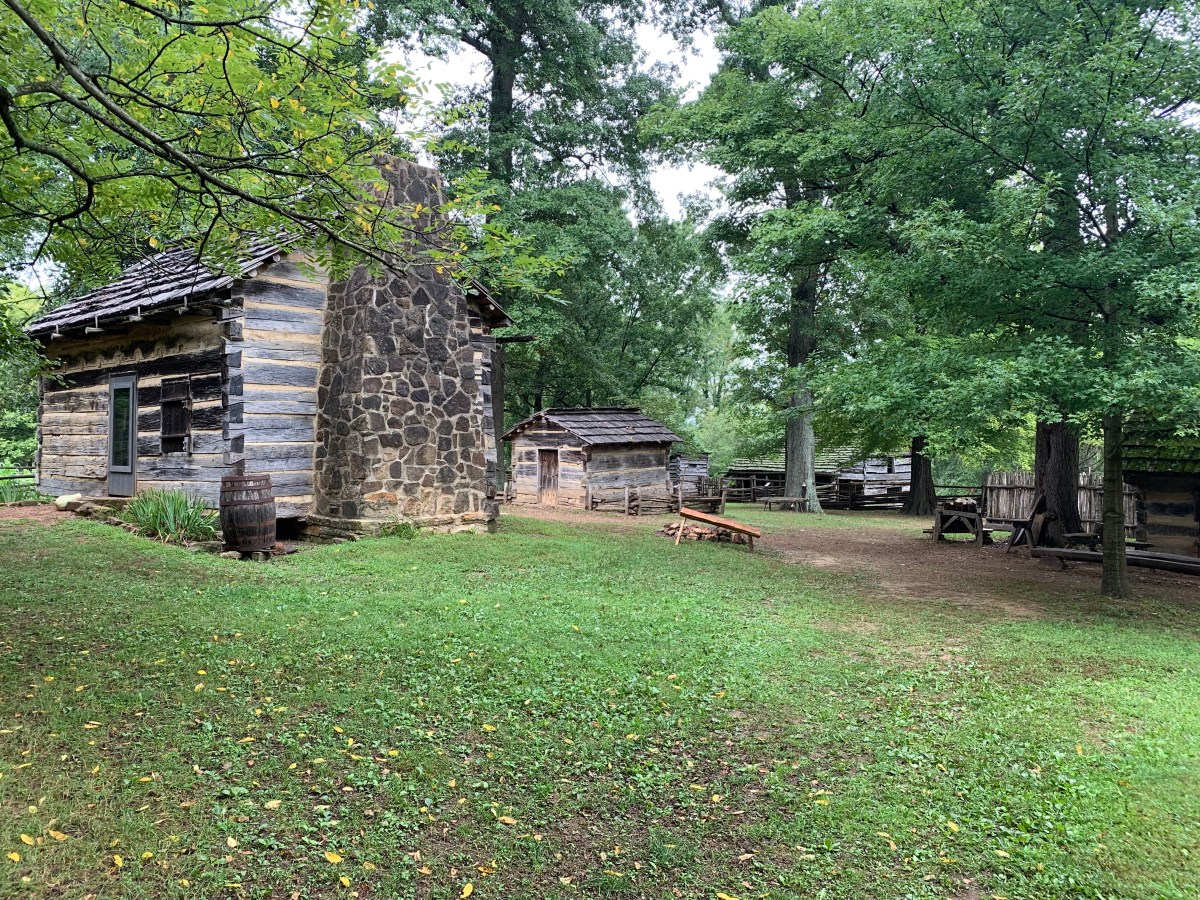
Abraham Lincoln is remembered in the name of four national park sites and one national heritage area, and he is an integral part of at least four more sites, not to mention numerous other national and state sites, landmarks, parks and much more.

Abraham Lincoln National Heritage Area is in Illinois, and it includes hundreds of waysides, visitors centers, historic sites, debate sites, Lincoln’s impressive tomb in Springfield, tour routes, museums and more. The Lincoln Home and the nearby Presidential Library & Museum are key partners with the non-profit that preserves his legacy and cooperates with towns and others who celebrate Lincoln and promote Lincoln tourism.

The NPS recognizes the following four sites as integral to understanding his legacy, but many of the Civil War sites and more are part of the full story, particularly Gettysburg and Appomattox. There’s even a Lincoln story (photo above) in the defense of Washington DC.

If you’re looking for trip ideas, consider a road trip in an electric vehicle focusing on Lincoln!

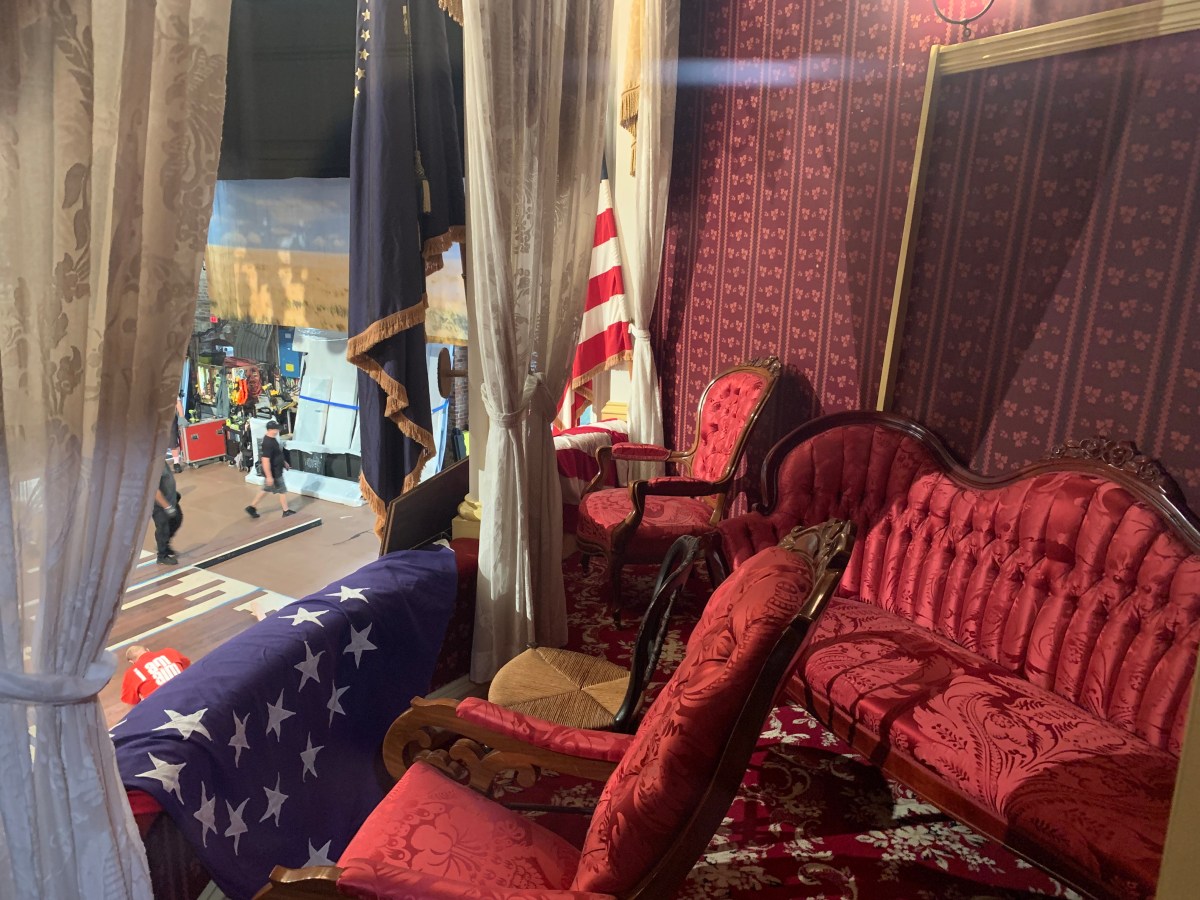
Ford’s Theatre

“By God, that will be the last speech that he will ever make!” John Wilkes Booth A Shakespearean actor, infuriated…

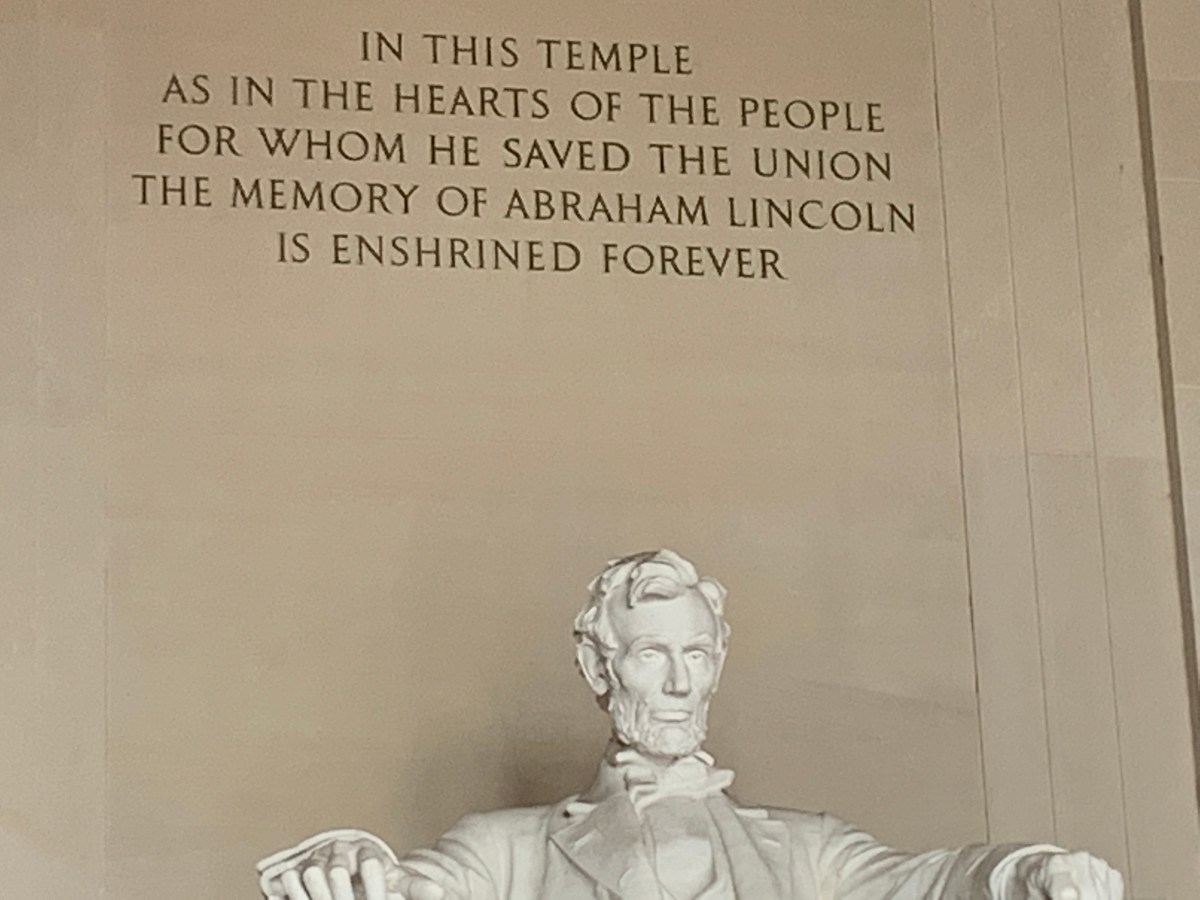
Lincoln Memorial

Carl Sandburg reported that Lincoln felt that the important monument was not the marble one but the “more enduring one…