[Sorry for not following the alternate Saturdays posting schedule this week, but Rhode Island is such a small state that it slipped through my rigorous editing process. Enjoy the bonus state photo summary!]
Pick the best in each of the six regions completed
Visit Canada and Mexico again to see more world heritage sites and biospheres
So I plan to cross the country again this year in my electric car, seeing National Parks from California to Florida, World Heritage Sites from Canada to Mexico, and various lesser known but still important small sites. Logistical challenges or new park designations (thanks Joe) may thwart my plans, but I resolve to do my best.
The posting schedule should continue unchanged all year. Mondays are site visits. Thursdays are typically viewpoints and summaries. And every other Saturday I plan to post a state photo summary. Thanks for following along!
Québec is my favorite city in North America. I love New Orleans, Philadelphia and San Francisco, but there’s a certain je ne sais quoi. Probably the food. UNESCO may have picked it as a World Heritage Site due to its history, architecture, culture, beauty, fortifications, statues, parks, narrow old streets, churches, magnificent vistas, harbor, citadel, Haute-ville, Basse-ville, museums, galleries, Parliament, battlefield, archaeological discoveries, and all the rest, but it’s really the food.
Although the funicular (above) is fun too, and the old shopping district is colorful, amidst several fine restaurants. There always seem to be festivals in all seasons, concerts, and other excuses to try something new to eat or drink. If you want to get out of the city, you can go to Île d’Orléans, by bridge from the north side of the Seaway. They have farms, berries, cheese, bakeries, jam, chocolatiers, wineries, cideries, sugar shacks with maple syrup treats, and a microbrewery. Basically, much of what you eat in Québec City is from the island. As much as I enjoy going around shops and stands there, I prefer leaving all the work to each restaurant’s wait and cook staff, so I order many different dishes and sample the best of everything. Bon appétit!
Hope you had a Merry Christmas! Enjoy this next installment of how to fix our thinking problem by clarifying our four distinct ways of thinking. Lots of us get sentimental around the holidays, so there’s no better time to delve into instinctual thinking.
Observe and mimic
As animals, we follow our instincts, observe and mimic. We underestimate how influenced we are by what we observe. Our species—Homo sapiens—evolved larger brains and more sophisticated vocal anatomy than our predecessors, enabling us to communicate complex ideas through words. But our predecessors—Homo erectus—accomplished much despite their lack of language. They drew art and symbols, crafted tools and weapons, they mastered fire and they organized into communities. Our species began with knowledge of all of these elements of human society, before we invented the words and grammar to describe them. Wordlessly, our ancestors conveyed how to be successful humans, including cooking, hunting, raising families and living in tribes, through observation and mimicry, over thousands of generations.
We still learn this way. Our DNA contains the basic human design, but our species has always augmented that recipe with a sophisticated set of imitated human behaviors we learn from observation: how to use tools, communicate, and behave together. Babies learn very quickly by observing their families, before they learn any words. Parents pantomime behavior they expect their babies to mimic, such as opening our mouths while spoon-feeding. And throughout our lives now, we learn more behaviors while watching videos than when reading, because unconscious observation is the primary way our species has always learned.
Instinctive versus instinctual
Instinctive implies inherited behaviors, like our instincts to survive or reproduce. All humans are the same species, so we share the same physiology and basic emotions. Anger, disgust, fear, happiness, sadness and surprise are all easily recognizable human emotions, because our faces express them with eyebrows or lips moving up or down, jaw or cheeks flexing or relaxing, and eyes widening or tightening. These emotions are genetic, universal, unconscious, and evolved over thousands of generations, because communicating our emotions visually helps us thrive.
Instinctual—as I define it—includes both the traits we are born with and adds what we unconsciously learn as humans. While some facial expressions are genetic, others are learned through observation and mimicry. Often our genetic traits are indistinguishable from our unconsciously learned behaviors, so it’s useful to group them both together as instinctual.
Instinctual motives
Think about what motivates you. Are you devoted to your family, your significant other, your friends or your pets? Are you working to make your life more comfortable, to enjoy good food, and to have fun? Do you make an effort to dress well for an event, for colleagues or for any gathering? Do you wish you were more appreciated, recognized or admired? Is being in a relationship where you can share your feelings and spend time together intimately important to you? Do you enjoy supporting your local sports team and cheer when they win? Afraid of dying?
These are all normal, powerful instinctual motives. In many cases, the thinking is simply, “I want it, it feels good, so that’s what I’m doing.” It does not matter whether it is conscious or unconscious, whether it reflects a physiological need or an evolved group behavior, whether you are intelligent or well-educated, or whether you are following the crowd or leading it. If the root cause of your motivation is physiological or determined by your social needs, then what drives you to think and act the way you do is instinctual.
Instinctual behavior
Most people primarily behave instinctually, without really thinking. Does such categorization offend you? Do you want to object, argue or fight about it? Do you suspect that you are being judged or having your status questioned? Are you preparing to say that all humans are this way and nobody is any better? Then thank you for confirming. You instinctively feel threatened by a mere description and want to fight about it. Rather than dispute what drives us, we should welcome our instinctual motives and behavior as what makes us human. There’s nothing inherently wrong with satisfying our basic needs, protecting our child, flirting, or needing group approval. Our species would not survive without those instincts.
Instinctual motivations are what cause most of us to get out of bed, to groom, eat, exercise, work, rest, have fun and spend time with each other. Instinctual motives drive most actions, longterm habits, rituals, and even desire for change. Without that fire in our gut, most of us would not take that first step to accomplish anything. Instinctual feelings can also depress us, make us give up too soon or paralyze us with fear or doubt. Whenever we interact with others, we take in non-verbal cues and react instinctually, straightening our backs, baring our teeth in a smile, maintaining eye contact while extending an open hand. We instantly adopt a posture of helpfulness, defensiveness, confidence, aggression, flirtation or curiosity.
Our instinctual desires choose how we entertain ourselves: action, comedy, crime, horror, drama, porn, romance or thriller. We often behave this way at work, when we decide where to sit during the meeting, who to team up with and whether to seek out or avoid confrontation. Our desire for recognition, to be attractive and to dominate others are common human traits, and they drive our behavior more than other ways, whether we are conscious of them or not.
Instinctual thinking
The different ways of thinking are primarily distinguished by motive. Instinctual thinking is driven by instinctual motives, consciously or not. We may not be aware of our unconscious motives, but we still feel them. They drive us to act instinctually, including displaying complex social behaviors, towards an instinctual goal, regardless of how much we initially realize what’s really driving us. Later, we often become aware of our instinctual motives simply by observing our behavior. Awareness helps us improve our instinctual behavior, through conscious instinctual thinking.
Those who have a finely tuned sense of instinctual motivations or who send all the right signals have social advantages over those who miss social cues or give off weird signals. Unconsciously we judge each other by tone of voice, stance, handshake and a look in the eye. If they appear confident, then we believe them. Do they remind us of others who were good or bad to us? Who appear to be winners and losers? Our internal instinctual drives often determines who we fear, flatter, imitate, join or avoid. Once aware of the instinctual games we all play, we can control our own instincts, influence the behavior of others and even influence group dynamics on a large scale. In this way, the dominant rule, and the subservient follow.
Instinctually-oriented folks feel in their guts that this is how the world works.
A series of locks allow small boats through Jones Falls below on the lovely historic river and canal connecting Ottawa to Kingston in Canada. In season from mid-May to mid-October, the boats tie up on the dock to the right and wait their turn, perhaps staying or getting something to eat at the 1870s lakeside Hotel Kenney. Chaffey’s Lock is another of the many pretty, historic locks, and it has a fancy hotel, a lock-master’s fort—in case the Americans try to invade by canal—, and a swing bridge that rotates on a wheel to let tall boats clear the lock.
The canal is recognized by UNESCO as a World Heritage Site. There are a couple dozen locks between Ottawa and Kingston Ontario built almost 200 years ago to facilitate trade and travel between the Great Lakes and the Atlantic Ocean. Today, giant cargo ships stick to the main St Lawrence Seaway, but that shift left a dozen or more adorable “timeless” little villages along the original canal route. Small boats still use this canal to avoid heavy barge traffic, dangerous currents and because it’s beautiful and fun. Much of the canal is short sections that connect a series of lakes, including Lake Rideau. If you visit the town of Westport, I recommend dinner at the atmospheric old Cove Inn, which often has live music.
I recently completed visits to all national park units in New York and New England. Connecticut, New Hampshire, Rhode Island and Vermont each count only 1 unique park. Maine has 4, including the only National Park in the region. Massachusetts has 14, and New York has 21 unique park units, plus 2 shared with the Mid Atlantic region and 2 world heritage sites. The multi-region Appalachian and North Country scenic trails start/end in the region, and the New England scenic trail crosses Connecticut and Massachusetts. Follow the links for more, including affiliates, heritage areas and the Washington-Rochambeau Revolutionary Route.
Maine has Acadia National Park, France Perkins, Katahdin Woods & Waters, and Saint Croix Island. All four parks showcase the state’s pine woods, clear waters and scenic views, while Perkins celebrates the woman in charge of the New Deal and Saint Croix tells the story of the first French settlers. If you want to hear French spoken, you can visit the Acadian Culture partner village area in the far north, where I hiked as a boy. Mt Katahdin is also the northern terminus of the Appalachian Trail. The coastal area from Acadia to Saint Croix Island is part of the Downeast Maine heritage area, including the bridge to Campobello in New Brunswick Canada.
New Hampshire is home to the sculptor Augustus Saint-Gaudens’ studio and marvelous sculpture garden. Freedoms Way heritage area is shared with Massachusetts, and the Appalachian Trail crosses the state.
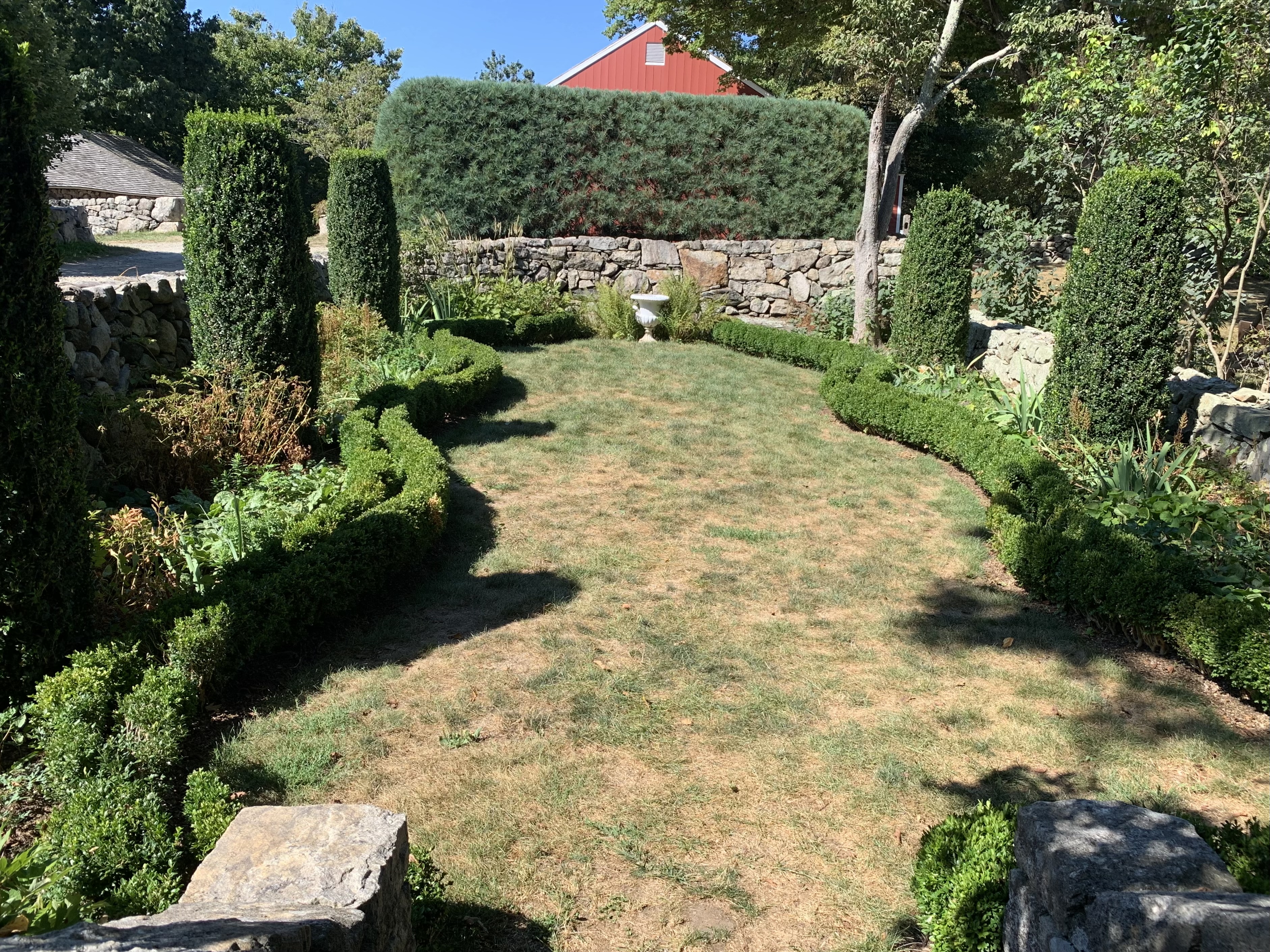
Rhode Island protects our religious liberty at Roger Williams and affiliated Touro Synagogue, and the state preserves our mill town history at Blackstone, which extends into Massachusetts within a broader eponymous heritage area. The Rochambeau Route begins here.
Gateway is multifaceted, but for me the most important part is the Jamaica Bay Wildlife Refuge above. Here there are migratory and year round birds, butterflies, trails, groves of trees and pleasant views. The contrast between the busy planes of JFK and the mute swans could not be more striking. Although the road noise limited my birdsong app, I still lost count at a dozen species. With more time, I would have kayaked around to see more birds.
But for folks interested in other things, the park includes Forts Hancock, Tilden & Wadsworth, beaches, parks and more, spread out over western Long Island, Staten Island and Sandy Hook peninsula in New Jersey. The Sandy Hook unit has miles of beautiful beaches (below with NYC skyline view) and paved bike trails to enjoy.
Humans think four distinctly different ways: instinctually, rationally, morally and creatively.
Instinctual thinking is how we feel human, and it includes all our evolved drives and behaviors, even some complex, internalized group dynamics.
Rational thinking is what we learn in school and often use at work: fact-based, methodical logic and calculating profits.
Moral thinking is what we should have learned as children and should still apply to every important decision we make: right and wrong, good versus evil, long-run over short-run.
Creative thinking is how we come up with new ideas: imagination, invention and inspiration.
Some people fall neatly into one of those four categories and consistently use the thinking methods appropriate to each.
Skilled instinctual thinkers are conscious of their own instincts, motives, desires and drives, those of others and the dynamics of how they typically play out.
Skilled rational thinkers use accurate facts and apply consistent logic and organized methods to solve problems.
Skilled moral thinkers take the long consequential view and judge on firm principles established to promote the general good, to set priorities and proactively intervene.
Skilled creative thinkers break rules, make imaginative leaps and invent to create beauty, find a new direction and change the world.
In theory, masters of multiple ways of thinking would approach every challenge beginning with proper motive, use the appropriate techniques, and achieve the right goal. Faced with a multifaceted problem, the master would rapidly run each thinking technique, then consider each conflicting solution, explore possible options, understand why, organize relevant details, arbitrate, optimize and prioritize to choose the best solution and course of action. But honestly, who does all that well?
What Goes Wrong?
Most of us aren’t sure how we think, let alone how the people we interact with think. We may get in an argument, because we’re trying to make a rational recommendation and the other person is trying to make a moral argument. Our creative solution may not work, if everyone just continues doing things by habit. And worst of all, relatively few people think using any consistent method.
In practice, few, if any, have been taught about all four different ways of thinking systematically, have been trained to use them all, know how they each differ and conflict with each other, and consistently apply them all correctly. Even if you are lucky enough to have a liberal arts college education, with degree requirements including ethics, creative arts and psychology & sociology, likely you still specialize in one way of thinking, knowing just enough about the other ways to get your thinking into trouble.
Unfortunately, the rest of us rely on a shifting, ad hoc hodgepodge blend of ‘thinking’, unaware of motives, dishonestly ignoring inconvenient facts, over-ruling our better judgement, and repeating the same old mistakes. We are driven by our instincts, we rationalize to suppress our guilt over having acted badly, and we can’t imagine trying a new path.
Since each way of thinking is different in motive, technique and objective, any blended thinking technique is flawed and unreliable. Just because we stumble into a jumbled solution, doesn’t mean that we’ve got our thinking straight. Think of it this way: you may know how to cook, play tennis and put together an outdoor grill, but you wouldn’t stir nuts and bolts into your chili with a racquet. It’s similarly wrong to let your instinctual thinking take over your moral judgement or bias your rational analysis or reduce your artistic creation into a common cliché. Every tub must stand on its own bottom. Each way of thinking must operate independently to work best. Only then, can they be combined with integrity.
Next Steps
Now that you get the general idea, every other Thursday, I’m going to review a method of thinking, discuss ways to improve it, or consider a relevant case, and then we can move on to mastery. We don’t need to excel in every way of thinking, but we do need to sort out when to use which and not muddle them together willy-nilly. Until we realize what’s wrong with our thinking, we won’t fix it.
The rest of the schedule stays the same for now, with visits on Monday, summaries etc. every other Thursday, and photo summaries every other Saturday. Ciao!







 Zero Carbon Travel