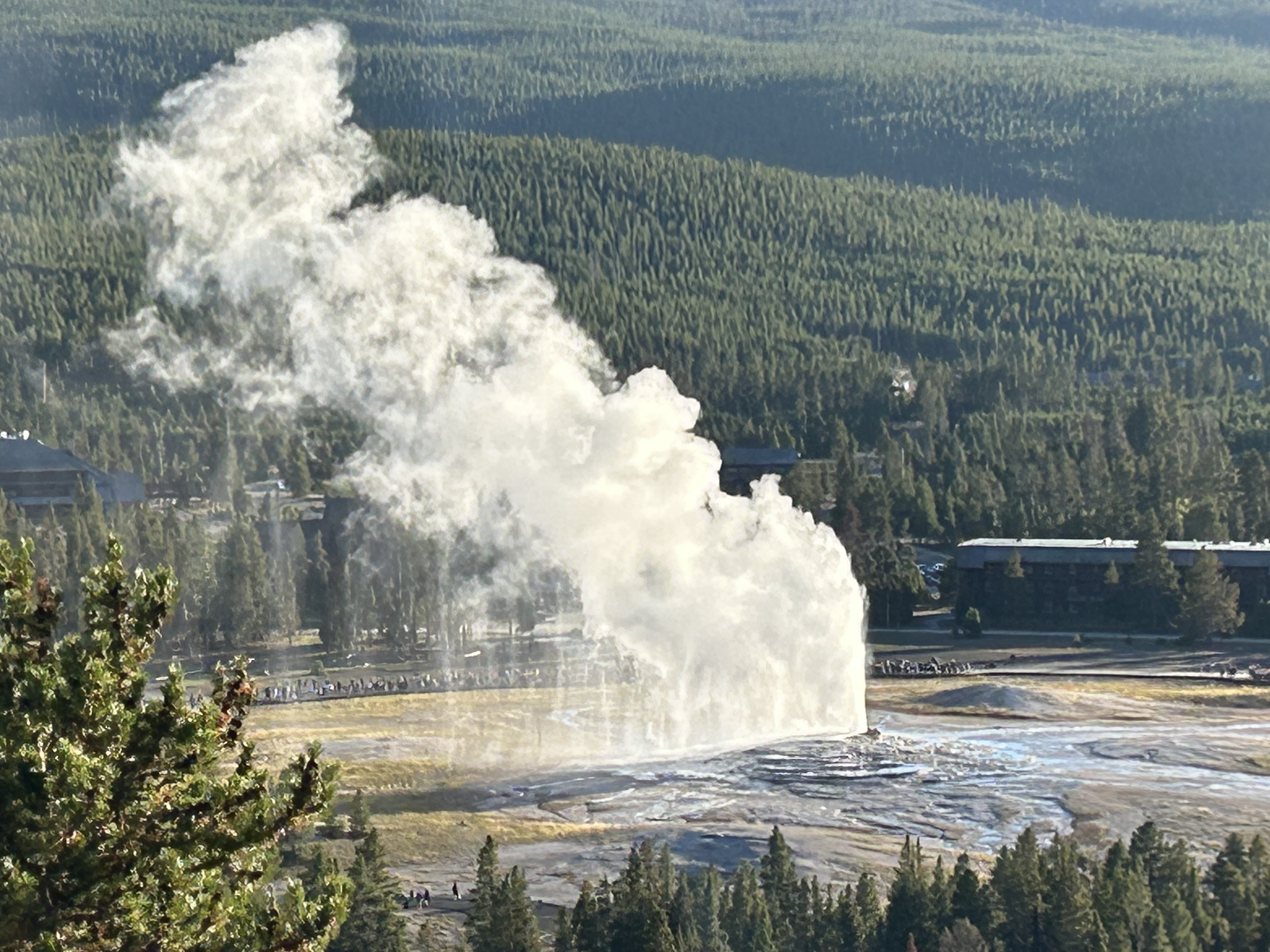
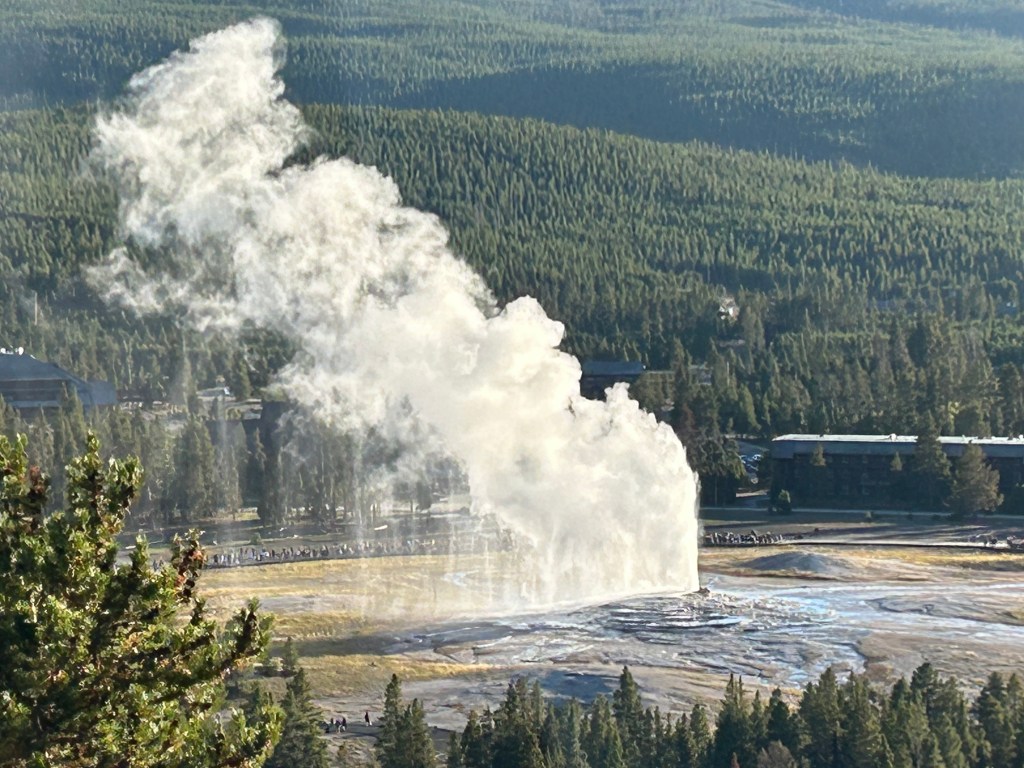
Best Park: Yellowstone. Geysers, wildlife, recreation, lodges, forests, mountains, waters. Yellowstone is spectacular and the best park in many categories.
This large UNESCO biosphere near Edmonton Alberta includes Elk Island National Park, which has hundreds of plains and wood bison. But Elk Island is fenced, so, as important as that park is for restoring the bison population, I came to see beaver. And on the Beaver Hills Biodiversity Trail, I saw several large beaver dens, like the one above.
Beaver are quite destructive, and their homes are surrounded by felled and drowned trees and pointy stumps. But they also create year round dens and dams with ponds and small lakes for many other species. Besides the many waterfowl, blue dragonflies, and chattery squirrels, I saw a magnificent golden eagle circle above the pond. And of course, I saw five or six beaver, swimming far from their dens, playing and occasionally climbing on branches to dry off, scratch or hang out.
When humans create zoos, safari parks or even national parks with fences, it’s not right to call the enclosed animals ‘wild’. Some may have been born wild, but as long as they’re locked up, they’re no longer wild animals. Humans make the rules in those spaces, so, no matter how we try to copy nature, the spaces are artificial. But when beaver fell trees, build dams and create lakes, they make the rules. And the species gather there naturally. Beaver Hills is a natural area, filled with wild animals, and it is delightful to pause here and take in the peaceful balance of life.
Our history is replete with racism, and many of my posts are devoted to its tragic examples: US War on Native America, Road to Abolition, Equal Education, Black History and American Concentration Camps. Since genetically all humans are the same species, there is no scientific basis for racism. We are all on the same side. But in my travels, I have found both overt racism and subtler ethnocentrism everywhere. I have heard Swedes make fun of Norwegians, British belittle the Irish, Italians disparage Romani, Turks and Greeks complaining about each other, Russians being anti-Semitic, Japanese discriminating against Koreans, Chinese distrusting Japanese, Malaysians criticizing Chinese, Israelis insulting Palestinians, Tanzanians maligning Arabs, Dominicans faulting Haitians, etc. I’m sure many of the same folks also made negative comments about Americans, behind my back or even calling me a ‘big nose’ or ‘foreign devil’ to my face.
Basically, racism is a damaging and potentially deadly way of thinking about others. Racism divides society, treats people unfairly and often results in violence against innocent people. Academics argue about whether prejudice is an evolved human trait or whether racism is learned. I doubt anyone learns to be racist by reading 19th century books on Phrenology or old Nazi propaganda. People who look up old racist literature have already formed their views. Children acquire racial biases as toddlers and pre-schoolers, often unconsciously by observing adults. Some tribal mistake in our instinctual thinking makes us vulnerable to distrust others, unknown to us, and wish them harm. Tribal unity on superficial facial characteristics may have once been useful in outwitting Neanderthals, but in the modern, interconnected global community, it is not just obsolete, it is a deadly plague, pitting billions against billions, all the same species.
Some academics stress the importance of systemic racism, the structures that sustain it, and the leaders who promote racist ideology. But this logical approach has a human weakness, so a systemic solution is asymmetrical to the problem. Most racist adults deny that they are racist. Relatively few risk public shame with overt racism. Racism lurks in the shadows, until it explodes. Some deplorable adults promote racism consciously, but it is hardly an intellectually rigorous movement. While diversity, equity and inclusion are taught formally, racism spreads informally. In my experience, I’ve heard more racist comments from illiterates and drunks than sober academics. Racism spreads quickly among less educated people who lack access to the benefits of vibrant, integrated multiracial communities. W.E.B. Du Bois exposed the real, blunt view of racists behind their fragile intellectual facade of superiority: “they do not like them”. Racism may be an ideology to a few, but it is an instinctual flaw in many.
While racism is still obviously employed consciously as an instrument of political power, its mass effectiveness lies in its unconscious appeal. If folks already have deeply rooted prejudices, it is easier to convince them to act cruelly, even without evidence. Missionaries believed they were doing God’s work to take Native American children away from their parents and put them in boarding schools. Soldiers believed false and grossly exaggerated claims that Native Americans had committed blood-thirsty atrocities, before they machine-gunned women, children and the elderly as they slept, before taking fingers as souvenirs. Slave owners believed their superiority gave them the right to use whips and chains for generations. School boards believed that money was better spent on white children. Mobs believed that an unproven allegation of sexual assault justified days of death and destruction. And many believed that Americans of Japanese descent could not remain free, while Americans of German descent could. The cruelest acts were committed by people motivated to act without evidence.
Any system can become an instrument of racial injustice, if it is filled with enough people with deep-seated racist views. A racist jury will rule unjustly, no matter how the law is written. Political leaders do not adopt racist policies because they were proposed by Ivy League think tanks, they adopt them because they are expedient and popular among ignorant people who support them. Columbus did not wait for the King or the Pope to issue racist proclamations before enslaving the first Native Americans he met, because he brought base racism with him and his crew. And they immediately decided to apply it to the Taíno, because they were different. The root cause of centuries of tragic American history is the false, racist assumption that there was something wrong with the other group of humans. Racism is the instinctual mistake within us that causes us to break the Golden Rule.
So, since racism is fundamentally a problem of instinctual thinking, the first step in solving it is to reveal it within ourselves. We all act instinctually, or we would forget to eat and die. We are all emotional, with a million likes and dislikes, preferences and aversions. We mimic, extrapolate and project. We have a physiological and evolved social need to group together, find similar soul mates, and to feel good about ourselves at the expense of others. Our society enforces homogeneity from pre-school. Sesame Street taught us, “one of these things is not like the others, one of these things just doesn’t belong”. But when we defectively apply that instinctual thinking to groups of our fellow humans and feel that someone “just doesn’t belong” in our neighborhood, due to their race or ethnicity, then we are being racist. First, be aware.
Being anti-racist requires honest introspection. If you can find a racist attitude in yourself, understand where it came from, and judge it to be hurtful and wrong, then you can fight it. You can change your words and deeds. And then, you can apply that new skill to the world. Suddenly, you will recognize the next racist thing you hear as racist, and you will have the opportunity to object. You can make a little more effort to understand people who are different, and you might find that you like their food, their humor, music, literature, style, or even some of their religious beliefs. Ultimately, you must apply the same open-minded attitude to all groups of humans.
When I lived abroad, groups of schoolchildren would point at me, giggle and sometimes call me names, because I was foreign to them. Their school uniforms, group behaviors and appearance was equally strange to me, at first, but I was happy that the country stopped burning and beheading foreigners who looked like me some 150 years earlier. Culture shock has two sides, when you fall in love with a culture and when you hate it. Before you really get over culture shock, you need to go through both stages. Then you can stop seeing one group—a single culture—and start seeing the diversity within the group.
The simple truth is that there are good and bad people everywhere, in every group. It is neither accurate nor useful to judge whole groups as good or bad based on superficial characteristics. When groups of people share the same prejudice unconsciously, they begin applying their racism broadly. When groups share prejudice consciously, they organize that racism into a damaging and dangerous force, breaking down a peaceful, fair society, challenging laws and morals, and hurting innocents. Decades later, people may acknowledge that one case was wrong, without admitting that the same instinctual fault still persists.
Isn’t it time for us to admit the full extent of our racism, understand it, and stop it completely? Must we continue to repeat the worst of our history in new ways, for the same old reason? Can’t we finally decide that all humanity deserves to be treated as we believe we should be treated?
I saw ducks and geese in the thousands, a flock of whooping cranes, a pair of sharp-tailed grouse, and many other birds, but they kept their distance from me. Saskatchewan has many lakes, and occasionally one will be full of birds. I also saw a young moose walking near the road, and there were bison behind fences. Since I was there during harvest, I could see the giant combines gathering grain. The self-guided driving tour gives several suggestions for exploring the area, which is mostly farms and First Nation communities. I believe there’s a visitor center opening soon.
The lake is at the center of a UNESCO Biosphere Reserve, but there’s also a popular state park camping and recreation area. So there are RVs, cabins, a beach below with a playground, mini golf, a golf course, a boat launch and even a few JetSkis, which hardly seem compatible with an internationally important bird refuge. Humans have trouble sharing our world with all the other species.
8 trails cross the Rocky Mountain region, including 6 National Historic Trails and a National Geologic Trail that link multiple sites, plus the North Country National Scenic Trail that is an individual park unit. Here’s a quick summary in case you are interested in exploring the trails in the region.
In South Dakota the expedition traveled north along the Missouri River from Yankton Sioux to Lakota territory.
In North Dakota they hired Sacagawea and her husband at Knife River.
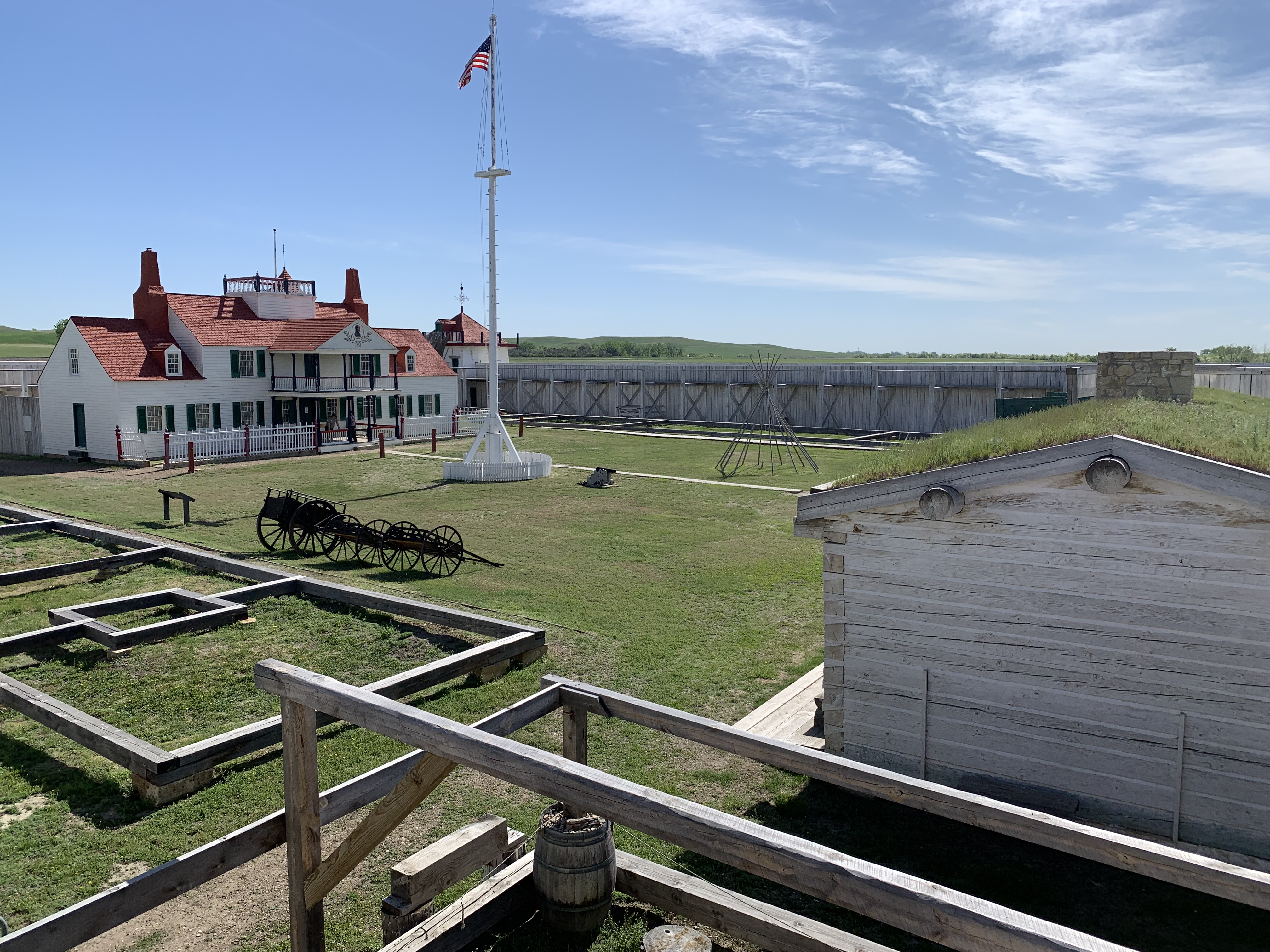
In Montana they split near the Yellowstone confluence where Fort Union Trading Post was later built and rejoined near the Snake confluence where the Nez Perce NHP is now. Grant-Kohrs and Big Hole are both on their trail too.
California NHT 1841 to 1869 also crosses Colorado and Utah.
Mormon Pioneer NHT 1846-1847 continues to Utah.
The Pony Express NHT 1860-1861 followed the pioneer trail through Colorado, Utah & Wyoming, but the young riders rode from Missouri to California in only 10 days.
One terminus of the North Country NST is in North Dakota while the other is in New York.
The view above of Clear Lake from the wishing well is beautiful. The Canadian biosphere includes Riding Mountain National Park and environs, including many ranches, homes and towns that proudly support the local species and clean environment around them.
I enjoyed a few hikes in the park, including a lovely marsh with floating boardwalks and over a dozen bird species, like swamp sparrow, black billed magpie and yellow-rumped warbler. (Love that birdsong app!)
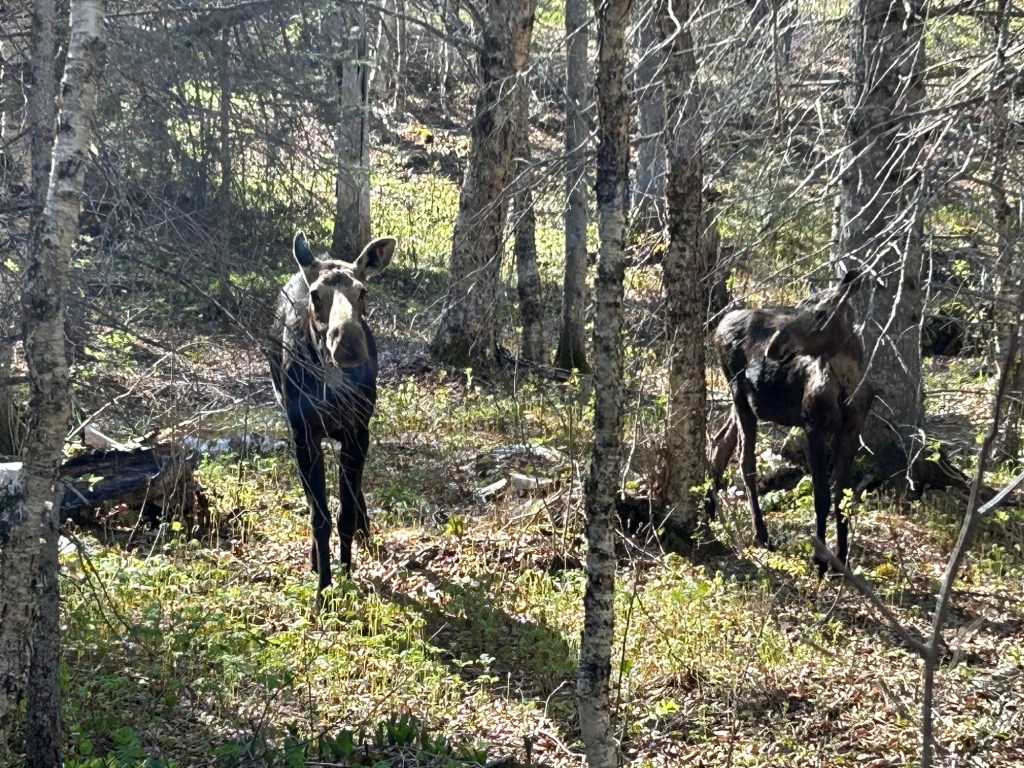
Another hike took me to a lake near Grey Owl’s cabin, before he moved to Prince Albert National Park in Saskatchewan. He was an Englishman who reimagined himself as part Native American and who spent his life advocating for wilderness conservation, especially the beaver. Interesting stories about him. Unfortunately, I didn’t see any beaver, but I did see the moose below.
In 2024, my total reached 400 *including 3 extra types*—affiliates, heritage areas and trails—even though they aren’t official national park units. My official total is 385 (out of 433).
My earlier favorites mostly hold, with several important changes.
What a beautiful place! A Canadian horticulturalist, Dr Henry Moore, deserves credit for the idea creating a peace garden—built during the Great Depression—on the Manitoba / North Dakota border. America has far more war memorials than parks devoted to peace. Chamizal on the Mexican border is dedicated to diplomacy, and Perry’s is both a war and peace memorial. As we begin a new year, we should not take peace and diplomacy for granted, given all we sacrificed in wars.
This affiliated park, a favorite of mine, is a neutral zone with the entrance between each country’s border security. You will need proper id either to continue on or to return to your home country after your visit here. The park is not far from the small town of Rugby North Dakota, which is the geographic center of North America. It’s a bit of a trek from the nearest US supercharger in Grand Forks, but there are a couple car dealers on the way that offer CCS charging if you have the adapter. Also, the park itself has a free electric 1772 car charger at the drop off entrance to the Conservatory, which has a massive collection of succulents donated by local enthusiasts.
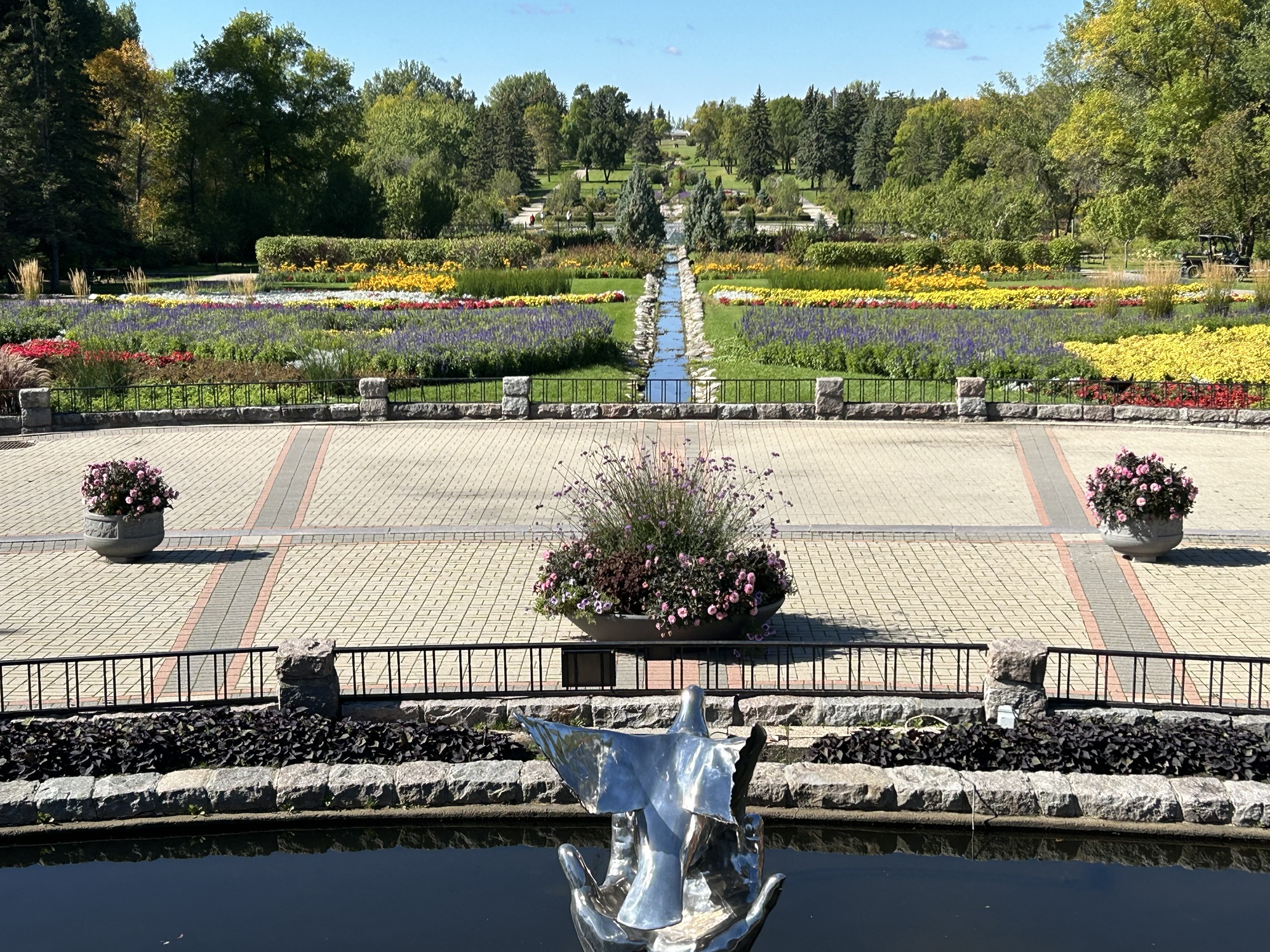
Technically I missed the peak season, but as you can see above, there were plenty of flowers still in bloom at the end of September. There’s a long winding drive through the woods with lakeside picnic grounds below, a campground and a few cabins and more around the central border gardens. And if you walk the length of the formal garden above, the building at the end is the Peace Chapel, which is the perfect place to find inspiration and hope for peace in the quotes from famous leaders and philosophers carved inside its walls.













 Zero Carbon Travel