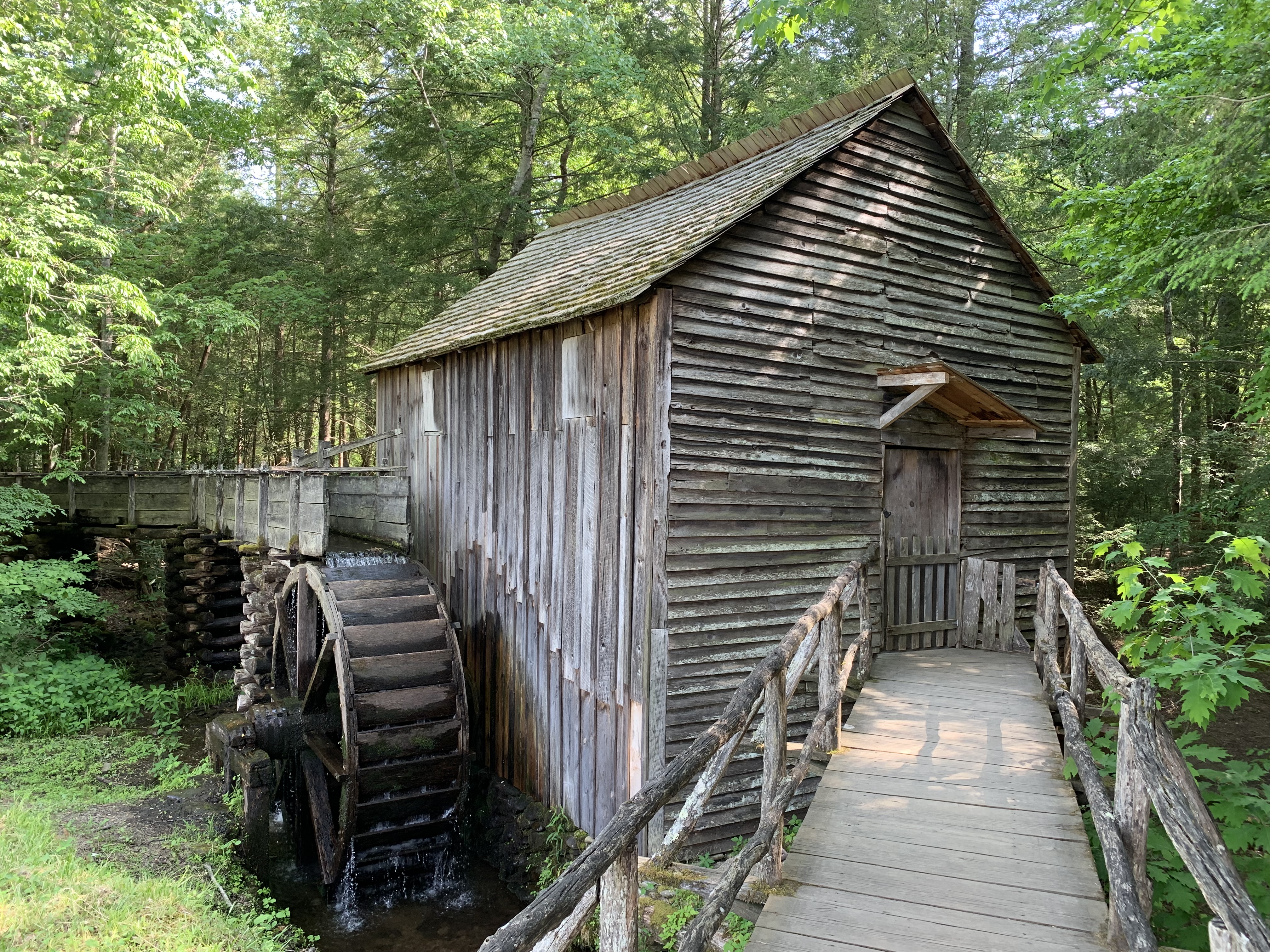
Some Cherokee still live in the Blue Ridge Mountains, although the western North Carolina heritage area is more focused on waterfalls, sights along the Blue Ridge Parkway, bluegrass music, the Great Smoky Mountains, and more. The Cherokee, angry about their stolen lands, sided with the British during the Revolutionary War, while their Piedmont—central NC—neighbors, the Catawba, sided with the Patriots.
A particularly beautiful area in the US, the Blue Ridge includes the headwaters of the New River and the eastern states highest mountain (Mitchell), gorge (Linville) and waterfall (Whitewater Falls), plus the homes of interesting people, including the poet Carl Sandburg. There’s also rich diversity of species and frequent wildlife sightings. I love driving through, and I have to admit to bending my itinerary a few times to see something new here.
The Gullah Geechee area is much larger, stretching from North Carolina to Florida, including some great national park units, like Reconstruction Era, Cumberland Island and Timucuan Preserve. I heard Gullah spoken several times in the Carolinas, and there are numerous spots along the coast in four states to stop and learn about quilts, baskets, and other crafts. I love the food, always wanting to stop for boiled peanuts, country captain, perloo or other dishes. Gullah Geechee is a living culture, a unique community, an integral part of our history, and this distinct heritage is woven deep into our collective roots.
I understand that Gullah developed as a common dialect among slaves who had lived or passed through Angola, hence the name. A great public TV program on the English language taught me a bit about Gullah years ago. You already know some of the words that come from Gullah, like gumbo, jitters, and tote. The settlement on Cumberland and the plantation at Timucuan have clues about the Caribbean crops of indigo and sea cotton brought to grow in the barrier islands and about the enslaved people who worked the plantations. Not only did the communities survive, but they retained some of their African and Caribbean connections, linking us with living communities in other countries today.

 Zero Carbon Travel
Pingback: North Carolina in Photos | Zero Carbon Travel
Pingback: South Carolina in Photos | Zero Carbon Travel
Pingback: National Heritage Areas in Georgia | Zero Carbon Travel
Pingback: Florida in Photos | Zero Carbon Travel