All Parks in the Midwest, Zero Carbon

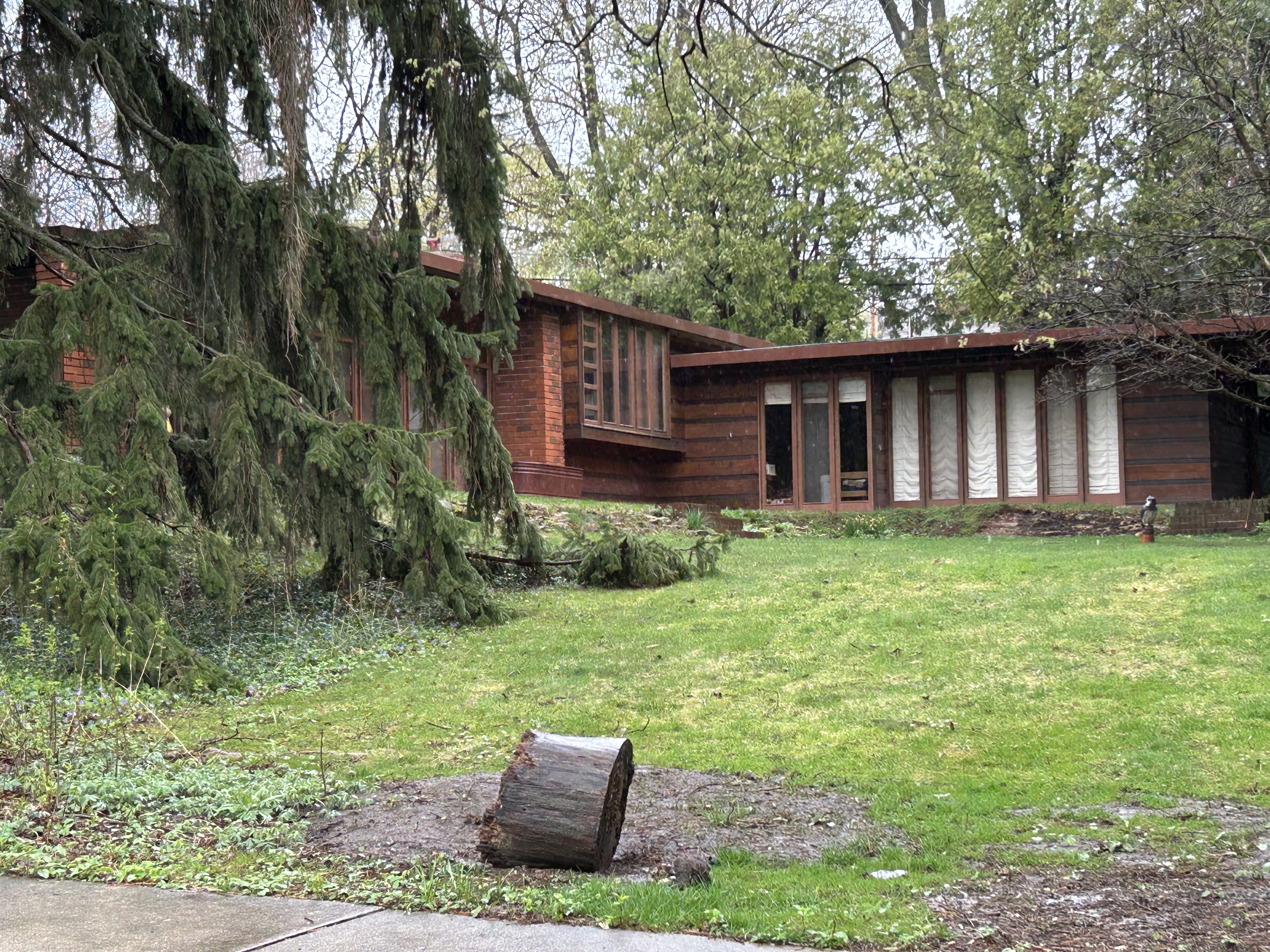
I recently completed EV visits to all 47 park units in the 10 states of the Midwest region, as well as 5 affiliated sites, 8 heritage areas, trails and biospheres. The region also has Cahokia Mounds, Hopewell Culture and 4 Frank Lloyd Wright world heritage sites.

Illinois

Indiana

Iowa

  • Effigy Mounds: ancient burial grounds on the beautiful bluffs of the upper Mississippi
  • Herbert Hoover: Quaker village origins and presidential library

Kansas

  • Brown v. Board: learn about the case against structurally unequal education
  • Fort Larned: well-preserved fort on the Santa Fe Trail during westward expansion
  • Fort Scott: site of a Bleeding Kansas event, Civil War recruiting & logistics and more
  • Nicodemus: still thriving African American pioneer town
  • Tallgrass Prairie: preserves a trace of the once vast ecosystem

Michigan

Minnesota

Missouri

Nebraska

Ohio

Wisconsin

Boston Harbor Islands National Recreation Area

The view above is from the Ramparts at Fort Warren on Georges Island, one of the 34 beautiful & fascinating islands. The fort didn’t come into play in the Civil War, except as a prison for Confederate soldiers. When I was here in my youth, I heard the spooky story of the Lady in Black, who haunts the cliffs and corridors. With the help of local sympathizers, she snuck into the fort, whistled a tune that her husband knew, found him but accidentally shot him during the escape. She was tried and executed for treason, in a dress she had sewn herself from black curtains in the commander’s office. Her shadowy ghost has been seen by many since the Civil War.

Alas for fans of the supernatural, the story is nonsense. Despite the obviously dramatic appeal, there are no contemporary records of the women herself, the escape attempt, the death of her husband, the arrest, the investigation, the trial or what would have been the first official hanging of a woman for treason during the Civil War. The story began in the 1950s or 60s to encourage folks to visit the old fort in summer. But apparently we prefer lies to the truth. And nothing cools you off on a hot day like sitting in a dark 65° man-made cave listening to a ghost story.

The islands have been also been used as summer fishing grounds by Native Americans, by pirates, smugglers, for quarantine, as schools or asylums, and as way-stations on the Underground Railroad. Outward Bound holds one of its programs on Thompson Island, which Nathaniel Hawthorne once described as “a little world by itself”. The School for Field Studies once hosted me (photo) and a few other whale watchers for a month on a boat, including a day writing up our research in the church on Peddocks Island. A few of the islands remained relatively unchanged since the glaciers receded leaving steeply eroded drumlin cliffs and long low sand-spits. But Spectacle Island had to be completely reclaimed from “trash island” to beautiful natural recreation area.

The Boston Harbor of Tea Party fame is in the inner harbor in the distance above. The Tea Party Ships & Museum on Griffin’s Wharf is not part of the park service, but it’s a fun hands-on spot to learn about ‘no taxation without representation’. The Harbor Island ferries mostly leave from Long Wharf near Faneuil Hall, which is on the Freedom Trail. The islands make a nice excursion if you’re visiting Boston during their open season from mid May to mid October. Since I had already traveled to the islands many times by sailboat, I simply rode the park-partner ferry out for a few hours to take some photos and reminisce. But as I write this today, I can’t help but think about tomorrow’s election. We owe it both to those who fought to create and protect our country and to our future, to hold tightly to our democracy, and vote.

Heritage Areas in Pennsylvania

Pennsylvania has eight National Heritage Areas, by far the most of any state, and I have visited them all by EV. Kudos to their politicians, but Pennsylvania does have many unique areas worth visiting.

The Delaware & Lehigh National Heritage Corridor includes the National Canal Museum with summer canal boat rides and different trails and bike paths along historic routes for coal and early American industry. The trail runs (with a few gaps) from the Lower Delaware River, through Allentown and will eventually connect with Wilkes Barre on the Susquehanna River.

The Journey Through Hallowed Ground NHA covers Civil War sites across four states, with Gettysburg being the star in Pennsylvania.

Lackawanna Valley NHA’s star is Steamtown above, but the area includes electric trolleys, as well as historic coal, iron and industrial sites.

The Oil Region NHA includes Drakes Well and other sites related to the birth of the modern petroleum industry in the Quaker State.

Fort Necessity and Friendship Hill are both in the Rivers of Steel NHA, but the historic focus is best seen by visiting sites like a blast furnace or a foundry & machine shop that explain how the steel industry began.

Schuylkill River Greenways NHA includes Hopewell Furnace, Independence NHP and Valley Forge NHP, but there are also over 100 miles of river to explore paddling, hiking or driving. (Say SKOO-kil meaning ‘hidden river’; so Schuylkill River is redundant.)

Susquehanna NHA focuses on the river valley and colonial York more-so than the Amish communities of Lancaster County, and there are many beautiful natural places to explore.

The Path of Progress National Heritage Tour Route is currently a bit DIY, but it includes Allegheny Portage, Fallingwater and Johnstown Flood sites along picturesque, winding historic roads.

Oil Region National Heritage Area

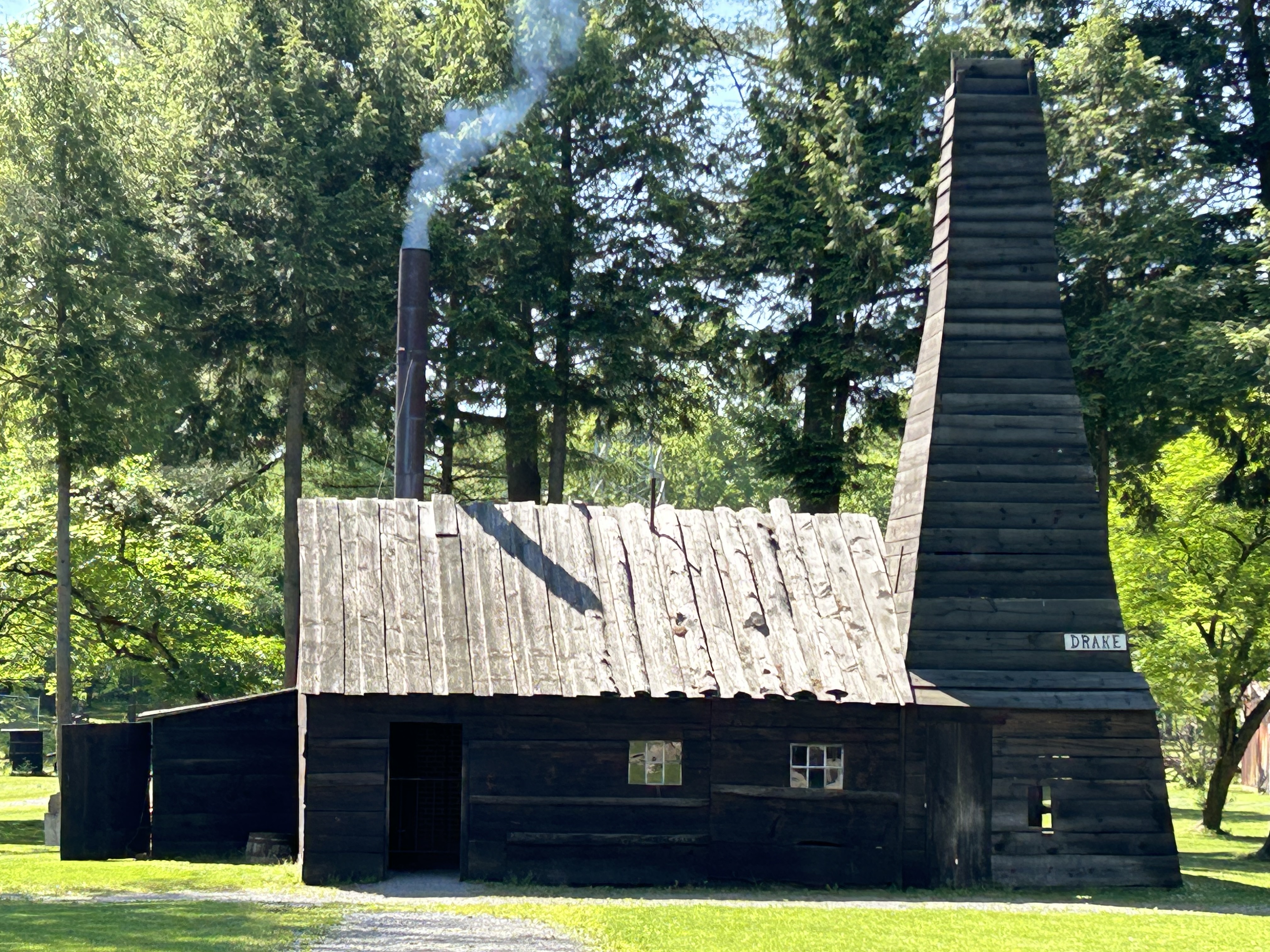
[Apologies for posting this a day behind schedule.] Light sweet crude oil (above) means a thin, low-sulfur, unrefined oil, and at one time the global price was set here in western Pennsylvania, where it was found in 1859 at 70’ in a lucky strike by Edwin Drake. Of course, the Seneca had already discovered the oil where it seeped into Oil Creek, and they had long used it for various purposes, including as Vaseline, but Drake built a well to extract oil as fast as it could be pumped out. His backers already knew of many commercial uses, including replacing whale oil which was used for lamps. The industry helped the Union win the Civil War. Quaker State and Pennzoil were born near here, and John D. Rockefeller was an early customer. Ida Tarbell, daughter of a local independent forced out by the monopoly, went on to write a critical history of Standard Oil.

The hub of the heritage area, the Drake Well Museum has a variety of equipment over 100 years old and many exhibits explaining the different oil products produced by refining at different temperatures and occasional demonstrations of (recycled) oil pumped up by the reconstructed historic well below. If you want to learn the story, you can look up the 1954 Vincent Price movie about “Colonel” Drake on YouTube; it was made by the American Petroleum Institute. With Halloween almost upon us, nothing could be more appropriate than watching a movie about the oil industry starring an actor famous for horror movies.

No matter how cleanly carbon is burned, it is still dangerous, as running a car inside a garage proves. In only 165 years, we extracted and burned millions of years of accumulated oil, and we changed the composition of our atmosphere. Carbon levels have risen at an incredibly fast rate back to where they were about 3 million years ago, ten times as long ago as when human Homo sapiens (wise) evolved. Considering the mass extinctions our carbon burning will cause and our inexcusable refusal to stop, we should probably rename ourselves Homo stultus (foolish).

President Biden’s Parks

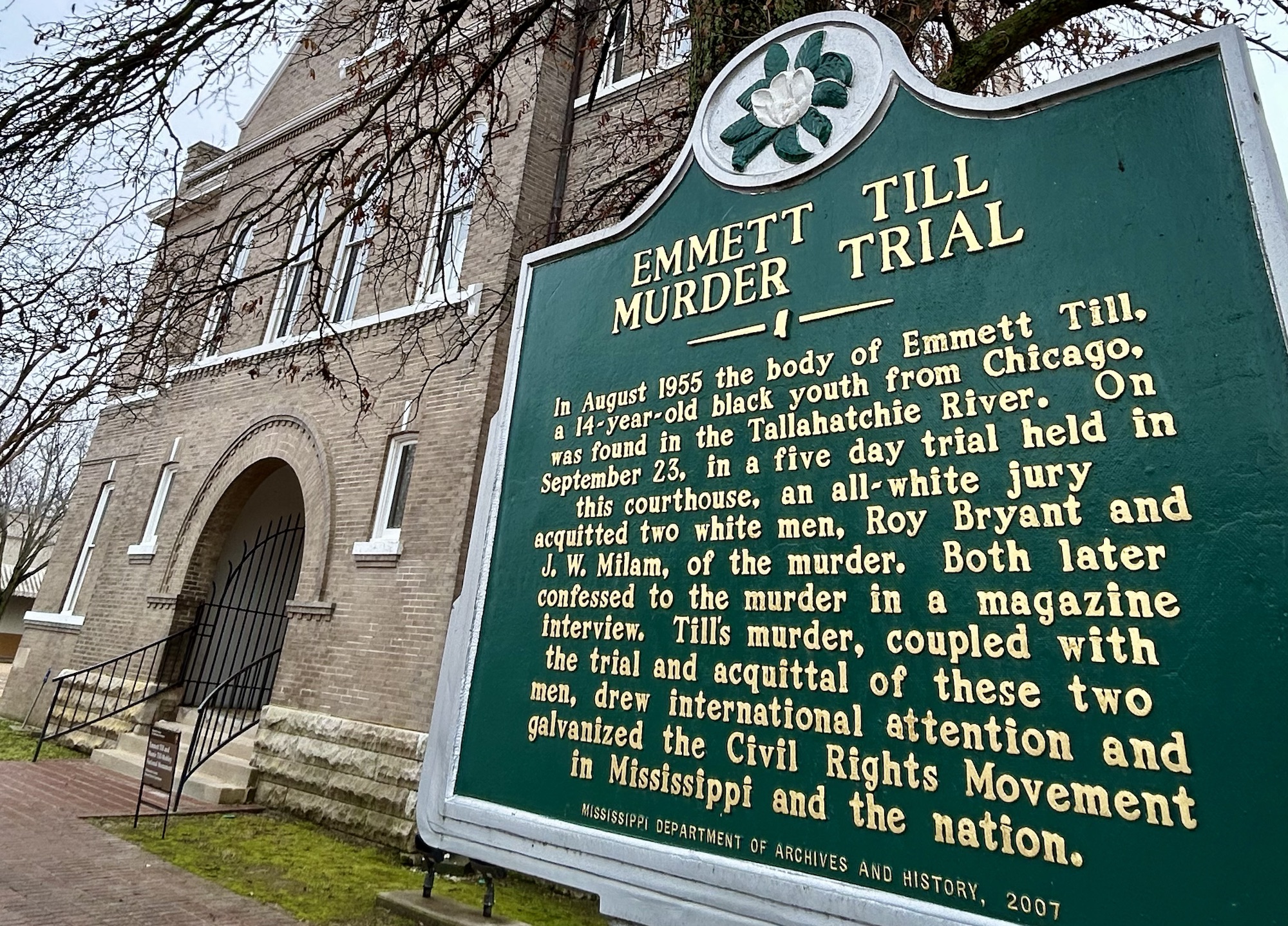
President Biden added 10 national park units. Seven are historic civil rights sites: Amache NHS, Blackwell School NHS, Carlisle Federal Indian Boarding School NM, Emmett Till and Mamie Till-Mobley NM, Frances Perkins NM, New Philadelphia NHS, and Springfield 1908 Race Riot NM. And three are national scenic trails: Ice Age, New England and North Country NSTs.

President Biden’s parks legacy is now complete, and overall he’s accomplished more than the first term of his predecessor, who approved five small park units, cut Bears Ears & Grand Escalante by over a million acres, and removed 19 US Biospheres from UNESCO. Biden doubled the scenic trails units from three to six, and his parks help protect the history of American Concentration Camps, desegregation in education, the Underground Railroad, and Black History.

Biden has also made many other changes that don’t affect the official total of park units.

  • Elevated to national historical parks
  • Created new national monuments
  • Expanded existing national monuments in California
    • San Gabriel Mountains near Los Angeles
    • Berryessa Snow Mountain in Lake County
  • Restored protections
    • Bears Ears in Utah
    • Boundary Waters in Minnesota
    • Grand Staircase Escalante in Utah and Arizona
    • NE Canyons & Seamounts (south of Cape Cod)
    • Tongass National Forest in Alaska
  • Limited exploitation and protected wildlife
    • Aransas and Big Boggy in Texas
    • Bristol Bay in Alaska
    • Chaco Canyon in New Mexico
    • Chumash Marine in California
    • Everglades in Florida
    • Lost Trail in Montana
    • Muleshoe in New Mexico and Texas
    • Paint Rock River in Tennessee
    • Roanoke River in North Carolina
    • Thompson Divide in Colorado
    • Wyoming Toad

New England National Scenic Trail

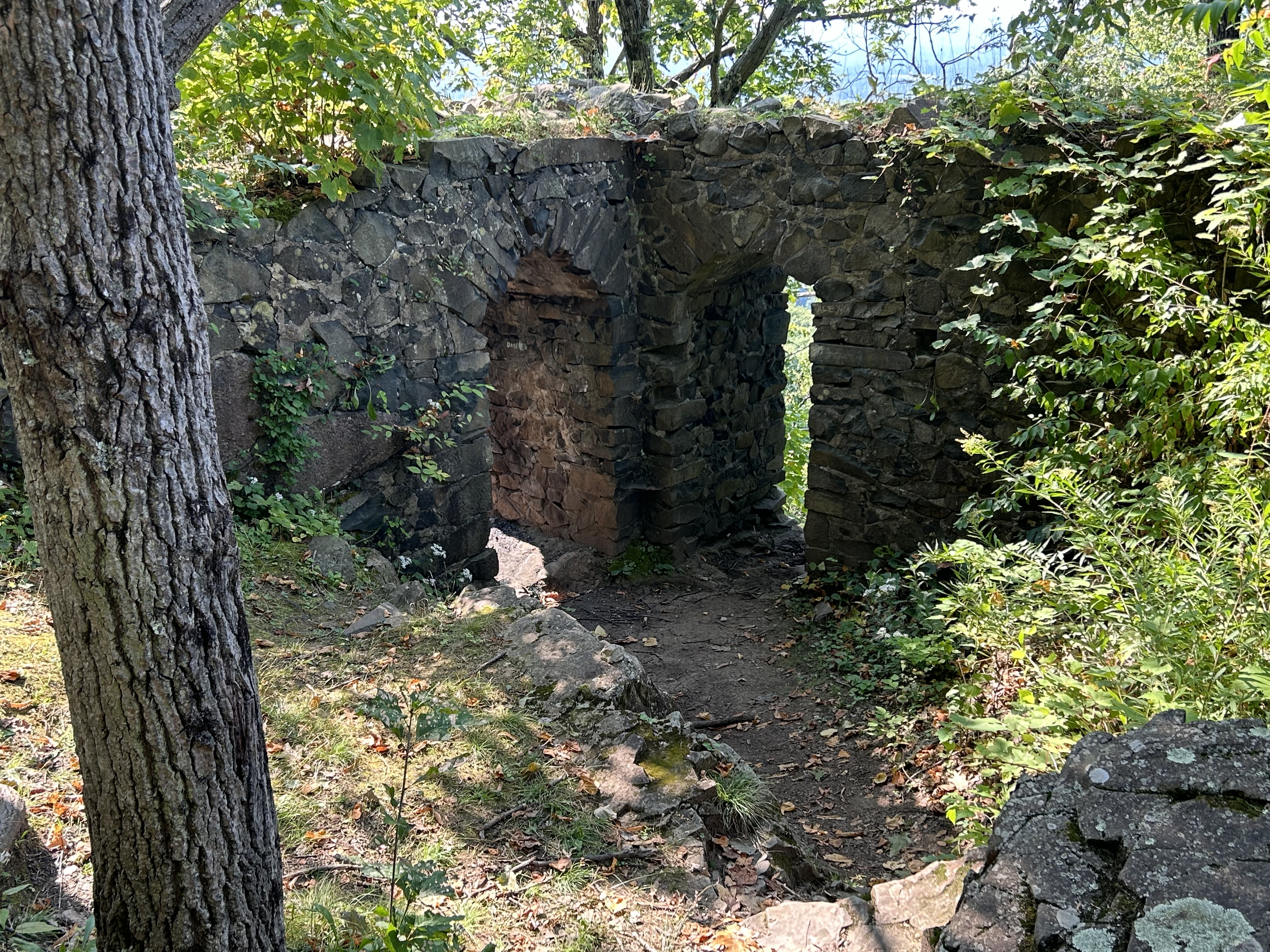
Mt Tom in Holyoke Massachusetts is a high point of the trail along the Connecticut River (although there are mountains over ten times higher in Colorado). The trail runs along a high ridge with several lookout towers to watch hawks or catch a glimpse of the river over the trees. The Eyrie House Ruins above are of a view hotel that burned down 123 years ago. As usual, I had forgotten about my childhood visit here, until I reached the ruins and climbed a rusty old tower to see the view below.

The trail is 235 miles from Long Island Sound to the New Hampshire border, through native lands, over rugged mountains, through annually brilliant foliage, past reservoirs, waterfalls and quaint New England villages. Last year, President Biden elevated the trail to a full national park unit, along with North Country and Ice Age National Scenic Trails. Hopefully, this step will encourage more people to hike and explore this lovely area of our country.

Springfield 1908 Race Riot National Monument

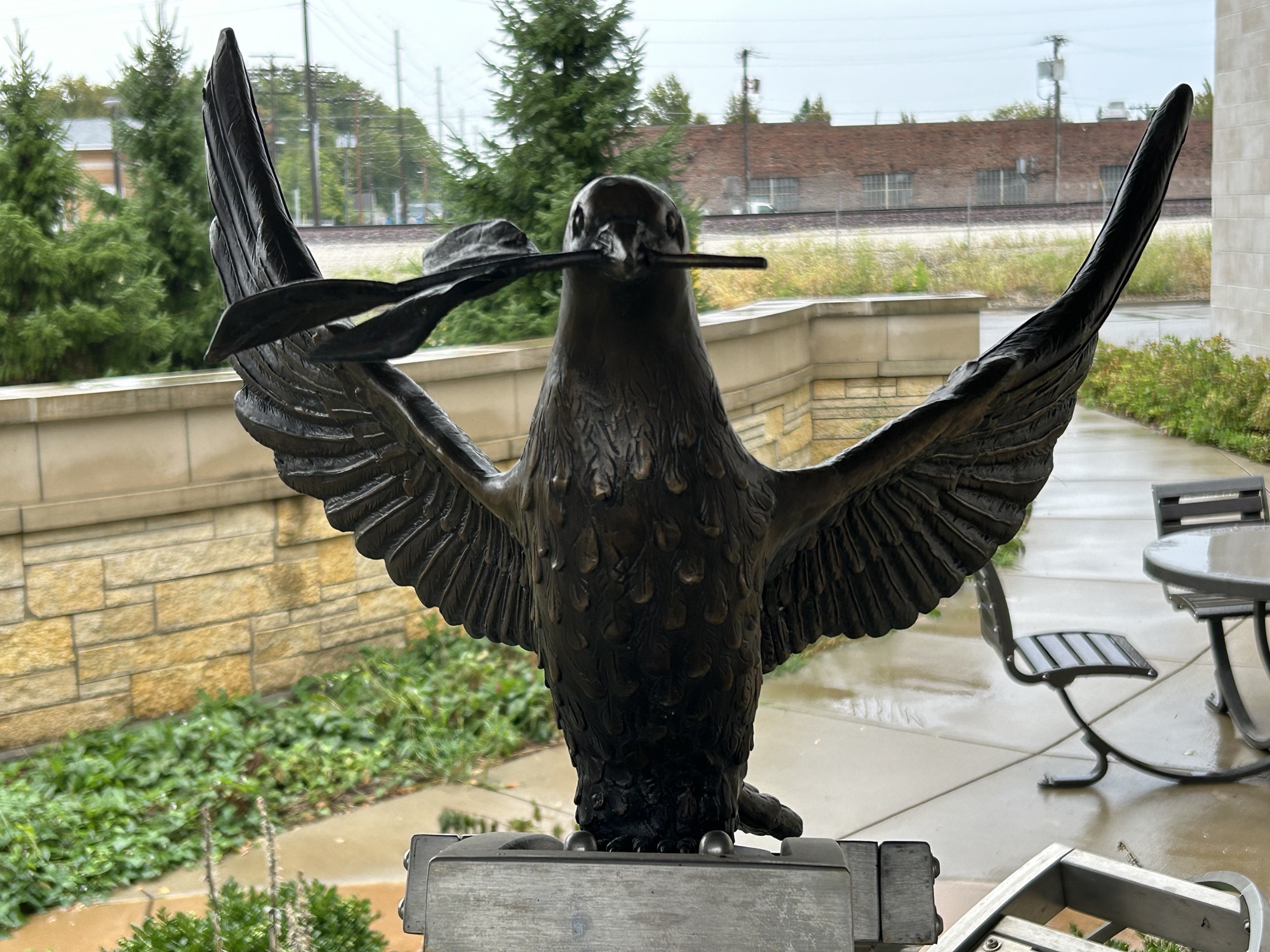
This new park established by President Biden this August is still a fenced off construction area next to the railroad tracks, but there are several art installations dedicated to the riot, including the dove above and a mural at the Children’s Hospital next door. 11th Avenue along the site is known as Reconciliation Way, to commemorate the terrible events here in 1908.

In mid August 1908, in Springfield Illinois, a white mob of five thousand lynched 2 black men, killed 7 others, burned out millions of dollars worth of black homes and businesses and also targeted Jews and whites deemed sympathetic to the black community. The police did nothing to stop the riot. The burning, looting, ransacking and violence lasted 3 days until put down by the state militia, which resulted in 6 dead rioters.

Church leaders blamed the victims for being “sinful”. Although everyone knew the perpetrators and many were arrested, only one 15 year old was convicted after he confessed to stealing revolvers, shooting at black people and starting 15 fires. The others denied any responsibility, the witnesses denied seeing them, and the charges were dismissed. The judge denied that there was racism in Springfield.

Many Americans were shocked by the scale of the violence in Abraham Lincoln’s home town, and civil rights advocates like W.E.B. Du Bois and Ida B. Wells helped form the NAACP in 1909 in response. In 1910 speaking before the NYC Republican Club (the party of Lincoln), Du Bois argued that if racial hierarchy were the natural order of the world, then there would be no need to use social and physical weapons to oppress a race.

“So soon as the prejudiced are forced into this inevitable dilemma, then the real bitterness and indefensibility of their attitude is revealed; they say bluntly that they don’t care what [slurs] may be capable of—they do not like them and they propose to keep such folk in a place of permanent inferiority to the white race—by peaceful policy if possible, but brute force if necessary.
And when a group, a nation or a world assumes this attitude, it is handling dynamite.
There is in this world no force as the force of a man determined to rise.
The human soul cannot be permanently chained.”

W.E.B. Du Bois

Hispanic Heritage Month

Before there was a United States, the Spanish were here first. Over five centuries ago, Spanish explorer Ponce de León arrived in Florida, somewhere near St Augustine. That settlement is older than Plimoth and even older than Jamestowne. Hernando de Soto landed in 1539—at the mouth of Tampa Bay near where Hurricane Milton just landed—, and he led his expedition through what would later become 8 US states. Before the celebration of Hispanic Heritage Month ends on October 15th, we should take a moment to reflect on the deep Hispanic roots of America, reflected in the Spanish names of many of our city, county and state names.

  • Arizona is ‘Arid Zone’
  • California is named after a 16th century Spanish fictional island
  • Colorado was named for it’s rich colors
  • Florida is ‘Flowery’ since de Leon arrived on Easter, 1513
  • Montana is ‘Mountainous’
  • Nevada means ‘Snowy’ in Spanish
  • New Mexico was part of the Spanish Empire’s reach to Alaska and the Great Lakes
  • Oregon was first recorded in Spanish
  • Texas comes from Tejas for ‘Friend’, used to describe Native American allies
  • And Utah derived from how the Spanish referred to the natives there

The Spanish began European exploration of our country, beginning by funding Columbus.  One reason there are Spanish place names throughout the US is due to explorers like De SotoCoronado, and Cabrillo.  How many Americans know that St Augustine is our oldest permanent European settlement? We love Historic Route 66, but do we recognize that such Old Spanish Trails were mapped by Spanish colonizers like de Anza and de Oñate?  At El Morro, early settlers carved messages in the rock in Spanish.  Spanish speaking traders were at the ancient Casa Grande and at the still open Hubbell Trading Post.  100 years before we gained our Independence from the British, the Pueblo Revolt kicked the Spanish out of what’s now the US southwest.  We know that Jefferson bought Louisiana Territory from Napoleon in 1803, but do we know that Napoleon got it from Spain in 1800?  Our Midwest roots are both French and Spanish. The Presidio in San Francisco was Mexican for decades before the US Army took over.  

And yet for some reason, we persist in ignoring our Hispanic Heritage.  The Canadian River flows from Colorado, through New Mexico, Texas and Oklahoma, and it was mapped by Governor Oñate in 1601.  The river’s most remarkable geographic feature is in Texas, where it runs through Palo Duro Canyon, the second largest canyon in the US, described as a cañada in Spanish.  And yet for generations, English speakers have tried finding non-Spanish explanations for the river’s name, such as lies that the French trappers didn’t know any Spanish, didn’t trade with the Spanish there and confusedly thought that the river came from Canada.  Ridiculous!  

While the ignorant falsely view Spanish speakers as only recent immigrants, in much of the country the Spanish speakers were here first, remaining for generations, even as wars and borders changed their lands from Spain or Mexico to the US.  Over 40 million Americans speak Spanish at home, as they have for generations.  Spanish speakers and their descendants should be rightfully recognized as founding members of our country, as their experiences and lives here predate English speaking settlers, and Spanish speaking citizens have continued contributing to our country, despite prejudice against them.  

Unlike the war-shrine Alamo, the San AntonioTumacacori and other missions today are dedicated to peace and understanding.  Despite some politicians trying to divide us, the Mexican border has long been peaceful, with disputes negotiated at places like Chamizal above in El Paso.  César Chávez organized the first permanent agricultural union in the US, to lift up the lives of millions of people.  And when Brown v Board of Education ended segregated schools for African Americans, it also ended segregation for Spanish speaking students at places like Blackwell School in Texas.  

We should learn about our Hispanic Heritage and our past discrimination—including tragedies of mob violence and mass deportations—, so that we reject hatred and division.  We can be a more just, inclusive and a better society.  

“Those who cannot remember the past are condemned to repeat it.”  

—George Santayana, Spanish-American Philosopher